
Autumn Plant Propagation: What Should You Multiply?

On our Central Portugal Quinta, autumn is when I stop staring at one mother plant and ask: what is worth multiplying before winter? Useful plants rarely arrive as a full hedge. They arrive as one shrub, one pot, one market clump. The land gets denser when we copy what already earns a place.
This round of autumn plant propagation is not a claim that every cutting will make it. It is a plan to multiply what is useful, then learn what succeeds. Some species like cool root weather. Others want spring or summer wood. Stick around for Herman’s Tough Kraut Fixes at the end. The Troubleshooting FAQ covers rooted versus succeeded, tender plants, one-method myths, pot mixes, and how we track trials.
For field-tested homestead tools and reading, start at our Resources page.

Why Increase Autumn Plant Propagation on the Quinta
We do not propagate only the toughest summer survivors. That would shrink the system and teach us less. The plan this season is honest: multiply as many useful plants as practical, then watch the full chain. Mother plant. Propagation. Rooting. Potting. Summer watering. Winter protection. Eventual planting. A useful plant that needs frost cover or summer water stays in play if we can provide those inputs.
On this land, plant-out often waits until October. Summer heat is for pots. Frost pockets are real, especially in the low food forest. Summer water and winter frost protection are real constraints. Propagation still makes sense because one mother can become several trial plants without another nursery bill. Keep notes. Accept losses. Do not rewrite failure as success.
Tough Tip: Multiply useful plants on purpose. Do not wait for a perfect “set and forget” list before you take a cutting or split a clump.

Why Autumn Helps Some Projects (and Not Others)
Cooler nights and softer sun help many woody cuttings settle without July wilt. Soil stays workable. Moisture returns. Roots can form while tops stay quiet. Autumn favors some hardwood work, layering checks, and divisions that hate peak heat.
It does not favor every species. Salvia 'Amistad’ is the honest counterexample. We bought it at the end of March 2026. It is still in a pot, waiting for upper-land placement. Plant Library notes point to future propagation, and horticultural guidance favors semi-hardwood cuttings in late spring or summer. Autumn may not be the best window for Amistad. Saying that keeps the trial clean.
Match the calendar to the wood, not the blog calendar to your mood.
Tough Tip: Cool root weather helps many projects. It does not rewrite a species that wants spring or summer cuttings.
The Plants We Are Trying, and How Each Multiplies
One method does not fit all. Healthy mother material matters more than fancy hormone. Quinta facts stay separate from general hort guidance.
Goumi (Elaeagnus multiflora). Planted 23 February 2023 in a hedge zone beside sour cherry and yellow jacaranda. About 1.8 m. Nitrogen fixer. The Plant Library lists seeds, cuttings, and layering. We have no confirmed Quinta propagation success yet. This autumn it is a candidate for layering or cuttings from healthy wood, not a proven clone factory.
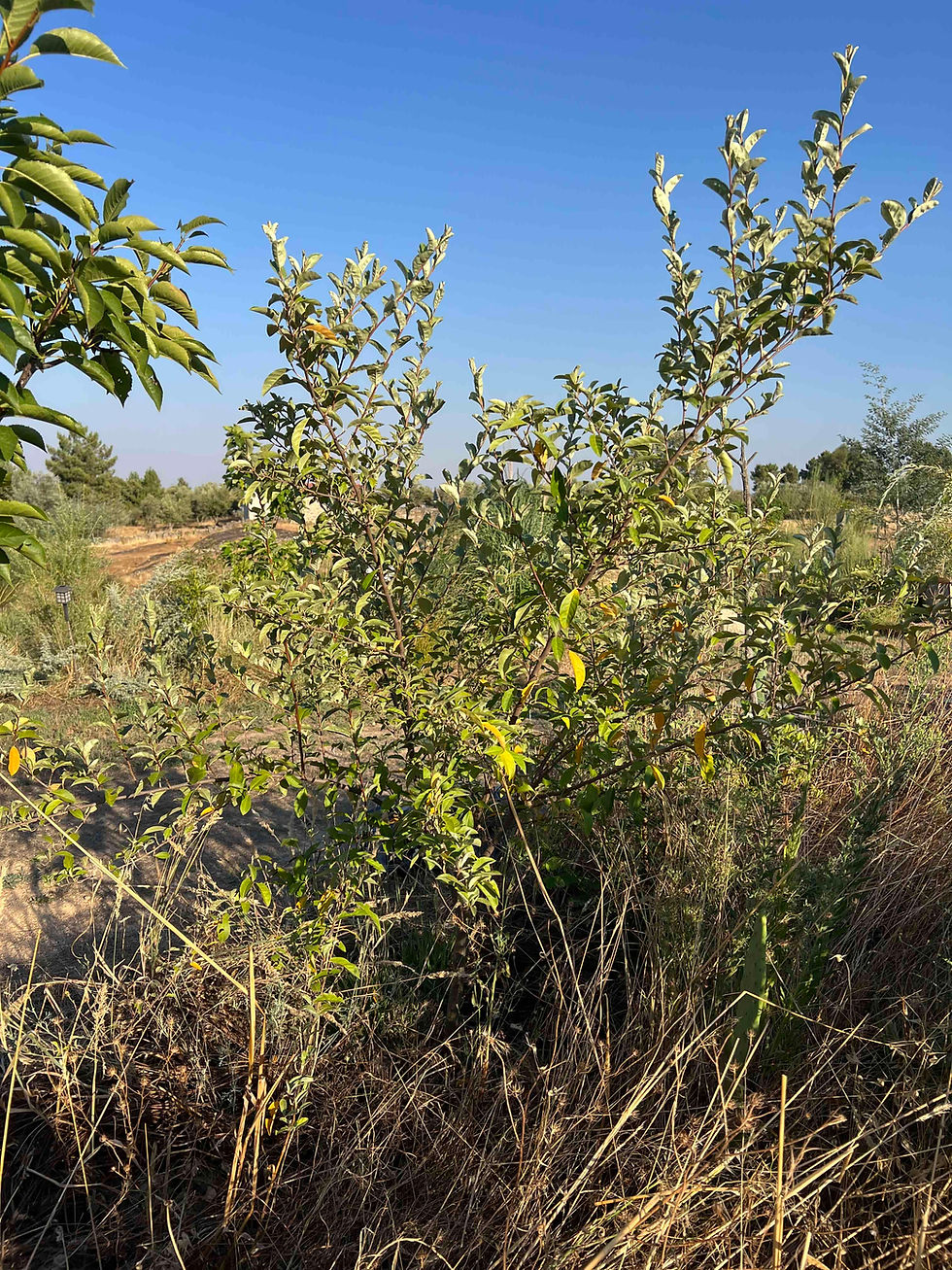
Hazelnut (Corylus avellana). Planted 3 April 2022 in the center of the food forest. About 1.9 m and bushy. It already earns its place. Our cuttings rooted easily, then dried out in summer. Next trials go in pots under partial shade with steadier water. Methods: suckers, layering, hardwood cuttings. Full Quinta notes: Corylus avellana. I also put hazelnut on the east side to shade young trunks. That is a siting note, not a new planting claim.
Black mulberry (Morus nigra). Planted October 2022 on the upper north-south bed. About 2 m. Use the live mulberry cuttings propagation how-to: sifted native dirt, 15-25 cm pencil-thick cuttings, bright shade. Do not expect a grove already. One mother and a cutting trial are not a finished mulberry line.
Ebbing’s silverberry (Elaeagnus × ebbingei). I am trying this as a trial candidate. We do not have a Plant Library page yet, and I have no planting date or size from this land. General plant advice only: semi-hardwood or half-ripe cuttings often late summer into autumn; layering is possible; the hybrid will not come true from seed. Until I have results here, that is book knowledge, not a Quinta fact.
Nepeta × faassenii ‘Six Hills Giant’. Bought at a local market as a dense clump. We are splitting it into at least two sections: one pot, one sunny dry spot on the land. Plant Library methods: division and cuttings. Low water once established; long flowering; drought-tolerant pollinator plant. We do not claim the land section has already thrived.
Salvia ‘Amistad’. Still potted, awaiting upper-land placement. Future propagation is the plan. Semi-hardwood later, not forced this autumn.
Tough Tip: Name the method for the plant in front of you. Goumi is not mulberry. Nepeta is not hazelnut. Healthy mother wood beats a mixed technique.
Mix, Water, Frost, and How We Will Track Survival
Growing medium is a third experiment beside species and season. Drainage, moisture, and aeration matter. Soil, compost, and sand in known ratios teach different lessons. Hazelnut already showed that mix, placement, and water matter more than “it rooted.”

Two bottlenecks decide whether a rooted cutting becomes a plant: winter frost protection and summer water. Frost pockets exist here. Young pots need bright shade, labels, and a cold-night plan. Summer needs deep, steady water without cooking roots in full sun.
Track each trial with plant name, date, mix recipe, shade, water notes, and plant-out date if it reaches October ground. Rooted is a milestone. Succeeded means it survived potting, frost risk, and at least one dry season under our care.
Tough Tip: Write the mix and the date on the pot. Memory is not a survival metric.
Final Thoughts on Autumn Plant Propagation
Autumn plant propagation on this Quinta is a multiplication experiment, not a toughness contest. Copy useful mothers. Match one method to each species. Respect later cutting windows. Test the medium. Protect from frost. Budget summer water. Track what survives.
Join the Kraut Crew for more field notes like this, and use the Resources page for tools we actually rely on.
Herman’s Tough Kraut Fixes: Common Challenges with Autumn Plant Propagation
Propagation questions on Mediterranean land usually come down to expectations, timing, and follow-through. This Troubleshooting FAQ keeps answers short.
Q: Does success mean the cutting rooted?
A: No. Rooted is step one. Success here means the plant also survives potting, winter frost risk, summer water, and eventual planting. Celebrate roots. Do not stop the notebook there.
Q: Should we reject tender or higher-care plants?
A: Not automatically. If a plant is useful and we can provide frost cover and summer water, it stays in the trial. We are not building a list of only the toughest summer survivors.
Q: Is there one cutting method for every plant?
A: No. Goumi may use layering or cuttings. Hazelnut leans on suckers, layering, or hardwood. Mulberry has its own hardwood how-to. Nepeta divides. Match the plant.
Q: What potting mix should we use?
A: Treat mix as an experiment. Aim for drainage, moisture, and aeration with soil, compost, and sand in known ratios. Label every recipe. Hazelnut taught us that rooted cuttings can still fail when mix and water are wrong.
Q: How do we track what works?
A: Label plant, date, mix, shade, water notes, and plant-out date. Compare mother health, method, and season. Keep homestead facts separate from general hort tips so future you does not invent a success.


Comments