
Buying Land for Off Grid Living: Assessing Stone Structures, Wells, and Location

Updated: May 19
Buying land for off grid living feels like a dream — until you discover the “charming stone house” leaks like a sieve, the “abundant well” runs dry in August, and the “perfect location” happens to be a flood zone. Many first-time buyers fall for the view and ignore the details that really matter. I know, because I’ve made some of those mistakes myself here in Portugal.
The good news? With the right checklist, you can walk a property once and leave knowing whether it’s a hidden gem or a money pit. You don’t need to be an engineer to spot the cracks, measure a flow test, or map sun and slope. You just need a clear process — and the willpower to look past the olive trees and ask tough questions.
If you’re looking at land here in Portugal, you’ll also want to read my detailed guide, The Homesteading Land-Buying Checklist for Portugal: 15 Critical Factors Before You Purchase. Think of that post as the country-specific rules of the game, and this one as your on-the-ground toolkit for evaluating stone structures, wells, and site conditions anywhere.
In this guide, I’ll share the exact steps, tools, and costs to assess stone structures, wells, and location before you commit. By the end, you’ll have the confidence to tell a realtor “no thanks” or move forward knowing you’re building resilience on solid ground.
Stick around to the end for Herman’s Tough Kraut Fixes, where I troubleshoot common off-grid buying mistakes and show you how to turn them into smart, practical solutions.

Assessing Stone Structures for Off-Grid Living
Stone houses can be a blessing or a curse. They offer thermal mass, history, and beauty. But they also hide cracks, moisture problems, and missing ring beams that can eat up your budget fast.
What to Look For
Foundation and Walls: Walk the perimeter. Look for horizontal cracks (often structural), vertical cracks (often settling), and widening cracks at corners. Measure with a ruler — anything wider than 5 mm needs professional attention.
Moisture and Drainage: Touch the base of walls. Rising damp leaves salt stains or crumbling mortar. Check for drainage paths outside. If water hugs the wall, expect long-term problems.
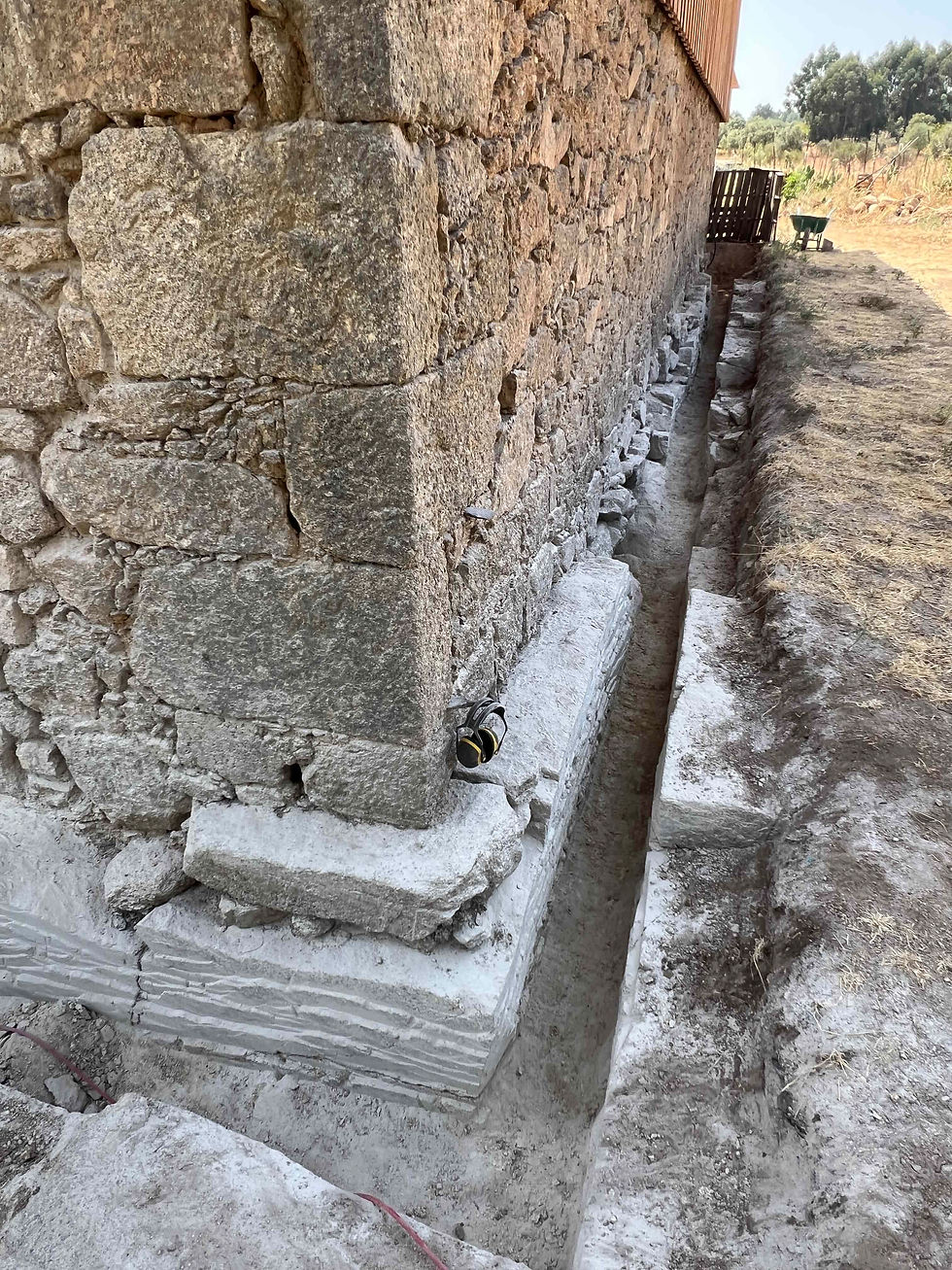
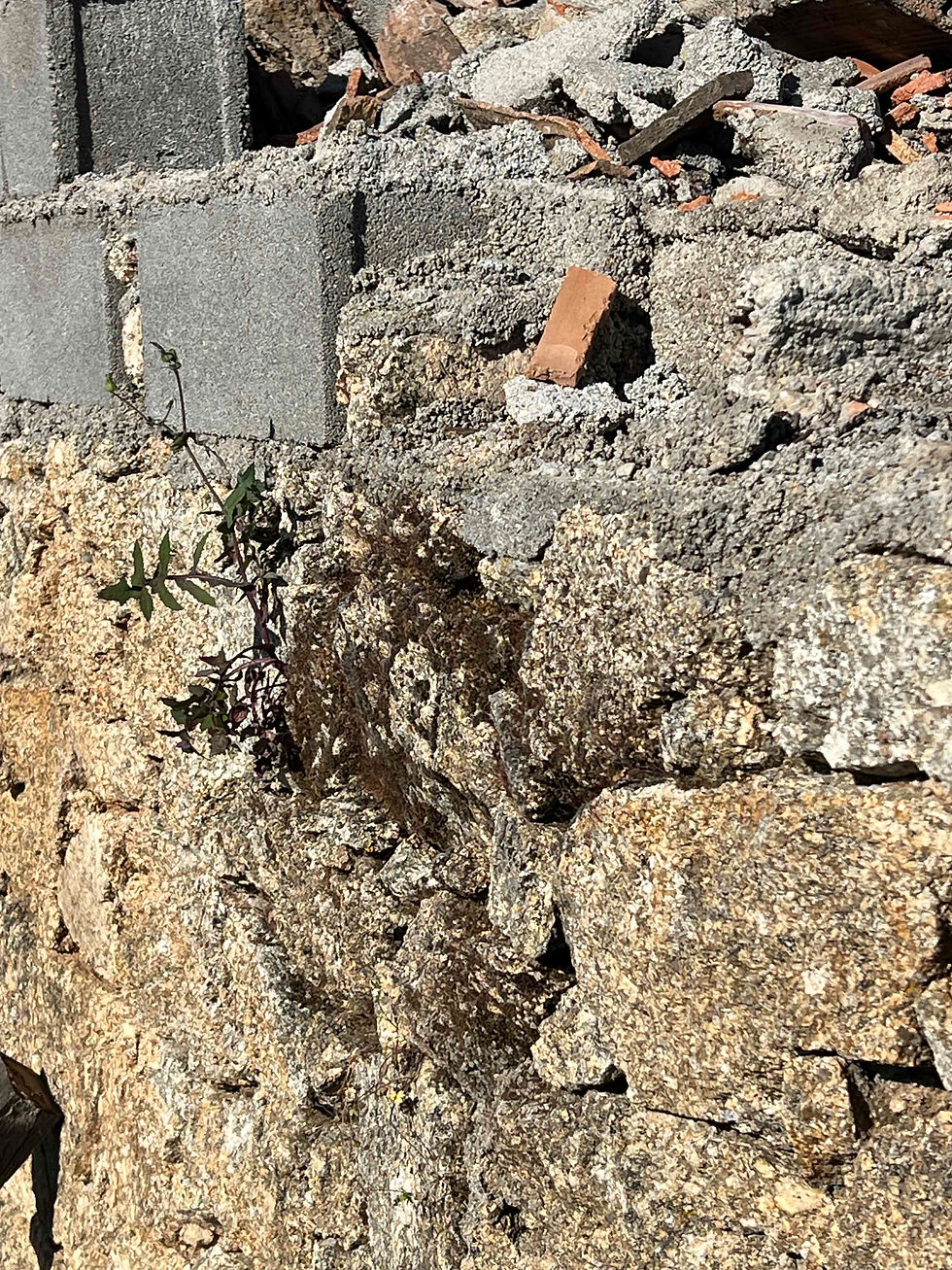
Roof and Ring Beam: Many old stone houses lack a reinforced concrete ring beam to tie walls together. Without it, roofs push outwards and walls bow. Budget for adding one if missing.
Insulation and Openings: Stone walls are thick but not magic. Note window size, orientation, and shading. South-facing windows can be a blessing for winter sun but a curse without summer shading.
Practical Tools to Bring
Measuring tape or ruler (for crack width)
Small spirit level (check leaning walls)
Moisture meter (optional but useful)
Notebook or phone for photos and notes
Common Mistakes
Falling in love with “character cracks.”
Solution: Cracks are only charming until they swallow your renovation budget. Document, measure, and get a structural opinion.
Ignoring damp walls because “stone breathes.”
Solution: Stone breathes, but water still damages. Plan for French drains or lime-based plasters.
Off-Grid Tip
A well-assessed stone house saves you thousands in heating and cooling. Thermal mass can work with your solar system — but only if moisture and structural issues are fixed first.
Cost & Time Snapshot
Ring beam retrofit: 2,000–5,000 € (materials + labor), ~2–3 weeks work.
Professional structural assessment: 300–600 €.
DIY drainage fixes: from 100 € in gravel and pipe, 1–2 weekends of digging.
Assessing Wells for Off-Grid Living
A well can be the heart of your homestead — or a money pit that leaves you hauling water in August. Don’t take anyone’s word for it. Test, measure, and document before you buy.
What to Look For
Depth and Construction: Ask for records or measure directly. Hand-dug wells are often wide and shallow (5–15 m), while drilled wells go deeper (30–100 m+). Deeper usually means more reliable supply, but also more costly to equip.

Static Water Level: Lower a weighted string or tape to measure how far down water begins. Note the depth and the total well depth.
Flow Rate (Yield Test): Run the pump or bucket water continuously for one hour. A sustainable flow for off-grid living is ideally 500–1,000 liters/day minimum for a family.
Water Quality: Crystal clear doesn’t mean safe. Test for bacteria, nitrates, and heavy metals. A simple lab test (often 50–100 €) saves you from surprises.
Pump and Power Needs: Check if there’s already a submersible pump, its age, and power rating. Match against your planned solar or generator system.
Practical Tools to Bring
Weighted tape or string for depth
Stopwatch and bucket (for flow tests)
Hand-held TDS meter (basic mineral check)
Torch/flashlight for inspecting the well shaft
Sample bottle for lab testing
Common Mistakes
Trusting the owner’s “never runs dry” story.
Solution: Run your own timed flow test, ideally in summer when aquifers are lowest.
Assuming a pump means “problem solved.”
Solution: Pumps fail, pipes clog, and electricity costs. Budget for spares and solar-friendly models.
Skipping the water test.
Solution: Always test. Even a beautiful well can hide farm runoff contamination.
Off-Grid Tip
Don’t just rely on pumping on demand. We pump our well water into a 1,000 liter IBC tank set on pallets at the highest point of our land. From there, gravity takes over and feeds water to our mobile home. Simple, low-tech, and zero daily power use.
Cost & Time Snapshot
Lab water test: 50–100 €, 1 week for results.
New submersible pump: 250–800 € depending on depth and capacity.
Storage tank: 500–1,500 €, half a day to install on a prepared base.
Professional well inspection: 200–400 €.
Assessing Location for Off-Grid Living
The best stone house and the deepest well mean little if the land itself works against you. Location makes or breaks an off-grid project. We learned this the hard way: first rains revealed hidden flood paths, summer winds turned cozy corners into fire funnels, and the “easy access” track turned into a mudslide.
What to Look For
Sun & Orientation: Spend time on site morning and afternoon. Note sun angles for solar potential, and look for shading from trees or hills that may limit winter energy gain.
Wind Exposure: Strong winds dry soil and batter roofs. Walk the land for natural windbreaks (hedges, ridges, forest edges). Planting your own takes years, so factor it in early.
Slope & Drainage: Gently sloping land helps with runoff and water storage. Steep slopes can erode, while flat basins may flood. Look for signs: water gullies, silt deposits, or moss lines on walls.
Access & Roads: A property that looks fine in summer may be unreachable after heavy rain. Test the road with your vehicle if possible. Confirm right of way legally — don’t rely on “the neighbor’s fine with it.”

Neighbors & Boundaries: Off-grid doesn’t mean isolation. Check proximity to farmland (sprays drift), forest (fire risk), and local livestock (noise, flies). Verify boundary markers and fences.
Natural Hazards: In Mediterranean climates, two big ones: fire and flood. Walk the land for burn scars or water channels. Ask locals about past events — they often know more than sellers.
Practical Tools to Bring
Compass or smartphone app (orientation)
Notebook for sun path sketches
Boots for walking slopes and drainage lines
Camera for documenting access tracks and hazards
Common Mistakes
Falling in love with the view.
Solution: Views don’t water crops or power solar. Prioritize slope, soil, and safety first.
Trusting summer access.
Solution: Ask locals how winter roads behave. Mud and floods change everything.
Ignoring firebreaks.
Solution: Check distance to forest and plan for 10–20 m of defensible space around your buildings.
Off-Grid Tip
Good orientation and slope can cut energy needs in half. A south-facing hillside (north-facing in the southern hemisphere) gives you passive solar in winter and runoff control in storms.
Cost & Time Snapshot
Road reinforcement (gravel + geotextile): 1,000–3,000 €, a few weekends of work.
Firebreak clearing: 200–500 € if DIY with a brushcutter, or 1,000 €+ for contractors.
Earthworks for drainage: from 500 € for a small swale to several thousand for machinery on larger slopes.
Regulation & Legal Notes
Going off grid doesn’t free you from paperwork. Ignore this step and you risk fines, disputes, or losing access to your own well.
Building & Renovation Permits:
Many stone houses in rural Portugal (and elsewhere in Europe) are classed as heritage or agricultural structures. Adding a ring beam, new roof, or extra floor may require approval. Always check with the municipal office (Câmara Municipal in Portugal).
Water Rights & Well Registration:
Wells often need to be registered with local authorities. Pumping limits, especially in drought-prone areas, may apply. Never assume a well is “yours” until you see proof in writing.
Access Rights:
Confirm legal access. Verbal agreements with neighbors can disappear overnight. Ask for servidão de passagem (right of way) documentation, or equivalent legal proof in your country.
Boundaries & Fencing:
Survey maps can be decades out of date. Always walk the boundaries, compare with official documents, and clarify before building fences or planting trees.
Tough Tip: Bureaucracy may feel like the opposite of off-grid freedom, but it’s your shield. A registered well and a legal access track protect your investment better than any solar panel.
Sustainability Notes
Technical checks and paperwork aside, the real goal is resilience. Sustainability isn’t an add-on — it’s the backbone of off-grid living.
Thermal Mass:
A well-repaired stone house absorbs heat by day and releases it at night. Combine with shading and ventilation for natural temperature control.
Water Efficiency:
Pair your well with rainwater harvesting. Even 100 m² of roof can harvest 60,000 liters/year in a rainy climate — reducing pump use and extending well life.
Fire Resilience:
Create defensible space around structures by keeping 10–20 m clear of dense vegetation. Plant fire-resistant species (carob, olive, pomegranate) near buildings.
Soil & Erosion Control:
Use swales, terraces, and mulch to slow water and build soil. A stable slope grows food and protects your stone house foundations.
Energy Design:
Orient living spaces and solar arrays toward winter sun. Every kilowatt you save through design is one you don’t have to generate.
Tough Tip: Think in decades. The land you buy should not only meet today’s needs but also adapt to hotter summers, wilder storms, and shifting regulations. That’s real off-grid security.
Building on Solid Ground
Buying land for off grid living is equal parts excitement and detective work. A stone wall with history, a well with steady flow, and a site with sun and slope can set you up for decades of resilience. But each of these needs clear eyes, good tools, and the courage to walk away if the land doesn’t fit your vision.
The difference between a dream property and a money pit isn’t luck — it’s preparation. With the right questions, a simple checklist, and a willingness to learn, you’ll spot the cracks before they swallow your budget and the opportunities before someone else does.
Want more real-world tips from the trenches? Join the Kraut Crew — our growing community of homesteaders, gardeners, and off-grid dreamers. You’ll get free resources, early access to guides, and the comfort of knowing you’re not alone on the journey.
Herman’s Tough Kraut Fixes: Common Challenges when Buying Land for Off Grid Living
When buying land for off grid living, it’s easy to overlook hidden details that later turn into costly mistakes. Wells may look reliable but hide shared rights or contamination. Stone structures may feel sturdy yet lack ring beams or suffer from rising damp. Access roads can look fine in summer but collapse into mud in winter. And regulations around water, building, or boundaries can be confusing, especially if you’re new to rural property.
This troubleshooting FAQ tackles the most common questions I get from fellow off-grid hopefuls — and the very problems I’ve faced myself since moving to Portugal.
Q: How can a well on my land not be mine?
A: This is the classic trap. A well may physically sit on your property, but water rights often operate separately from land rights. In Portugal and many EU countries, wells must be registered with local water authorities. If they aren’t, neighbors may claim historic rights of use, or authorities may restrict pumping in drought years. Always ask for registration papers (registo de captação de água) and clarify if easements exist. If the well isn’t documented, budget for time and cost to register it yourself.
Q: What do I do if the stone walls are cracked or damp?
A: Not all cracks are fatal. Hairline cracks under 5 mm are often cosmetic, while wide horizontal cracks at corners can mean structural failure. Damp at the base of walls usually points to rising water or poor drainage. The fix? Plan for a ring beam to tie walls together, and consider French drains or lime plasters to let stone “breathe.” Budget realistically: a ring beam retrofit can run 2,000–5,000 € but can save your house from collapse.
Q: The well has water, but the flow is weak. What now?
A: A shallow well may hold water but lack recharge capacity. Run a timed flow test in summer (the driest season) to see how much water is sustainable. If the flow is too low, options include drilling deeper, adding rainwater harvesting to reduce demand, or pumping into a large storage tank to buffer supply. For reference, a household typically needs at least 500–1,000 liters per day, depending on climate and lifestyle.
Q: The access road looks fine now. How do I know if it’s usable in winter?
A: Roads are deceiving in dry months. Look for ruts, eroded ditches, or moss lines that indicate water flow. Ask locals how they get in and out during heavy rain. If the road is clay-heavy, expect mudslides. Budget 1,000–3,000 € for gravel and geotextile reinforcement. A well-maintained access road isn’t just convenience — it’s your lifeline for supplies, emergency services, and peace of mind.
Q: What hidden costs surprise most first-time buyers?
A: Most first-time buyers budget for the land itself, but underestimate everything needed to make that land functional, legal, and resilient long term. The hidden costs usually arrive in waves.
Permits: Renovation or extension permits often take months and add hundreds to thousands in fees.
Pumps & Tanks: Even if there’s a functioning well, pumps eventually fail, and storage is non-negotiable.
Fencing & Boundaries: Re-establishing boundaries and fencing can run into thousands, especially on large plots.
Seasonal Fixes: Clearing firebreaks or repairing drainage is recurring, not one-off.
Recommended Books & Resources
Books
Water Wells and Septic Systems Handbook by R. Dodge Woodson
Straight-talking primer on wells, pumps, and septic—great for due diligence before you buy.
The Water-Wise Home by Laura Allen
Clear, practical systems for rainwater capture, indoor conservation, and landscape reuse. Fits off-grid homes perfectly.
Greywater, Green Landscape by Laura Allen
Step-by-step greywater designs you can scale from “start now” to full homestead integration.
Resources
Measuring tape (dual-scale)
Stanley 8 m/26’ dual-scale tape measure; reliable, compact, and shows both metric and imperial clearly.
Notebook + pen (weatherproof)
Rite-in-the-Rain 3×5 notebook and all-weather pressurized pen for wet days.
Moisture meter
General Tools MMD4E is a popular, affordable choice for checking damp stone/plaster; consider a pinless model for finish surfaces.
Small spirit level (torpedo)
Classic 9-inch Stanley torpedo level for quick plumb/level checks on walls and frames.
Weighted tape (30 m open-reel)
For measuring depth of wells or shafts.
Plumb bob (8 oz)
Attach to the end of a tape or string to measure static water level precisely.
Clean water sample bottles (sterile) for lab tests
100–120 mL sterile bottles, often with sodium thiosulfate for chlorine neutralization.
Hand-held TDS meter
HM Digital TDS-3 is a sturdy field meter for quick dissolved solids readings (not a safety test).
Tough Kraut Resources
Our trusted toolkit for land checks, well testing, and off-grid gear, field-tested on our own homestead.


Comments