
Wild Neighbors: Iberian Magpie (Cyanopica cooki) On Our Portuguese Homestead

Common Name: Iberian Magpie / Azure-winged Magpie
Scientific Name: Cyanopica cooki
Animal Group: Bird
Status in Portugal: Native and resident across much of the Iberian Peninsula
IUCN Status: Least Concern
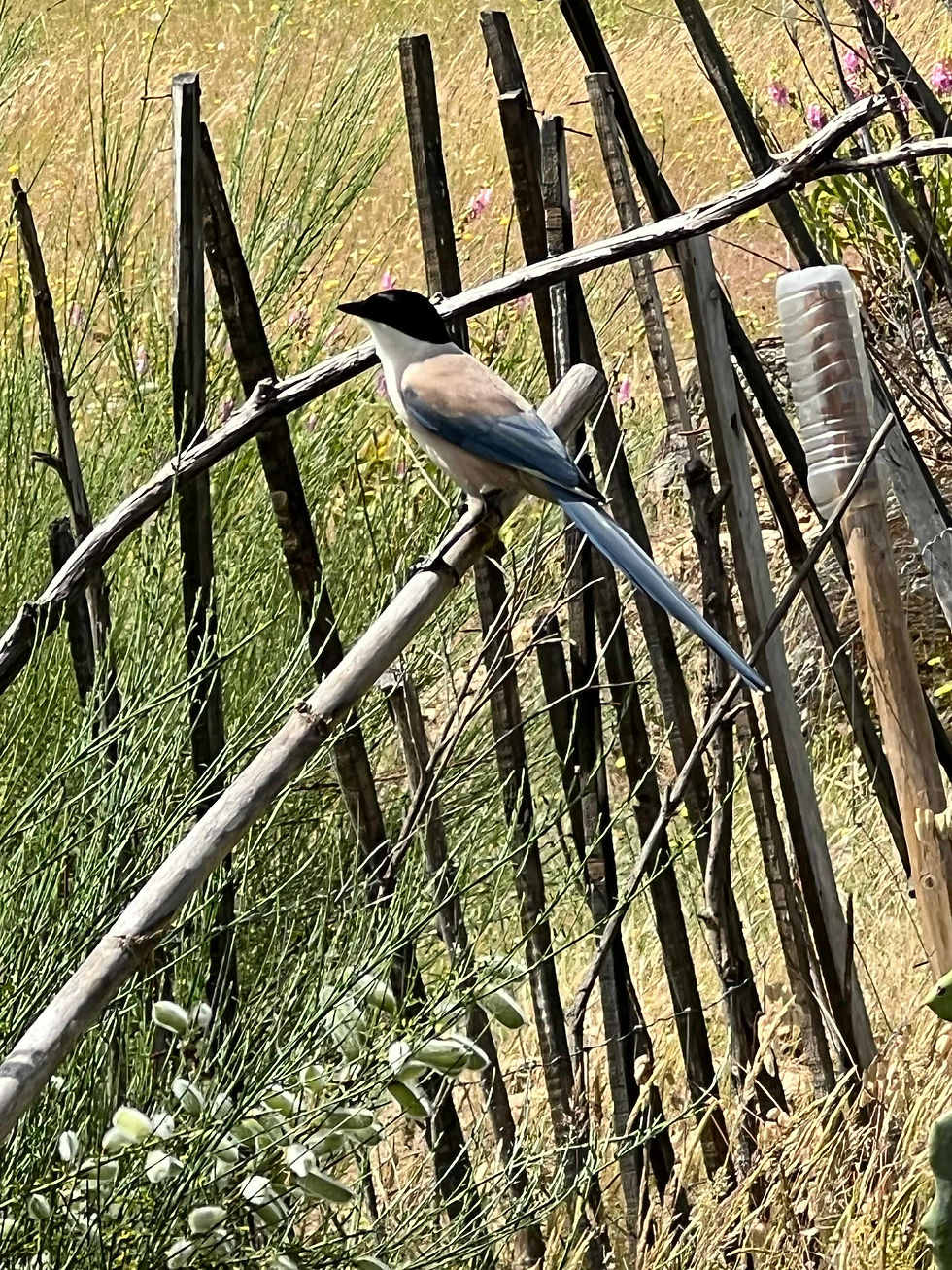
We noticed the Iberian magpies from our very first days on the land. Before many trees were planted, before irrigation lines stretched across the terraces, and before the greenhouse stood where it does now, these blue-winged neighbors were already here watching us from fence poles and dry branches like tiny feathered supervisors.
Today we see them every single day. Usually not alone either. Iberian magpies move through our Quinta in noisy family flocks, gliding from tree to tree, stopping on posts to scan for insects, then suddenly launching off together again like a coordinated patrol. Toward evening, larger groups often travel across the upper part of our land on their way to communal roosting or nesting areas.
For homesteaders, they are fascinating neighbors. They help reduce insect populations, spread seeds, and add life and movement to the landscape. At the same time, local neighbors warn us that they absolutely love ripe fruit. Cherries, persimmons, and figs seem especially high on the menu once harvest season begins.
If you enjoy learning about the intelligent birds that share Mediterranean gardens and orchards, check out the Recommended Books & Resources section further down. A good field guide and bird ID app quickly turn “that blue bird over there” into a much deeper understanding of the wildlife community living around your home.
Quick Facts At A Glance
Characteristic | Information |
Common Name | Iberian Magpie / Azure-winged Magpie |
Scientific Name | Cyanopica cooki |
Size | Around 31–35 cm long; approx. 65–85 g |
Activity Pattern | Diurnal (active during the day) |
Typical Diet | Insects, fruits, seeds, berries, small invertebrates |
Predators (Portugal) | Hawks, owls, domestic cats, martens |
Predators (General) | Raptors, snakes, mammals, corvid competitors |
Preferred Habitat | Open woodland, orchards, olive groves, farms, gardens |
Human Risk Level | Very low |
Role On Our Homestead | Insect hunter, seed disperser, fruit thief, ecosystem observer |
How To Recognize Iberian Magpie On A Mediterranean Homestead
Visual ID
The Iberian magpie is one of the easiest birds to recognize once you have seen it properly. The body is pale grey-beige with a glossy black cap and throat, while the wings and especially the long tail shine with a soft azure-blue coloration that becomes striking in sunlight.
Their tail is long and elegant compared to many garden birds, giving them a balanced, slightly acrobatic appearance during flight. Juveniles look similar to adults but often appear duller and fluffier.
On our land, they commonly perch upright on fence posts, irrigation poles, dead branches, and the tops of young trees before dropping suddenly toward the ground to grab insects.

Sounds & Behavior
Iberian magpies are highly social birds. They chatter constantly with nasal calls, squeaks, and soft rattling sounds while moving together through the landscape. A silent Iberian magpie flock would honestly feel strange.
One of the most interesting things we observed involves territorial behavior from other birds. A male blackbird repeatedly chased and “attacked” Iberian magpies near the upper part of our land, likely protecting nesting territory or warning them away from vulnerable chicks.
Their intelligence is obvious. They watch movement carefully, often keeping a safe distance from humans while still remaining curious enough to observe garden work from nearby perches.
Tracks, Droppings & Other Signs
Tracks are usually difficult to notice unless the soil is soft after rain. Like most perching birds, they leave three forward-facing toes and one backward toe.
Droppings are medium-sized, often white and dark mixed together, commonly found beneath favorite fence posts, roosting branches, or feeding sites. As always, wash hands after cleaning bird droppings or handling outdoor surfaces beneath nesting areas.
One clear sign of Cyanopica cooki activity on a homestead is noisy group movement through fruit trees during ripening season. Missing figs or pecked cherries may sometimes reveal their presence before you even spot the flock.
Where Iberian Magpie Lives: Portugal and Beyond
The Iberian magpie is native to the Iberian Peninsula and is widespread across Portugal and Spain. It thrives especially well in Mediterranean-style landscapes with scattered trees, open woodland, orchards, olive groves, and mixed agricultural land.
Interestingly, the species was once grouped together with the Asian Azure-winged Magpie, but modern research separated the Iberian population into its own species: Cyanopica cooki.

Globally, its range is relatively limited compared to many other corvids, which makes spotting them feel even more special for visitors unfamiliar with Iberian wildlife.
On our land, we see them throughout the entire year. Mornings often begin with small groups flying low over the terraces, while evenings bring larger family flocks crossing the property toward their nesting or communal resting areas.
What Iberian Magpie Eats (And What Eats Iberian Magpie)
Diet
Iberian magpies are opportunistic omnivores. In practical homestead language, that means they eat whatever seems useful, available, and worth stealing.
Their diet includes:
Beetles
Grasshoppers
Caterpillars
Spiders
Seeds
Acorns
Berries
Figs
Cherries
Persimmons
Small fruits
Occasionally eggs or tiny nestlings
On our Quinta, we frequently observe them hunting insects from elevated lookout points. Fence posts and dead branches act like tiny hunting towers. They watch carefully, then swoop down quickly toward the grass or soil surface before returning to another perch.
During fruit season, however, the relationship becomes slightly more complicated.
Neighbors warned us almost immediately: “The magpies will find your figs before you do.”
Predators & Threats
Natural predators in Portugal include hawks, owls, martens, snakes, and domestic cats. Nest predation also occurs from other corvids and mammals.
Human-related threats include:
Habitat simplification
Pesticide use reducing insect populations
Loss of nesting trees
Road traffic
Persecution around commercial orchards
Despite this, the species remains relatively adaptable in mixed rural landscapes where old trees, open foraging areas, and water remain available.
Living With Iberian Magpie On An Off-Grid Homestead
Like many intelligent birds, Iberian magpies sit in the “helpful but occasionally annoying” category.
Helpful Roles
Their biggest benefit on our land is likely insect control. We regularly see them hunting beetles, larvae, and grasshoppers around the terraces and open soil areas.

They also contribute to broader ecosystem functions:
Seed dispersal
Cleaning up scraps and fallen fruit
Supporting predator-prey balance
Acting as wildlife indicators for healthy mixed habitat
And honestly, they simply make the land feel more alive.
Potential Issues
Fruit theft is the obvious downside. As our fig trees, persimmons, and future cherries mature further, we fully expect competition to increase. Large family flocks can strip surprisingly large amounts of ripe fruit in a short period of time if trees are left completely unprotected.
Their vocal nature can also become noisy near nesting sites.
Practical Coexistence Strategies
On our Mediterranean homestead, peaceful coexistence seems very achievable.
We currently focus on:
Planting extra wildlife-friendly species to reduce pressure on single crops
Harvesting ripe fruit promptly
Accepting some “wildlife tax”
Maintaining diverse habitat instead of sterile landscaping
Providing water sources during summer drought
Future strategies may include lightweight netting over selected fruit trees during peak ripening periods, especially for cherries.
At the same time, we try to remember something important: these birds were here before many of our planted trees existed. In a way, we are newcomers negotiating shared use of the landscape.
Herman’s Tough Kraut Field Notes: Wild Neighbors Edition – Cyanopica cooki
Once you start noticing Iberian magpies regularly, troubleshooting and FAQ-style questions appear surprisingly fast, especially once fruit trees enter the picture.
Here are the most common ones we hear from neighbors and ask ourselves.
Q: Are Iberian magpies dangerous to chickens or pets?
A: No. Healthy chickens, cats, and dogs are far too large to be considered prey. They may occasionally steal feed scraps or investigate eggs if given the opportunity, but they are not predators of adult poultry.
Q: Why do they always sit on fence posts and branches?
A: Elevated perches give them visibility for hunting insects and watching for predators. On our land, they use poles and branches almost like observation towers.
Q: Will they destroy all our fruit harvests?
A: Usually not, but they can definitely reduce yields if trees are small or heavily exposed. Early harvesting, netting, and planting abundance rather than scarcity all help reduce conflict.
Q: Why was a blackbird attacking the magpies?
A: Territorial defense is the most likely explanation. Blackbirds often aggressively chase larger birds away from nests or feeding territories during breeding season.
Q: Can we attract Iberian magpies intentionally?
A: If you maintain mixed habitat with trees, open ground, insects, and water, they will probably arrive on their own. Whether you actively want more of them may depend on how much you love your figs.
Recommended Books and Resources
Books
The Magpies: The Ecology and Behaviour of Black-Billed and Yellow-Billed Magpies by Tim Birkhead
While focused on related magpie species, this book offers fascinating insights into corvid intelligence, social structure, and family behavior that strongly overlaps with Iberian magpies.
Resources
Merlin Bird ID App
Probably the single best free bird identification tool for homesteaders. Sound ID is especially useful when magpie flocks are calling from trees before becoming visible.
If you enjoy wildlife-friendly gardening and practical off-grid observations from Central Portugal, you can also explore our broader collection of field-tested tools and homestead resources over at Tough Kraut Resources.


Comments