
Mediterranean Fire-Resistant Landscaping: Safe & Sustainable Plant Choices

Updated: May 11
Summer in the Mediterranean can feel like standing on a barbecue plate. Smoke drifts across clear skies. Heatwaves push daytime highs past 40 °C (104 °F). Wildfires now strike places that never saw flame before. Along our upper fence line, prickly pear (Opuntia ficus-indica) forms a living barrier every season. You can turn your garden into a living shield too.

Read on, then check out Herman’s Tough Kraut Fixes at the end for quick-fire troubleshooting.
Foundations of Firewise Landscaping
What Is Firewise Design?
Firewise design zones your property into concentric layers: the home zone (0–5 m), the approach zone (5–30 m) and the wild zone beyond. Each ring uses plant choice and hardscape to slow or stop flames.
Mediterranean Climate & Wildfire Trends
Hot, dry summers—combined with stronger winds—mean fires spark more often. Even coastal orchards and hillside vineyards now face risk. Climate shifts push flames into new territory.
Why Plant Choice Matters
Every species has a flammability rating based on leaf moisture, oil content and growth habit. Choosing low-fuel plants with high moisture content not only resists ignition but supports local wildlife and reduces irrigation needs.
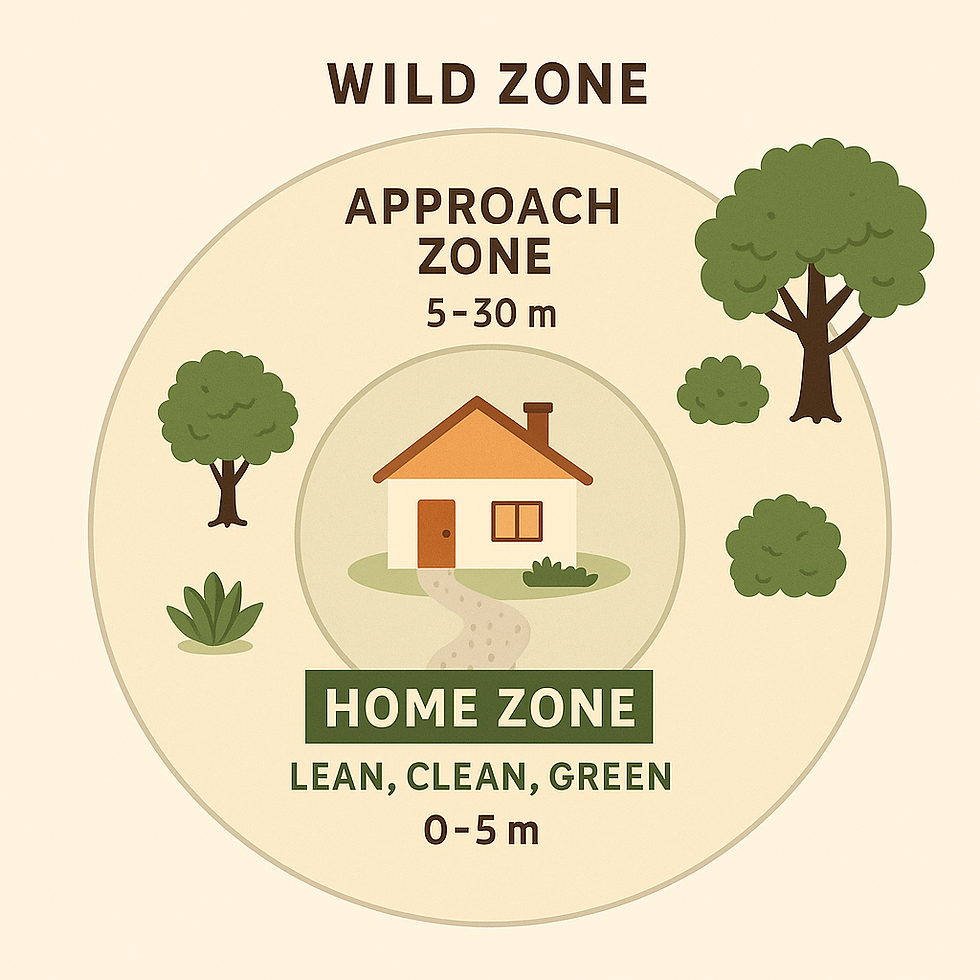
Firewise Design for Mediterranean Fire-Resistant Landscaping
Defensible Spaces
Create a 0–5 m “lean, clean, green” buffer around structures.
Remove dead wood, dry leaves and low-lying branches.
Layering & Placement
Place low-flammability, high-moisture plants closest to the house.
Use succulent groundcovers and gravel paths as breaks.
Hardscape Integration
Incorporate stone walls, patios and gravel driveways to interrupt fire spread.
Tough Tip: On a tight budget, swap costly pavers for crushed stone. It reflects heat and looks rustic.
Plant Selection for Safety & Sustainability
All these species thrive on minimal water once established. Cork Oaks and Olive trees are legally protected in Portugal—so plant with care and follow local guidelines.
Prickly Pear (Opuntia ficus-indica)
Succulent pads are up to 90 % water by weight, so they resist flaming and embers stall at this moist barrier.
Olive (Olea europaea)
A protected tree in Portugal, olives have leathery, moisture-rich foliage that slows flame spread. To honor their status—and maximize safety—plant them in your Approach Zone (5–30 m from structures), prune annually to remove dead wood, and keep irrigation steady so leaves don’t dry out.
Cork Oak (Quercus suber)
Also protected locally, cork oaks boast up to 20 cm of fire-insulating bark and epicormic resprouting after fires. Place mature cork oaks in the Outer Wild Zone (beyond 30 m) and underplant with low-fuel groundcovers to prevent ladder fuels from reaching the canopy.

Cistus & Phlomis
Low-resin Mediterranean shrubs that bloom with little water, ideal for filling gaps in your lean, clean, green buffer.
Agapanthus, Rosemary & Sage
Aromatic perennials whose dense, leathery leaves hold moisture and burn slowly, making them excellent filler in the Home Zone.
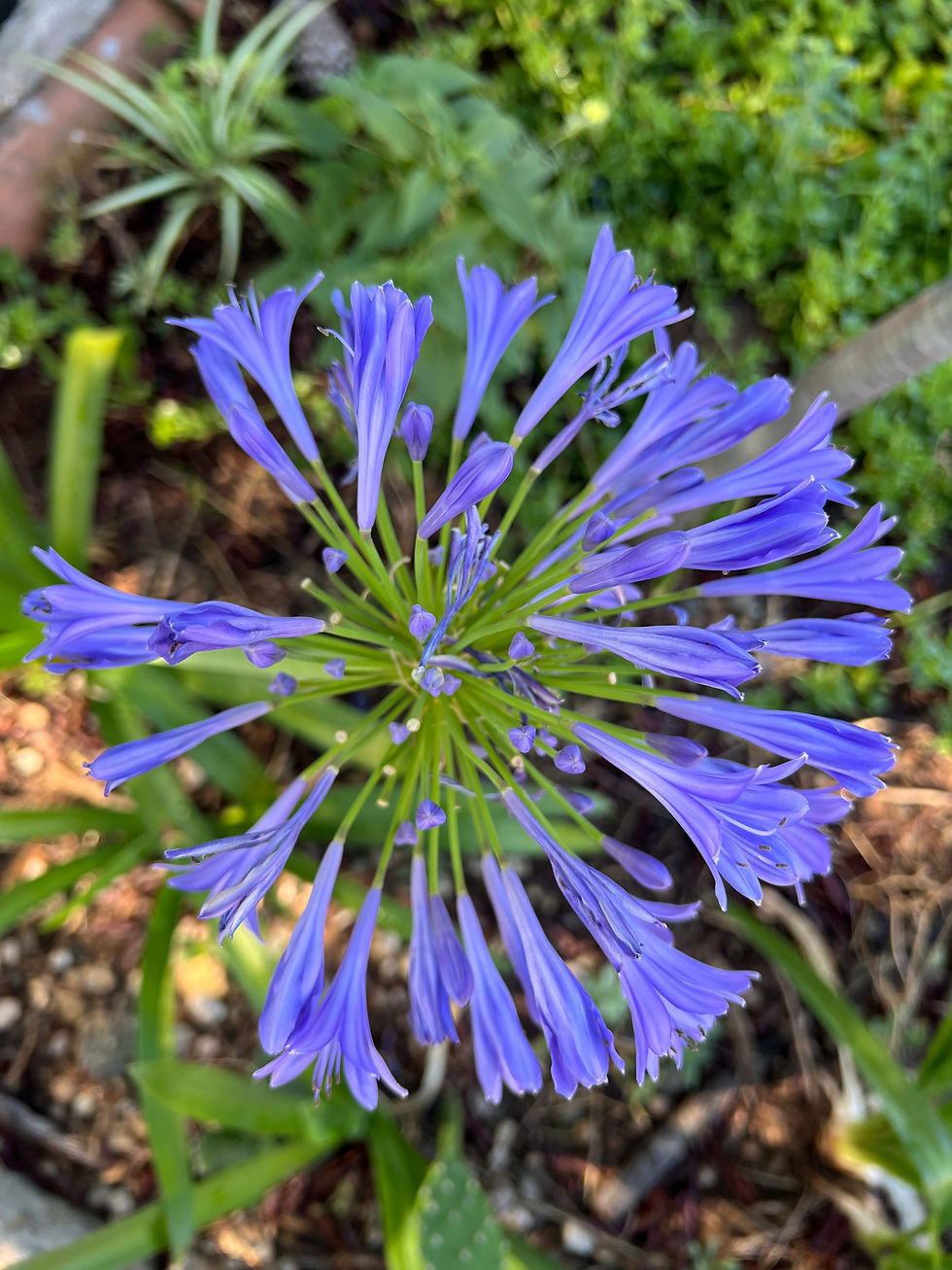
Santolina, Arbutus & Myrtle
Compact evergreens that create living walls; their foliage resists ignition and stands up to drought.
Mix heights and textures for year-round interest: a carpet of rosemary under the shade of a young cork oak, for instance, pairs protection with beauty. Always check local regulations before planting protected species, and consider consulting a forestry technician for permitting and best practices.
Maintenance for Fire Safety
Pruning & Thinning
Trim annually in spring. Remove dead or diseased branches.
Keep trees limbed up so lower branches sit at least 1 m off the ground.
Irrigation Strategies
Use drip irrigation to focus water at the root zone.
Adjust schedules: weekly in dry months, monthly in winter.
Mulch & Groundcovers
Choose non-flammable options like decomposed granite or crushed rock.
Avoid thick bark mulch near structures.
Debris Management
Clean gutters and roofs of leaves and needles every autumn.
Store firewood at least 10 m from buildings.
Underground Water Lines
Bury all irrigation and domestic water pipes below the frost line.
Shielding them from radiant heat ensures you retain water flow when you need it most.
Tough Tip: Create a summer-long checklist in your phone: prune, clear, inspect. Tick tasks as you go.
Build a Living Firewall
Mediterranean fire-resistant landscaping isn’t about eliminating every ember. It’s about stacking the odds in your favor. With thoughtful design, smart plant choices and steady upkeep, your property becomes a living firewall. You’ll gain peace of mind—and a garden that thrives on minimal inputs.
Join the Kraut Crew for more hands-on guides and community support. Together, we’ll build resilience—one prickly pear at a time.
Herman’s Tough Kraut Fixes: Common Fire-Resistant Landscaping Challenges
Every mediterranean fire-resistant landscaping plan hits a few bumps, but with these Troubleshooting FAQs you’ll be ready to tackle them head-on. Drawing from our off-grid life in central Portugal—where we’ve weathered summer fires and built our living firewall—these fixes come straight from the Tough Kraut playbook. They’re practical, field-tested, and tailored for self-sufficiency.
Got a question I missed? Leave a comment below, and the Kraut Crew will dive in to help!
Q: Why are my Opuntia pads rotting at the base?
A: Too much moisture. Lift pads onto a 5 cm bed of coarse gravel and switch to deep soaks every two weeks. This sheds excess water and strengthens drought tolerance.
Q: How do I clear “deadwood overload” under olives?
A: Each spring, prune twigs thinner than your thumb, sweep up fallen debris, and stack branches at least 10 m from structures.
Q: What’s the best non-flammable mulch?
A: Use a 5 cm layer of crushed stone or gravel. It suppresses weeds, retains moisture, and won’t ignite.
Q: How can I shield irrigation pipes from embers and heat?
A: Bury all lines at least 30 cm below grade and run crossings through PVC conduit for extra protection.
Q: Why does rosemary scorch in midsummer?
A: Overfertilizing pushes soft growth that burns. Cut back feeding, mulch with granite grit, and let deep roots do the work.
Recommended Books & Resources
Books
Gardening the Mediterranean Way: How to Create a Waterwise, Drought-Tolerant Garden by Heidi Gildemeister
A clear, practical guide to selecting and caring for drought-tolerant species in sunny, dry climates—packed with planting schemes, soil prep tips, and month-by-month care.
Firescaping: Protecting Your Home with a Fire-Resistant Landscape, 2nd Edition by Douglas Kent
Step-by-step strategies for designing defensible space, choosing low-fuel plants, and integrating hardscape features to slow or stop wildfire spread around your property.
Mediterranean Landscape Design by Louisa Jones
Focuses on authentic Mediterranean garden styles, covering site analysis, planting design, materials selection, and water-wise practices—ideal for achieving both beauty and fire resilience.
Resources
Exemplary Gardens Thorn-Proof Goatskin Gauntlet Gloves
Made from 100% natural premium goatskin leather, these gloves offer superior puncture resistance and flexible dexterity for handling roses, cacti, and other thorny plants. The extended suede cuffs protect forearms from scratches and are fully biodegradable at end of life.
OZERO 100% Cowhide Leather Work Gloves
Crafted from genuine cowhide leather with reinforced double-stitched seams, these gloves deliver heavy-duty protection for landscaping, brush hauling, and wood splitting. Their natural breathability and sweat-wicking properties ensure comfort without any synthetic linings.
COOLJOB “Think Green” Recycled Gardening Gloves
These gloves repurpose post-consumer plastic bottles into a durable, GRS-certified polyester shell with a micro-foam latex palm for firm grip and puncture resistance. Packaged in biodegradable materials, they offer an eco-friendly solution for everyday pruning, digging, and debris clearing.
Tough Kraut Resources
Our go-to hub for gardening tools, apothecary staples, compost systems, and books that fuel practical self-reliance.


Comments