
October Mediterranean Garden Tasks: Essential Garden Maintenance

October isn’t a time to hang up your garden gloves—it’s the month that quietly decides how well your garden will bounce back next spring. Mediterranean climates reward those who keep tending, mulching, pruning, and fine-tuning when others are winding down.
By now, your summer crops have bowed out, your soil is thirsty for organic matter, and your irrigation system probably deserves a check-up. These are the October Mediterranean garden tasks that strengthen your ecosystem through winter—keeping roots warm, moisture balanced, and microbes fed.

If you’ve already planned your plantings with our seasonal guides—like October Mediterranean Perennials Guide: Shrubs & Trees to Plant Now, October Vegetable Planting: Mediterranean Cool-Season Crops, and October Polytunnel & Greenhouse Gardening: Winter Crop Planning—then this post is your next step. Think of it as the bridge between planting and long-term success.
Here at Tough Kraut, we believe resilience is built in the “in-between” months. A bit of mulch, a careful prune, a fixed drip line—it all adds up to less work, less water, and healthier soil when the rains arrive.
Ready to get practical? Keep reading for my field-tested maintenance rituals that turn October into your garden’s reset button. When you’re done, scroll down for Herman’s Tough Kraut Fixes—your go-to Troubleshooting + FAQ section for common October garden challenges—and check out the Recommended Books & Resources for trusted tools and seasonal reads that keep your garden thriving year-round.
Why October Mediterranean Garden Tasks Matter More Than You Think
Mediterranean climates play tricks on new gardeners. The sun is still warm, the days feel forgiving, and weeds keep pushing through as if summer never ended. But underground, the story is changing.October is when soil biology wakes up again after the dry spell. The first rains spark a surge of microbial life, root activity, and nutrient exchange—the perfect time to build fertility, not ignore it.
In regions like coastal Portugal, southern Spain, or California’s inland valleys, autumn isn’t the garden’s finale—it’s the quiet start of the next growing cycle. These October Mediterranean garden tasks bridge the gap between exhaustion and renewal: adding mulch, balancing water, pruning smartly, and capturing rainfall before winter arrives.

Each of these jobs reinforces the same permaculture truth: small seasonal habits compound into long-term resilience. Healthy soil stores more carbon and moisture. Well-pruned herbs grow tighter and live longer. Clean irrigation lines mean fewer headaches when summer heat returns.
If you’ve followed along with our planting-focused October guides—like What to Plant in October: Complete Mediterranean Garden Guide (Zones 8–11) or October Polytunnel & Greenhouse Gardening: Winter Crop Planning—this is where those plans meet practice.
This post adds the maintenance layer: the work that keeps everything you planted alive, balanced, and ready for another burst of growth come spring.
Rebuild the Soil – The Power of Autumn Mulching
When the summer beds fade, it’s tempting to leave them bare until spring. But that’s exactly when Mediterranean soil starts losing moisture, organic matter, and structure. The simplest and most powerful of all October Mediterranean garden tasks is spreading mulch—a quiet act that protects the invisible world beneath your feet.
Autumn is mulch season. Cooler temperatures mean slower decomposition, giving organic material more time to break down gently through winter rains. A 5–7 cm (2–3 in) layer locks in moisture, suppresses weeds, and shelters microbes ready to burst into activity after the first showers.
If your garden survived another dry summer, this is your moment to give back. Use whatever’s locally available—shredded leaves, straw, pine needles, or chipped prunings. Even rough compost will do. On my own land, I start by layering mulch around young trees and perennials first, then move to vegetable beds once the last harvests are cleared.
Mulching now also sets the stage for better water infiltration once the rains return. You’ll lose less to evaporation and build more structure with every season. Think of it as passive irrigation insurance—each wheelbarrow of mulch buys time and resilience.
Tough Tip: Keep mulch a few centimeters away from stems and trunks to prevent rot, and always water the soil before mulching. Dry soil under dry mulch is like putting a blanket over an empty bed—comfortable, but not useful.
Pruning with Purpose – Herbs, Shrubs, and Restraint
October tempts every gardener to grab the shears. After all, Mediterranean herbs like rosemary, thyme, and sage look tired after the summer heat. But this is the season for selective pruning—not full makeovers.Done right, it’s one of the smartest October Mediterranean garden tasks for keeping plants compact, healthy, and storm-ready.
Start with the woody herbs. Trim back spent flower stalks on rosemary and lavender, cutting only into the soft, green growth. This encourages denser branching and better airflow through winter.If you grow Mediterranean shrubs such as cistus, santolina, or euphorbia, lightly shape them to prevent sprawling, but don’t cut deep into old wood—it rarely regrows.

Avoid touching frost-sensitive plants like lemon verbena, basil, or young citrus. Pruning stimulates new growth that can be damaged by cold nights ahead. Wait until late winter or early spring for those.
By pruning thoughtfully, you’re not just shaping plants—you’re directing energy. October pruning builds strength and airflow without forcing new growth, helping herbs stay compact and vibrant through the damp months ahead.
Tough Tip: Step back after every few cuts. It’s easy to overdo it. In Mediterranean climates, less is more—especially before unpredictable cold snaps. Patience grows better results than shears ever will.
Leaf Gold – Turning Autumn Litter into Garden Treasure
Autumn leaves are nature’s version of free organic matter. Yet every year, countless gardeners bag them up and send them away—like tossing out next season’s fertility. Here at Tough Kraut, we treat fallen leaves as what they truly are: leaf gold.

Among all October Mediterranean garden tasks, this one delivers the highest return for the least effort. Rake leaves from paths and patios, but never waste them. Dry leaves can be shredded and added to compost piles as a perfect “brown” carbon source. Mix them with your kitchen scraps, and you’ll balance nitrogen levels beautifully.
For quick wins, spread them straight onto garden beds as a loose mulch layer. Leaf litter softens rainfall impact, slows evaporation, and feeds earthworms through the cooler months. If you’re in a windy area (like much of rural Portugal), weigh the edges down with small branches or a sprinkle of compost to keep them in place.
On our own land, we pile the year’s leaf litter beneath fruit trees, where it forms a natural carpet that breaks down just in time for spring bloom. By spring, what started as clutter becomes humus-rich soil—a quiet transformation powered by patience, rain, and microbes.
Tough Tip: Use your mower or string trimmer to shred thick leaves like oak or plane. Smaller pieces decompose faster and are less likely to mat down and block airflow. In a pinch, even running over them with your wheelbarrow does the job.
Water Wisdom – Inspect, Repair, and Prepare for Rain
Water is the heartbeat of every Mediterranean garden, and autumn is the best time to tune that system before winter rains test it. Among all October Mediterranean garden tasks, this one might save you the most frustration (and leaks) later on.
Start with a slow walk through your irrigation setup. Check emitters for clogs, hoses for cracks, and fittings for leaks. Dry summers can warp plastic lines or loosen connections, especially if they’ve been baking in full sun. Flush the system with clean water, then reset timers for shorter, deeper watering intervals suited to cooler temperatures.
If you use gravity-fed systems or IBC totes like we do, clean the filters and inspect outlet valves for sediment buildup. Rain will soon refill your tanks, so this is your window to make sure everything flows freely.
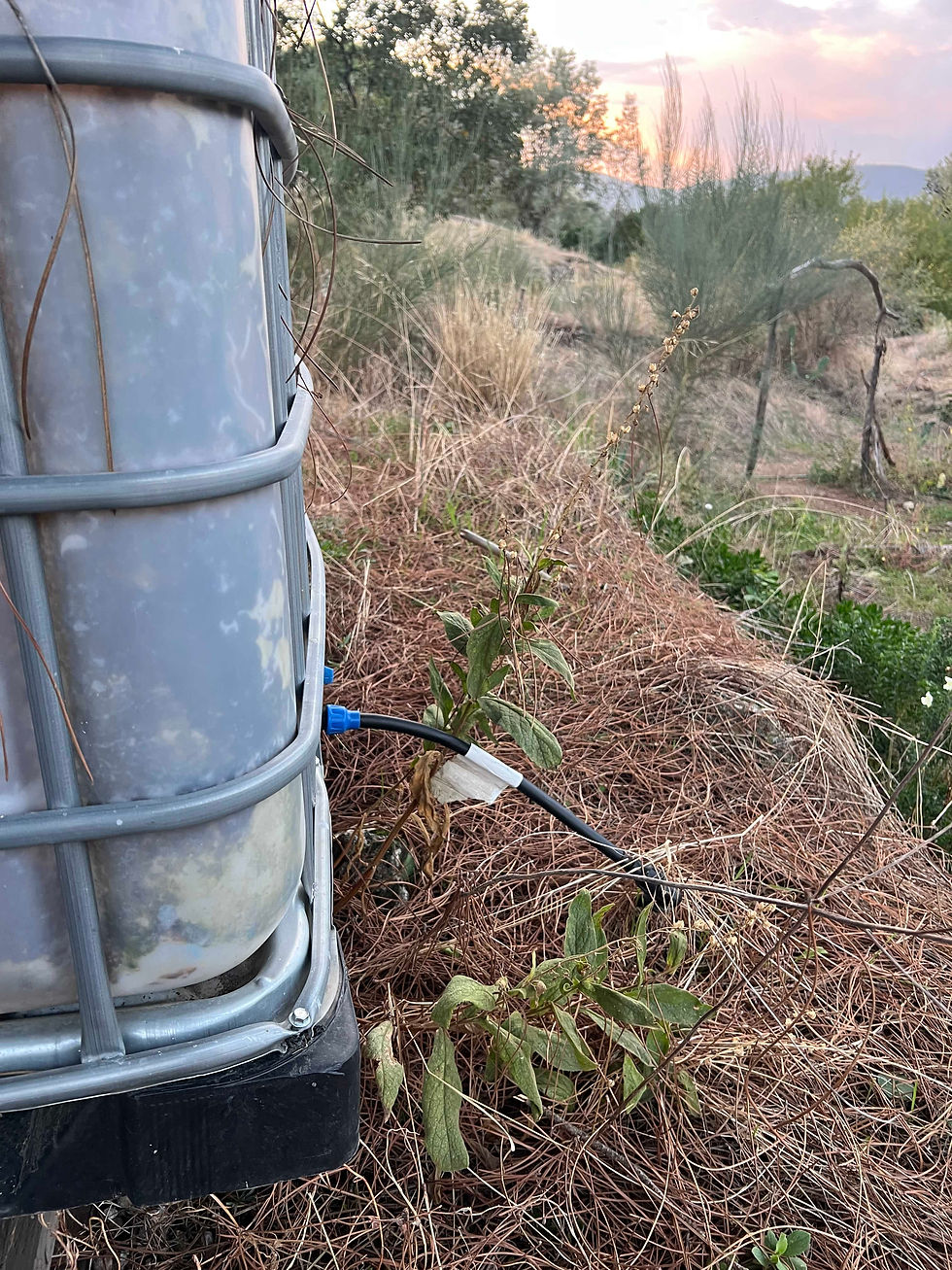
October is also the month to rethink where water goes once it hits the ground. Direct overflow from barrels into swales, trenches, or tree basins to recharge the soil. Every drop you slow, spread, and sink now reduces the need for irrigation next summer.
With systems inspected and storage ready, you’ll step into the rainy season prepared—not patching problems in the mud, but celebrating every storm as part of your garden’s cycle.
Tough Tip: Use a bucket to test your rainwater collection rate. One square meter of roof can yield roughly 1 liter of water per millimeter of rainfall. Even a small shed roof can fill a 200-liter barrel during a single autumn storm. Once you see the math, rain feels less like weather and more like opportunity.
Small October Habits, Big Spring Rewards
October may look quiet above the soil, but it’s one of the busiest months beneath it. Every wheelbarrow of mulch, every careful prune, every repaired hose sets the foundation for abundance next season. These October Mediterranean garden tasks aren’t chores—they’re investments.
In Mediterranean climates, gardening success isn’t won in spring. It’s built right now, in the cool calm of autumn. Whether you’re spreading leaf mulch, trimming herbs, or flushing irrigation lines, these small rituals stack resilience into your landscape layer by layer.
As someone who’s watched dry ground come back to life, I can tell you this: consistency outperforms perfection. The gardens that thrive here aren’t the ones with the fanciest tools—they’re the ones cared for with steady, seasonal attention.
So, take a walk through your garden today. Feel the soil, notice the shifts, and start your maintenance round. The work you do this month will repay you with stronger plants, richer soil, and fewer surprises when summer returns.
Ready to keep your garden thriving through every season?
Join the Kraut Crew—our growing community of resilient gardeners and off-grid learners. Members get early access to new guides, seasonal checklists, and practical insights from real life on the land.
Together, we’re proving that with the right knowledge, persistence, and mulch—any patch of land can grow tough.
Herman’s Tough Kraut Fixes: October Garden Troubleshooting & FAQ
Even the best-laid October plans can hit a snag. Here’s a quick Troubleshooting FAQ for common challenges Mediterranean gardeners face when tackling their autumn maintenance rounds.
Q: My mulch keeps blowing away. What can I do?
A: Windy Mediterranean sites can strip bare soil fast. Shred materials finer and water them in lightly after spreading. If gusts persist, use small branches, wood chips, or compost to weigh down lighter straw. Over time, heavier mulch layers knit together naturally and stay put.
Q: I’m unsure how much to prune without hurting the plant.
A: If you’re pruning herbs like rosemary or thyme, focus only on green, flexible stems—never cut into the hard wood. When in doubt, prune less. You can always shape again in spring. Over-pruning before frost weakens plants just when they’re trying to rest.
Q: Can I compost leaves from oak or eucalyptus trees?
A: Yes, with patience. Shred them first and balance them with nitrogen-rich materials like grass clippings or veggie scraps. Eucalyptus leaves decompose slower, so mix them sparingly. If you’re short on time, use them as a surface mulch under hardy trees.
Q: My irrigation lines leak, but I can’t find where.
A: Flush the system section by section. Listen for hissing sounds and inspect connections after running water through. Tiny pinholes often appear where hoses kink in summer heat. Replace brittle sections and use hose repair connectors—they’re inexpensive and save entire runs of tubing.
Q: How do I know if I’m watering too much after the rains start?
A: Check soil moisture 10 cm (4 in) below the surface. If it’s still damp from the last rain, hold off. Mediterranean soils need oxygen as much as water. Overwatering after autumn storms suffocates roots and encourages fungal growth.
Recommended Books & Resources
Books
The Dry Gardening Handbook by Olivier Filippi
The Mediterranean classic. Practical design, plant choices, and waterwise maintenance that match Portugal, Spain, and California conditions. Great context for why autumn prep matters.
Mediterranean Gardening: A Waterwise Approach by Heidi Gildemeister
A clear guide to water-smart planting and care. Useful when choosing what to prune, what to mulch, and how to reduce irrigation needs.
RHS Pruning & Training (DK) by Christopher Brickell
Step-by-step pruning for 800+ plants with photos. Ideal for your October light-shaping of herbs and shrubs without harming frost-tender growth.
Rainwater Harvesting for Drylands and Beyond, Vol. 1 by Brad Lancaster
Design-first approach to catching, slowing, and sinking rain. Perfect companion to your irrigation inspection and barrel setup this month.
Resources
EarthMinded FlexiFit Downspout Diverter Kit
A simple diverter that feeds a barrel without overflow mess. Easy DIY install for small roofs and sheds.
Raindrip Drip Irrigation Fix-It Kit
A compact repair box with connectors and plugs. Fast fixes for cracked lines and leaky joints after a long, hot summer.
Boogie Blue Plus Garden Hose Filter
Reduces chlorine and chloramine at the hose. Kinder water for soil life, compost teas, and seedlings.
Tough Kraut Resources
Our trusted lineup of pruning tools, irrigation fix-its, and composting gear—tested, tweaked, and proven on real Portuguese soil.


Comments