
Rainwater Collection for Gardening: Sustainable Solutions for Homesteaders

Updated: Sep 8
Living off-grid on our Quinta, I’ve learned that every drop of water counts. When my wife MuDan and I moved to our off-grid property in 2022, we relied on a stone well and a few rain barrels and buckets to start our garden and keep the plants and trees alive. Rainwater collection isn’t just for rural homesteaders like us, it’s a game-changer for urban gardeners, suburban dreamers, and seasoned growers alike.
It saves money, nurtures your plants with chemical-free water, and helps the planet. Collecting rainwater isn’t just about watering plants; it’s about independence and resilience, freeing you from municipal water dependence and building a self-sufficient homestead.
Here’s how you can start collecting rainwater from your roof for your garden, with practical, detailed tips.
Rainwater vs. Municipal Water: Why It Matters
Rainwater isn’t just free, it’s often better for your garden. In addition, it empowers you to take control of your water supply, reducing reliance on public water systems that can fail during droughts or spikes in demand. Municipal water might also contain chlorine and fluoride, which can harm soil microbes over time. Rainwater, avoids these additives, delivering oxygen-rich water that plants love. However, roofs can collect dust, bird droppings, or pollutants, so you’ll need to filter it.
In our Mediterranean climate, rainwater collection saves us from relying solely on our stone well. For homesteaders, this is a step toward a resilient, independent future.
Tip 1: Optimize Your Roof Catchment
A 20-square-meter (215-square-foot) roof can collect 500 liters (130 gallons) from a 25 mm (1-inch) rain, enough to water a small garden for a few days in our region with an annual average rainfall of 850 mm (34-inches).
Why It Works
Roofs turn rain into a free resource. Choosing the right material and setup ensures clean, usable water for your garden.
How to Choose Roof Materials
Not all roofs are equal for rainwater collection. Galvanized steel, aluminum, clay tiles, or concrete tiles are safest, as they don’t leach harmful chemicals. Avoid asphalt shingles, which release petroleum-based compounds, treated wood shingles that leak preservatives, or lead-containing materials, which are toxic. In urban areas, any roof may collect airborne pollutants, so filtration is critical. I use a metal roof on my chicken coop, which gives cleaner runoff than my porch’s older tiles.
How to Do It
Install galvanized steel or PVC (least preferred) gutters with a 1 cm per meter slope for efficient flow.
Add a fine mesh screen over downspout inlets to block debris.
Our coop’s small roof feeds a few buckets directly, proving size doesn’t limit potential.
Tough Tip: Inspect your roof yearly for moss, rust, or debris. A quick scrub with a brush keeps my coop roof’s runoff clean, saving time on filtration.

Tip 2: Pick Practical Storage
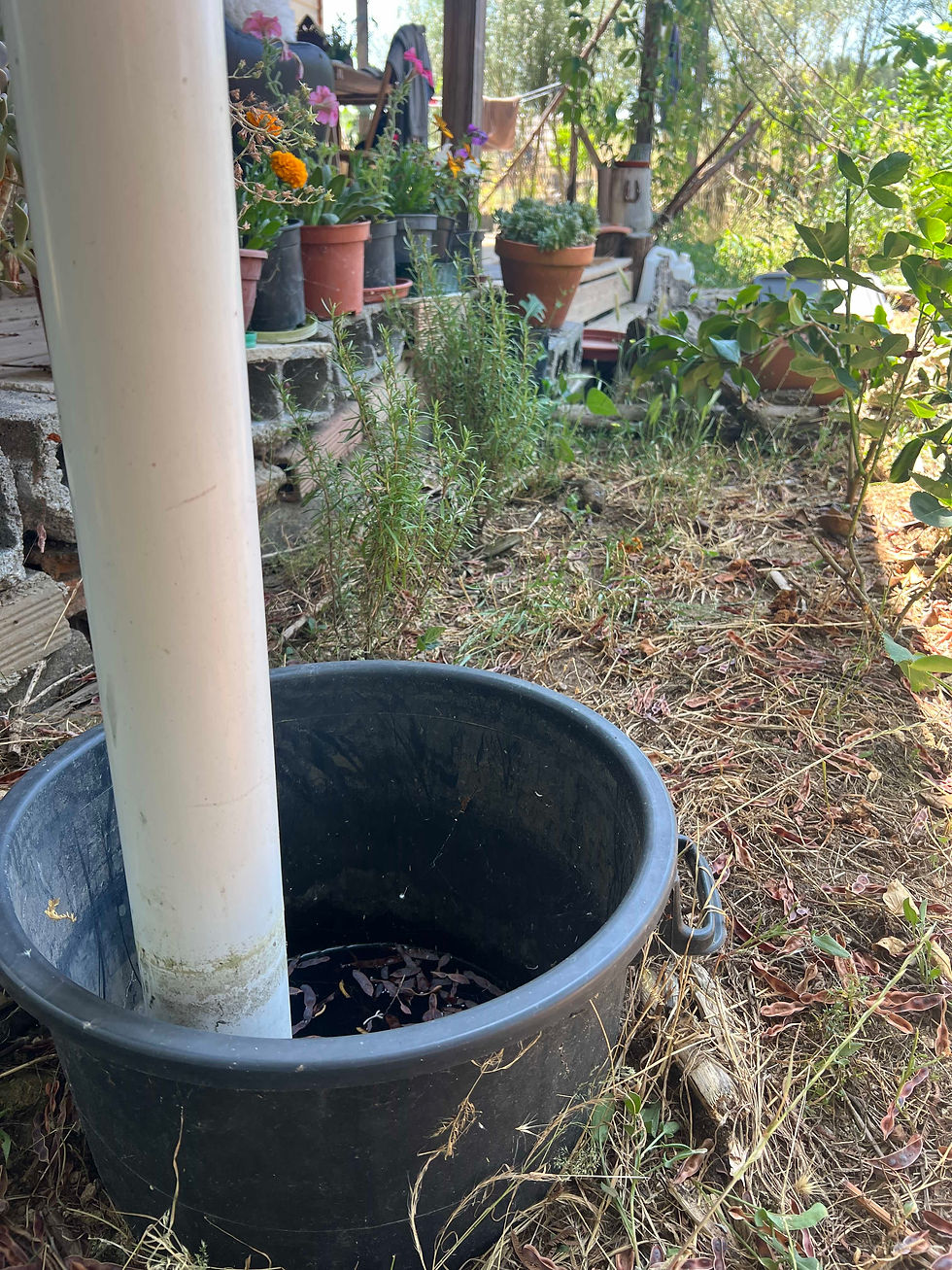
My grape harvest buckets are affordable, sturdy, and easy to dip into with a watering can. In addition, I am using IBC tanks to store water.
Why It Works
Cheap, food-grade storage makes rainwater collection accessible for any homesteader, from suburban plots to rural farms and properties.
How to Do It
Start with 50–100-liter (13–26-gallon) buckets for small gardens.
For larger homesteads, use 1,000-liter (265-gallon) tanks (€200–500, $250–600).
Seal lids tightly to keep out mosquitoes. I check my buckets monthly.
Tough Tip: Label buckets by source (e.g., “coop” or “porch”) to track quality. My porch buckets collect cleaner water than my coop’s dustier runoff.
Tip 3: Maximize Water Quality
Rainwater can carry pollutants like pesticides or dust, especially in suburban areas near industry.
Why It Works
Clean water protects your plants and soil. Filters and diverters remove contaminants for safe irrigation.
How to Do It
Install a first flush diverter (€20–50, $25–60) to discard the first 5–10 liters (1–2.5 gallons) of runoff.
Use a mesh or cloth filter at the bucket’s inlet, cleaning it monthly.
Test water with a €10–20 ($12–25) kit if you’re near urban zones.
Tough Tip: Scrub your roof before the rainy season. A brush and broom cleaned my porch roof, cutting sediment in my buckets.
Tip 4: Irrigate Efficiently
Smart irrigation saves water and time for busy homesteaders.
Why It Works
Drip systems or targeted watering deliver rainwater where plants need it, reducing waste and evaporation in hot climates like Portugal’s.
How to Do It
Connect a 100-liter (26-gallon) bucket to a drip system to irrigate a 20-square-meter (215-square-foot) garden for weeks.
Use a 5-liter (1-gallon) can for hand-watering herbs or seedlings.
Irrigate early morning or evening to minimize evaporation.
Tough Tip: Raise buckets and tanks at least 1 m (3 ft) on cinder blocks or pallets for gravity-fed drip pressure. This way I increased my garden’s watering efficiency.

Tip 5: Scale Up for Larger Systems
Expand your system to match your homestead’s goals.
Why It Works
Multiple catchments and overflow systems maximize water use for larger gardens or food forests.
How to Do It
Use every roof—sheds, garages, greenhouses—like my porch and coop setup.
Dig micro-catchments (basins) around trees to trap runoff for fruit trees.
Direct overflow to a rain garden to recharge soil and prevent runoff.
Tough Tip: Link buckets with PVC pipes to create a network. I have connected a row of IBC tanks for an increased storage capacity and easier distribution.
Tip 6: Plan Seasonal Storage
With 850 mm annual rainfall, Portugal’s dry summers require smart storage. We might see 6-8 months without a drop of rain.
Why It Works
Storing water for dry or wet seasons ensures a steady supply, supporting year-round gardening.
How to Do It
Stockpile extra buckets for wet seasons (October–March) to capture peak rainfall.
Add a 2,000-liter (530-gallon) tank for summer droughts. Bigger is better!
Cover tanks with shade cloth to prevent algae in heat.
Tough Tip: Rotate water in tanks every 3 months to keep it fresh. Stale water in an unused bucket taught me this lesson.
Tip 7: Stay Legal and Compliant
Why It Works
Following regulations avoids fines and keeps your system running smoothly. There are exceptions and regulations that vary significantly depending on location. Generally, it's legal to collect rainwater for personal use, especially for non-potable purposes like irrigation, but local laws may impose restrictions or requirements.
How to Do It
Check local laws, small systems are usually fine, but suburban areas may need permits.
Direct overflow pipes away from foundations to prevent flooding.
Plan for heavy rains above your average annual rainfall. Global weather events are getting more and more unpredictable and extreme.
Tough Tip: Contact your local council for rainwater regulations, exceptions or even subsidies to encourage rainwater harvesting.
Scaling Your System Over Time
Start small, but think big. A larger bucket can water a small herb garden today. Add buckets as your plot grows. In a year, a 1,000-liter tank can support a veggie patch. In five years, multiple roofs could feed a food forest, with overflow nourishing a rain garden. Each step builds independence and resilience, reducing your reliance on external systems. My coop buckets were just the start, now I’m planning gutters and a large tank to collect rainwater from our house roof to further secure our homestead’s future.
Start Collecting Rainwater Today
Rainwater collection is a practical, powerful step toward a resilient homestead. Rainwater is not just beneficial for your plants and garden, but it is also one of the safest water to drink.
My expanding system of IBC tanks and buckets keeps our garden green, and you can start just as small. Whether you’re a suburban family or a seasoned grower, every liter builds self-sufficiency.
Join the Kraut Crew newsletter for more homesteading tips, and share your rainwater setup with us on Instagram (@toughkraut)—we’d love to see it!
Herman’s Tough Kraut Fixes: Common Rainwater Collection Challenges
Every rainwater harvesting project has its challenges, but with these troubleshooting FAQs, you’re ready to tackle them! Drawing from my off-grid life in Portugal, where I manage rainwater collection on our homestead, here are answers to common questions to keep your system afloat. These fixes are straight from the Tough Kraut playbook, practical, tested, and built for self-sufficiency.
Got a question I missed? Leave a comment below, and the Kraut Crew will dive in to help!
Q: Why are my gutters clogged with leaves?
A: Leaves and debris can block water flow, especially after storms. Clean gutters before the rainy season and install leaf guards (€10–20, $12–25) to reduce maintenance. I clear my coop gutters twice a year to keep them flowing.
Q: Why am I collecting less water than expected?
A: Low yield often means leaks or misaligned gutters. Check for holes in gutters or buckets, and ensure gutters slope correctly (1 cm per meter). Adjusting my coop’s gutters boosted my collection by half.
Q: Why is my water murky or dirty?
A: Dirty water comes from roof debris or dust or sometimes simply organic particles in the air e.g. pollen). Install a finer mesh filter at your bucket’s inlet or clean your roof with a brush. Scrubbing my porch roof fixed murky runoff in my buckets.
Q: How do I stop mosquitoes breeding in my buckets?
A: Mosquitoes love standing water. Ensure buckets have tight lids, or add a teaspoon of vegetable oil to the water surface to suffocate larvae. I check my bucket lids monthly to keep pests out.
Q: What if I don’t have enough water for my garden?
A: If your garden’s still thirsty, your system may be too small. Add more buckets or upgrade to a 1,000-liter (265-gallon) tank. Doubling my buckets got me through Portugal’s dry summers.


Comments