
Can a Solar Air Conditioner Really Run Off-Grid? A Practical Guide for Small Homes and Cabins

Running an air conditioner off solar sounds like the dream. Cool air, no grid, no bill.
Reality is a bit different.
Most people either build a system that is far too expensive… or one that simply cannot keep up when the heat hits.
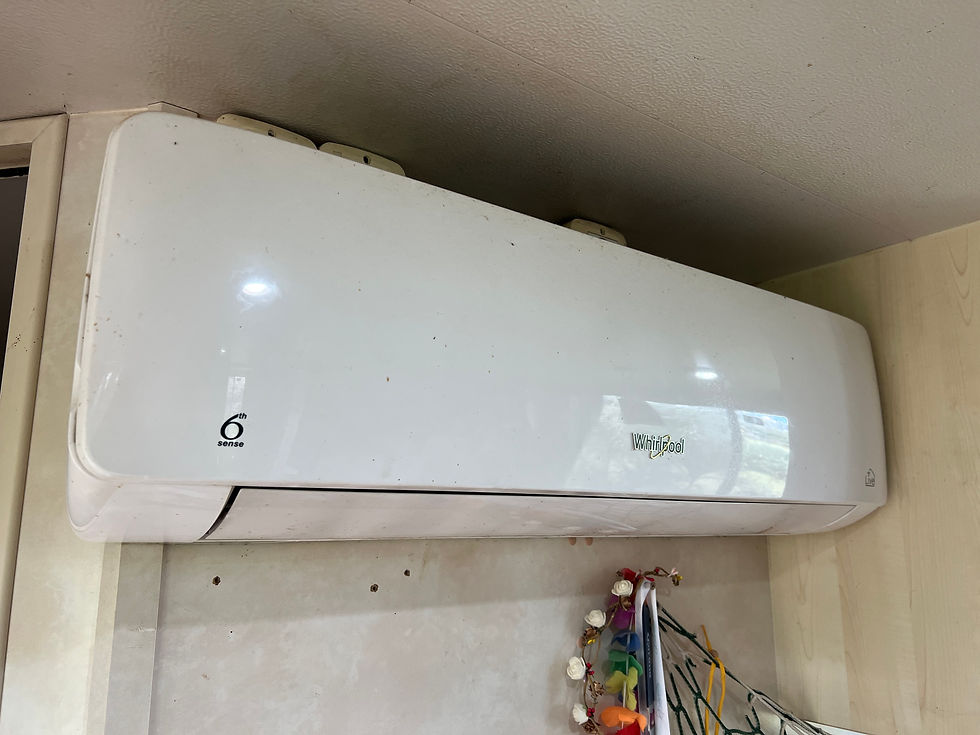
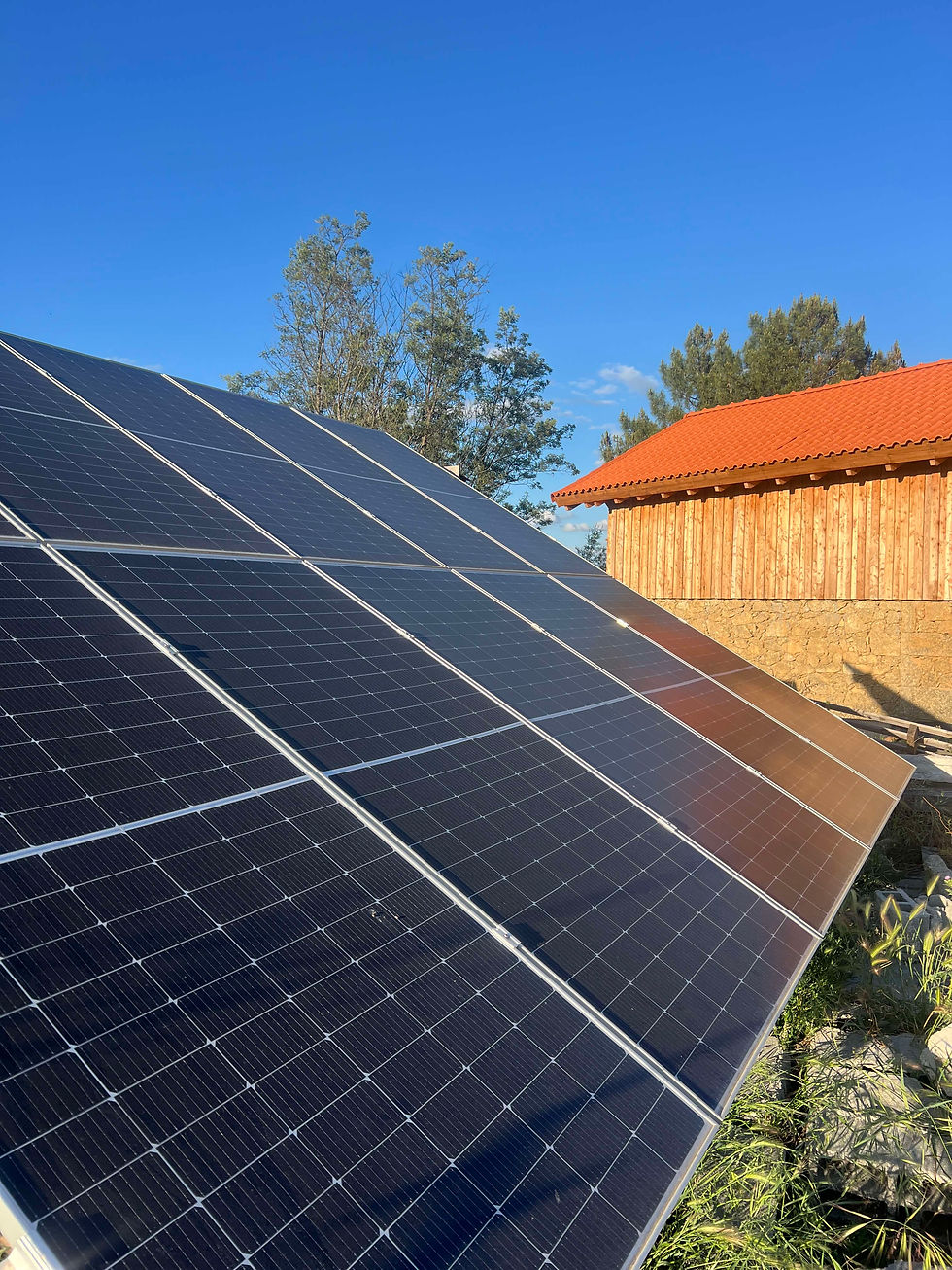
We have been living off-grid on our Quinta in Central Portugal for over three years now. Our system can produce around 4,600 W at peak in summer. And yes, we run an AC unit in a 24 m² mobile home.
It works. But only because we learned when to use it, not just how.
This guide will help you decide if a solar air conditioner off grid setup actually makes sense for you. And if it does, you will walk away with a realistic system size and a clear next step.
Stick around for Herman’s Tough Kraut Fixes at the end. That’s where the real mistakes get solved.
What “Solar Air Conditioner” Actually Means

Before sizing anything, let’s clear up a common misunderstanding. “Solar air conditioner” can mean three completely different systems:
Grid-tied AC with solar panels
Panels reduce your bill. The grid does the heavy lifting.
Hybrid solar AC
Runs on solar first. Pulls from grid or generator when needed.
True off-grid AC (panels + batteries)
Fully independent. Also the most demanding setup.
Right now, hybrid systems are gaining traction fast. Rising energy costs and hotter summers are pushing more people toward solar cooling.
But here’s the truth:
Cooling is one of the hardest things to run off-grid.
When a Solar Air Conditioner Off Grid Actually Makes Sense
Let’s keep this grounded in reality.
Good fits
One room or small cabin
Well-insulated space
Daytime cooling
Predictable usage patterns
Bad fits
Large homes with poor insulation
Trying to cool multiple rooms
Expecting 24/7 cooling on a small system
From our experience:
Our mobile home cools down surprisingly well, even with poor insulation. But only because the AC runs heavily during peak sun hours.
Trying to heat the same space off solar alone? Not reliable here. Cooling works because it aligns with the sun. Heating often doesn’t.
Tough Tip: Start by asking: When do I actually need cooling? If your answer is “all day and all night,” your system just got expensive.
Simple Solar AC Sizing (Without Overthinking It)
Let’s run a realistic example.
Step 1: Power draw
Small AC: 500–1,000 W
Mini-split: ~900 W
Larger units: 3,000+ W

Step 2: Daily energy
Example:
900 W AC
6 hours/day
→ 5.4 kWh/day
Step 3: Solar array size
5 peak sun hours
75% efficiency
→ 5.4 ÷ (5 × 0.75) ≈ 1.4 kW solar
Step 4: Battery storage
1 night: ~3–5 kWh
2 nights: ~6–10 kWh
Reality check
These numbers are simplified. In real life, you deal with:
panel angle
shading
inverter losses
seasonal changes
We see this every day. Once the sun drops lower, production falls fast. That’s when batteries start to matter.
Tough Tip: Do not size your system for perfect sunny days.Size it for the day when heat peaks and your panels don’t.
Hybrid vs True Off-Grid: What’s the Smarter Choice?
Hybrid systems
Lower cost
No batteries required
Flexible
Best for most people
True off-grid systems
Full independence
Higher cost
More complex
Best for remote setups
Honest take
If you have grid access, hybrid usually wins. If you want resilience and independence, off-grid makes sense. But only if you understand the trade-offs.
Tough Tip: Independence is not about having the biggest system.It’s about knowing how to use the one you have.
Climate and Building Matter More Than Panels
Your location changes everything.
Mediterranean climates (Portugal, Spain)
Strong sun
Cool nights
High solar potential
This is why solar cooling works well here. In Mediterranean gardening, we rely on small seasonal adjustments that build long-term resilience . The same principle applies to cooling.
Hot and humid climates
AC runs longer
Nights stay warm
Systems need to be larger
Building matters even more
A well-designed structure can cut cooling demand in half. Your solar system is not your first line of defense. Your building is.
Tough Tip: Every watt you don’t need is cheaper than every watt you generate.
Reduce Cooling First (This Changes Everything)
Before adding panels, reduce the load.

Start here:
Shade west-facing walls
Install shutters or blinds
Plant trees or pergolas
Seal gaps
Improve airflow
If you’ve followed any energy-efficiency upgrades, you already know this principle: reduce demand before upgrading systems
Less demand = smaller system = less cost
Tough Tip: If your house heats up like an oven, solar won’t fix it. Design will.
Safety, Compliance, and Reality Check
Let’s be clear.
Electrical work → licensed electrician
Structural loads → professional assessment
AC refrigerant → not DIY
This guide gives you direction, not a final design. Use it to have better conversations with professionals.
Tough Kraut Field Reality
Here’s what actually works for us:
AC runs mostly during peak sun
Cooling carries into evening
Nights do the rest
But there’s one key detail most people miss:
The system only works because we adapt to it. We open windows at night. We close up early. We work with the climate.
That’s the difference between “it works” and “it struggles.”
Keep It Simple, Keep It Real
A solar air conditioner off grid setup can absolutely work.
But only if:
your space is realistic
your system is sized correctly
your expectations match reality
Start small. Observe. Adjust. That’s how every resilient system is built.
If you’re on the same journey, join the Kraut Crew and share what’s working on your land.
Herman’s Tough Kraut Fixes: Common Off-Grid Solar Air Conditioner Challenges
When it comes to solar air conditioner off grid systems, most problems are predictable. This Troubleshooting FAQ covers what usually goes wrong—and how to fix it.
Q: My AC stops working in the evening. Why?
A: Solar production drops before your cooling demand ends. Either shift usage earlier or add battery storage.
Q: Do I need batteries?
A: If you want cooling after sunset, yes. Without batteries, your system depends entirely on sunlight.
Q: My system is large but still struggles. What’s wrong?
A: Most likely insulation or heat gain. Fix the building before scaling the system.
Q: Can I run AC all night off-grid?
A: Yes, but it requires large batteries (6–10 kWh+). That increases cost significantly.
Q: Can I heat with solar AC off-grid?
A: In mild climates, sometimes. In colder conditions, it’s unreliable without a very large system.
Q: What’s the biggest beginner mistake?
A: Designing the system before understanding actual energy use. Measure first, build second.


Comments