
Wildfire Resilience in Portugal: Causes, Patterns, and Protecting Your Homestead

Here in central Portugal, we don’t need a calendar to know when fire season has begun. The signal is unmistakable: the roar of water-bombing planes overhead, racing toward another blaze in the hills. In 2025, there may be fewer fire ignitions than in past years, but the ones that do catch burn hotter, faster, and leave behind three times more scorched land than last year.
Standing on our land, with a granite stone house under reconstruction, a fig tree just a few meters from the wall, and young food forest plantings all around, I often ask myself the same question many of you probably do: what can we really do to protect our homes and trees from wildfire?
The hard truth is this: no hedge, no hose, and no heroic effort will stop a wall of flame charging downhill. But resilience isn’t about stopping fire — it’s about shifting the odds. With the right defensible space, smarter planting, and a few home-hardening tricks, we can turn ember storms into smoke damage instead of total loss.
That’s exactly what this post is about. I’ll walk you through practical wildfire strategies we’re applying here at Tough Kraut — from working with nature to build living firebreaks, to reinforcing the weak spots embers love to exploit. And since I know the theory is never enough, I’ll also share my Tough Kraut Fixes, a Troubleshooting & FAQ section at the end with real-world answers to the most common wildfire protection challenges.
For those who want to dig deeper or connect with others during fire season, don’t miss the Recommended Books & Resources section at the end — now expanded to include not just trusted guides and practical gear, but also Community & Support Networks in Portugal where people are actively helping each other through wildfires.
If the sound of firefighting planes makes your stomach tighten the way it does mine, this guide is for you.

Before diving in, grab this free resource: Defensible Space Landscaping in the Urban/Wildland Interface (PDF) — a foundational guide that shows how defensible space and smart plant choices dramatically improve home survival rates.
Why Portugal Burns and What Makes Fires Fierce
In Portugal, wildfire is not just a natural hazard. It’s mostly a human-made problem, fueled by climate stress and land-use choices. Official data shows that about 98% of all wildfires here start with people. That’s why wildfire resilience in Portugal isn’t just about weather, it’s about changing habits in a fragile landscape. Of these, roughly one in four is arson, while another quarter comes from agricultural burning gone wrong. The rest are scattered across everything from machinery sparks to careless barbecue ash. Lightning? Just 2%.
This means prevention isn’t just about waiting for better weather. It’s about changing human habits in a landscape that’s already tinder-dry by midsummer.
And that landscape is shifting fast. Climate change doesn’t strike the match, but it does stack the deck. Rising average temperatures stretch fire season by weeks. Droughts cut deeper, while the new normal of “hydroclimate whiplash” — bouncing between very wet winters and bone-dry summers — feeds more aggressive burns. Portugal’s 2025 season proved the point: 36% fewer fire starts than the ten-year average, yet three times more land burned compared to last year.
Add to this the Mediterranean paradox: abandoned farmland turning into dense, continuous scrub, pine plantations with resin-rich fuel, and the collapse of the traditional patchwork of fields, orchards, and grazing land. Where once there were mosaics that slowed fire spread, we now have unbroken corridors of flammable vegetation.

The result is a fire regime that doesn’t just threaten houses at the forest edge. It can roll across valleys and leap over ridgelines with frightening speed. For homesteaders like us, this isn’t abstract — it means every fig tree, grapevine, and wooden facade has to be considered in terms of both sunlight and survival.
How Wildfires Behave
Not all wildfires behave the same way. Some creep low through grasslands, while others explode into crown fires that race through treetops. What makes the difference comes down to three forces working together: wind, slope, and fuel continuity.
Wind: Strong winds feed oxygen to flames and carry burning embers far ahead of the fire. These embers — sometimes traveling more than a kilometer — are what start most house fires.
Slope: On hillsides, fire moves uphill fast because flames tilt forward, heating vegetation above. Steeper slopes mean faster spread and more intense burns.
Fuel continuity: Continuous belts of shrubs, resin-rich plantations, or neglected scrubland act like highways for fire. When the landscape is broken up into patches — orchards, vegetable gardens, stone walls, or irrigated belts — fire slows down.
The critical takeaway: your house doesn’t need to touch the main fire front to ignite. In most cases, embers find the weak spots first — dry leaves in a gutter, mulch against a wooden wall, or an unscreened vent.
For homesteaders like us, this means resilience isn’t just about “how close is the nearest tree?” but rather: is there anything combustible right where embers are most likely to land? That’s why pruning, clearing, and home hardening matter as much as planting distances.
Protecting the Homestead: Zones of Defense
When it comes to wildfire, one of the simplest truths is also the most powerful: the closer to your house, the less you can afford to burn. That’s why fire professionals talk about creating “defensible space” in zones. Think of it like permaculture design, but instead of zoning for how often you visit a plant, you’re zoning for how badly fire wants to visit you.
Zone 0: The Ember-Free Zone (0–1.5 m / 0–5 ft)
This is the non-negotiable zone. Nothing flammable should live right against your walls.
Stick to stone, gravel, or paving. Succulent pots are fine, but no mulch or woody shrubs.
Keep gutters clear, eaves screened, and no firewood stacks under overhangs.
Tough Tip: If you want greenery near the house, keep it in movable pots that you can shift away during high-risk days.
Zone 1: The Lean & Green Zone (1.5–5 m / 5–16 ft)
Use low-growing, irrigated plants under 50 cm (20 in). Herbs like oregano, thyme, or ground-hugging ice plant are great choices.
Avoid oily or resinous species like rosemary or lavender in this ring — save them for further out.
Maintain paths, veggie beds, or even a strip of irrigated lawn as a moisture buffer.
Tough Tip: Treat this zone as your “outdoor fire shield.” Regular watering and mowing here do more to protect your home than a dozen buckets once the flames arrive.
Zone 2: The Reduced Fuel Zone (5–30 m / 16–100 ft)
Detached trellises and pergolas with grapevines or kiwi can work beautifully here — you get summer shade and food, without climbing plants turning your facade into a ladder of kindling.
Thin shrubs, prune “ladder fuels” (no low branches under trees), and break up continuity with stone paths, driveways, or vegetable patches.
Tough Tip: Imagine fire moving across this zone like water. Anywhere it could “flow” in one continuous line of fuel, break it up with something green and moist — or something solid and non-combustible.

Zone 3: The Wider Managed Zone (30–100 m / 100–330 ft)
Here the goal is fuel reduction, not elimination. Thin dense shrub belts and prune tree stands so they don’t form an unbroken canopy.
Maintain orchards, grazing strips, or tilled fields as natural firebreaks.
If you have neighbors with unmanaged scrub, this zone is your chance to buffer the edge before it reaches Zone 2.
Tough Tip: Use this zone to stack functions: orchards that feed you also slow fire; grazing animals reduce grass fuel while building soil fertility.
The Community Zone: Beyond 100 m
No matter how well you manage your land, fire rarely respects fences. That’s why Portugal’s Aldeia Segura – Pessoas Seguras program emphasizes collective management. Connect with neighbors about shared firebreaks, evacuation routes, and maintaining the outer perimeter together.
Fire-Resistant Planting & Natural Firebreaks
If fire is going to test your land, the plants you choose can either fuel the flames or help slow them down. While no plant is completely “fireproof,” some species resist ignition far better than others. Designing with these in mind turns your landscape into a kind of living armor.
Traits of Fire-Resistant Plants
Fire-resistant plants share a few key characteristics:
High moisture content in their leaves.
Low levels of volatile oils or resins (think rosemary or eucalyptus — bad idea close to the house).
Open branching habits that don’t trap heat or debris.
Minimal litter drop, which means fewer dry leaves piling up at the base.
Fire-Resistant Friends for a Mediterranean Homestead
Here in Zone 8a Portugal, the following species are both useful and relatively fire-safe:
Cork oak (Quercus suber) – Portugal’s natural shield. Thick bark shrugs off flames, and trees resprout after fire. Perfect for outer belts.
Carob (Ceratonia siliqua) – Drought-tolerant, evergreen shade, and less resinous than pines.
Mulberry (Morus spp.) – Deciduous, fast-growing, and excellent for shade near the house.
Fig (Ficus carica) – Already part of your homestead, with moist wood and broad leaves that resist ignition.
Loquat (Eriobotrya japonica) – Dense canopy, fruit-bearing, and useful in Zone 2 buffers.
Succulent groundcovers (ice plant, aloe, agave) – Moist, low to the ground, and act as natural ember catchers.
Plants to Avoid Near the House
Some species are notorious for their flammability and should be kept far from Zone 0–1:
Eucalyptus – high oil content, explosive in fire.
Pines and cypresses – resinous and ember-throwing.
Ornamental juniper and arborvitae – highly flammable, often used in landscaping.
Rosemary and lavender – beautiful and useful, but their aromatic oils make them dangerous close to walls.
Green Firebreaks in Practice
Firebreaks don’t always have to mean bulldozed earth. When well-planned, living firebreaks can be both productive and protective:
Orchards as buffers – A strip of irrigated olive, carob, or mulberry trees can slow flames while feeding you.
Succulent hedges – Rows of prickly pear (Opuntia), agaves, or aloes form low, moist barriers that catch embers and block fast-moving grassfires.
Moisture belts – Vegetable beds, orchards, and greywater-fed reed beds double as “green shields” if kept irrigated during fire season.
Natural breaks – Ponds, swales, stone walls, and even well-watered lawns can all act as low-maintenance fire stoppers.
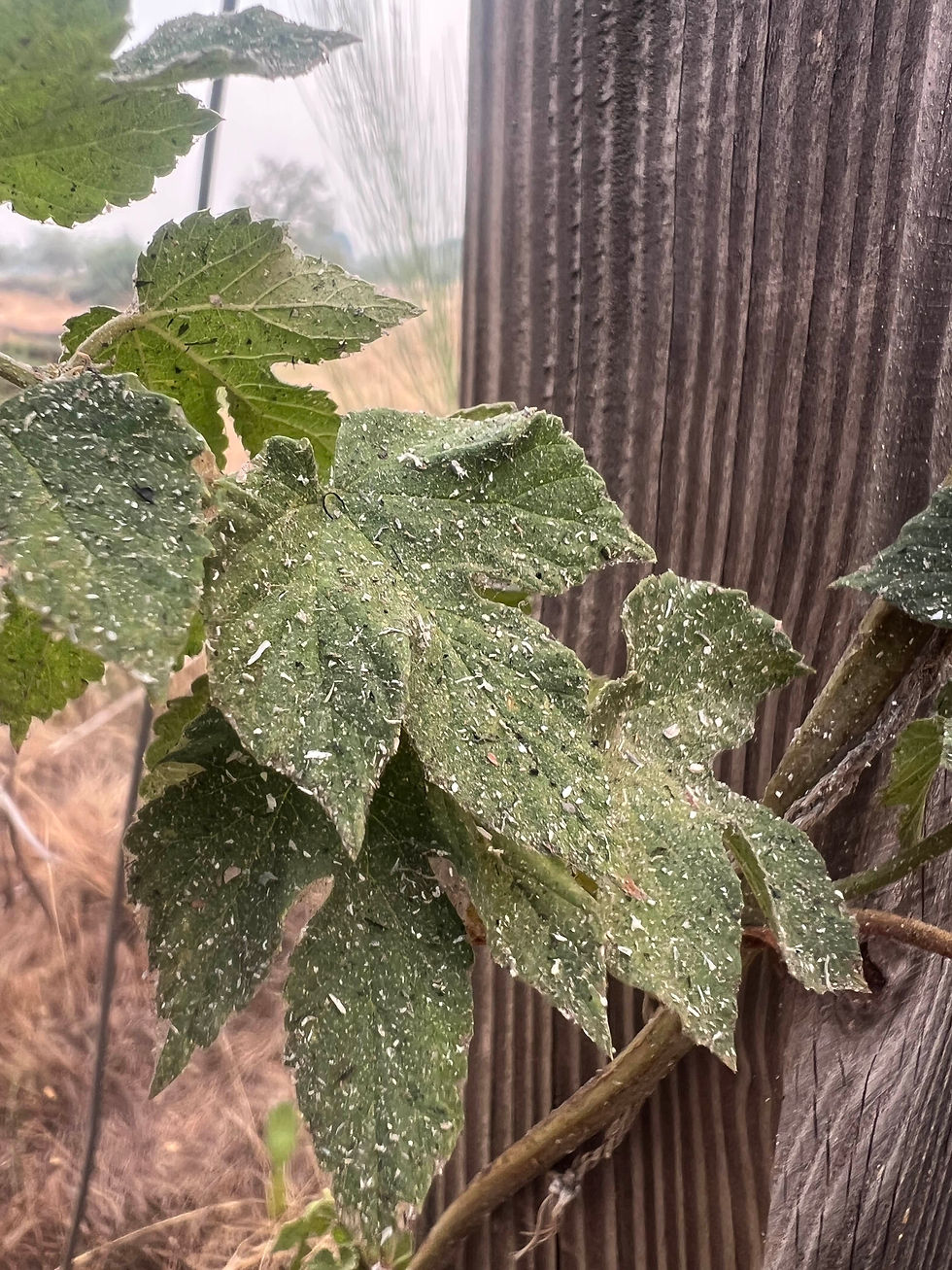
Tough Tip: Think of your planting plan as a mosaic of wet, green, and useful patches. A grapevine trellis, a loquat orchard, a succulent border — each slows fire in its own way. Put together, they turn your homestead into a landscape that works with nature to resist the worst of summer’s flames.
Our Home Hardening Strategies
When we talk about fire safety here at Tough Kraut, we’re not just passing on theory — we’re living it. As we rebuild our granite stone house in central Portugal, every material choice and retrofit is shaped by wildfire risk. What follows are the strategies we’re using right now to harden our home against ember storms and radiant heat.
Strong Starts: Stone and Clay
Our granite stone base walls give us an incredible head start. They’re naturally fireproof and act like a permanent shield against heat.
The clay roof tiles are another strength. They can’t burn, but we’re sealing under the tile edges with metal flashing to stop embers sneaking underneath.

Our Larch Cladding
The second floor is finished in untreated larch boards. We’re keeping them natural, because coatings shorten the lifespan of the wood.
That means Zone 0 around the walls is kept absolutely clear. No mulch, no shrubs, no vines rooted at the facade.
For shade, we’re designing detached trellises with grapevines on the west side. This way, the wall gets shade in summer without vines climbing directly on the cladding.
Windows, Vents, and Eaves
Our windows are second-hand Austrian double-layer wood frame units — solid and well-insulated, but more vulnerable to ember exposure than aluminum.
To protect them, we’ll eventually add exterior shutters (ideally metal) for the fire season.
Every vent and opening gets 1.6–2 mm metal mesh screens to block embers.
The eaves will be enclosed with non-combustible soffit material so sparks can’t settle inside.
Containers and Sandwich Panels
We use two shipping containers for storage. The steel walls are solid, but we’re cautious with the sandwich panel additions we’ve used on the coop and extensions.
If a panel has EPS or polyurethane foam cores, we treat it as high-risk and keep vegetation well back.
Where possible, line or cover exposed panels with cement board or thin render to buy time in a fire.
These aren’t “lost causes,” but we treat them as secondary — our house and water systems get priority.
Storage and Outbuildings
We store firewood, hay, and fuel well away from the house — at least 10 m (33 ft) downslope.
Outbuildings like the chicken coop are useful, but in our plan, they’re sacrificial if a major fire rolls through. The focus is on keeping the home, trees, and main infrastructure intact.
Tough Tip: When you look at your own place, ask yourself: Which parts are naturally fireproof, and which would embers target first? For us, the granite walls and clay tiles are the strong points. The larch cladding and wooden windows are our vulnerable edge, so our protection plan is built around those realities.
Infrastructure Resilience
Wildfire doesn’t just test plants and walls. It tests the lifelines that keep a homestead running: water, power, and access. If those fail, you’re left blind, dry, and cut off just when you need them most. Strengthening infrastructure against fire risk means you can keep pumps running, hoses charged, and escape routes clear.
Water Systems
Buried pipes: Keeping water lines underground protects them from heat and ensures supply during a fire.
Dedicated fire tank: A minimum of 5,000–10,000 liters (1,300–2,600 gallons) reserved for fire only. Tanks should be stone, ferrocement, or metal, with fittings firefighters can use.
Pump redundancy: Solar pumps are excellent for daily use, but add a backup petrol or diesel pump in a fire-resistant housing. Gravity-fed cisterns are the simplest safety net.
Quick-connect hoses: Fire-rated hoses with metal nozzles staged around the property make it possible to respond fast.
Power Supply
Burying electric lines removes a common ignition source and keeps the system working even if fire passes.
Independent power backup: A solar array with battery storage gives steady supply. Pair it with a manual transfer switch and a small generator for worst-case scenarios.
Protected housing: Keep batteries and inverters in a non-combustible shelter with ember-proof vents.
Access and Layout
Driveways: Wide enough for emergency vehicles, with a turnaround space so they don’t back uphill under pressure.
Perimeter paths: Double as firebreaks and give you safe movement around the property.
Clear addresses: Simple but often overlooked. Fire services need to find you fast, especially in rural zones.
Tools and Supplies Cache
Firefighting gear: Backpack sprayers, rakes, shovels, McLeod or Pulaski tools.
Protective kit: Goggles, heavy gloves, wool blankets, and respirators or N95 masks.
Buckets and towels: Sometimes the old ways work. A wet towel around the face buys breathing space when smoke gets heavy.
Tough Tip: Think of infrastructure resilience as designing for failure. Assume the grid goes down, the pumps stall, and the road is blocked. If you can still run water, still see in the dark, and still get out safely, your homestead passes the test.
Beyond the Homestead: Long-Term Landscape & Climate Effects
Wildfires don’t stop at the fence line. Even if a single home survives, the wider landscape carries scars that ripple through the region for years. Understanding these bigger patterns is key to seeing why resilience has to move beyond individual properties.
Forests and Rainfall
Forests don’t just capture water — they help create it. Research shows Mediterranean forests recycle part of their own rainfall through evapotranspiration. Strip away tree cover on hillsides and the incoming moist air from the sea travels shorter distances inland, leaving the valleys drier. It’s a feedback loop: less forest, less rain, more fire, even less forest.
Mountains as Humidity Islands
Portugal’s mountain ranges act like sponges, storing water in soils and slowly releasing it downstream. When fire clears those slopes, rain runs off faster, flooding lowlands instead of feeding aquifers. Hydrophobic soils — temporarily water-repellent after a burn — make this even worse. What used to be a slow-release reservoir turns into a fire–flood–drought cycle.
Soil and Recovery
High-severity fires don’t just scorch trees, they destroy seed banks and living soil organisms. Recovery can take decades, and sometimes regeneration fails altogether without help. In the first two years after a burn, erosion is at its worst, stripping nutrients downhill. Mulching, contour barriers, and reseeding can help, but scaling those solutions across landscapes takes coordinated effort.
Fire Regimes in Transition
Traditional Mediterranean landscapes were mosaics — a patchwork of orchards, pastures, woodlots, and villages. That patchwork acted as a fire buffer. Today, abandoned farmland and continuous forest create uninterrupted fuel belts. Suppression-focused policies also leave behind heavy fuel loads that burn hotter when they finally ignite. Fire management is shifting toward controlled burns, strategic fuel breaks, and community-level planning instead of pure suppression.
Tough Tip: A fire-smart homestead helps, but resilience is bigger than one property. Support local reforestation projects, coordinate fuel management with neighbors, and see your land as part of a living mosaic. A single green patch won’t stop climate spirals, but linked together they can shift the balance toward rainfall, regeneration, and renewal.
Seasonal Fire Prep Calendar (USDA Zones 8–11, Mediterranean Climates)
Wildfire resilience isn’t built in a weekend. It’s a seasonal rhythm — clearing in spring, mowing in summer, pruning in winter. In Mediterranean climates (Zones 8–11), where wet winters swing into bone-dry summers, the best defense is steady, seasonal care.
Spring (March–May)
Clear winter debris — rake away fallen leaves, twigs, and pine needles from around structures.
Prune trees and shrubs — lift lower branches 2–3 m (6–10 ft) above the ground.
Check irrigation — repair leaks, set timers, and prep greywater systems. Moisture belts are built in spring.
Service pumps and backup generators — test them before the heat arrives.
Tough Tip: Think of spring as the “reset button.” Every ember loves a forgotten pile of winter leaves — deal with them now.
Summer (June–August)
Mow and strim grasses — keep them under 10 cm (4 in) in Zones 0–2.
Irrigate key buffers — vegetable beds, succulent belts, and orchards double as fire shields if kept moist.
Stage gear — have hoses connected, buckets filled, and fire tools (rakes, backpack sprayers) ready to grab.
Gutters and roofs — clear them regularly; one dry bird’s nest can undo all your planning.
Tough Tip: Don’t wait for the first firefighting plane to remind you. Treat July like it’s already peak fire season.
Autumn (September–November)
Clear dry leaf fall — especially under figs, vines, and near walls.
Test pumps and backup power again — summer dust and heat can wear them down.
Inspect shutters, screens, and vents — repair any mesh or gaps before the next season.
Cut and stack firewood — but keep it 10 m (33 ft) from structures, ideally downslope.
Tough Tip: Autumn is ember season. Fresh winds, low humidity, and heaps of leaf litter make the perfect spark trap — so keep cleaning.
Winter (December–February)
Structural pruning — thin fruit trees, remove ladder fuels, and open canopies.
Fence line and boundary checks — repair gaps in firebreaks, trim hedges, maintain access tracks.
Soil prep and mulching — add organic matter to hold moisture, but keep mulch 1.5 m (5 ft) away from walls.
Plan improvements — this is the time to design trellises, cistern upgrades, or new plantings for spring.
Tough Tip: Winter is the design season. Fire is asleep — this is when you build the systems that will stand up to it.
Final Word on Rhythm
Resilience isn’t glamorous — it’s mowing when it’s hot, raking when you’d rather rest, and checking pumps when you’d rather plant. But in USDA Zones 8–11, where summer drought is guaranteed, this seasonal rhythm is what turns a vulnerable house into a defensible one.
Building Resilience, One Season at a Time
Wildfire resilience isn’t about perfection. It’s about stacking the odds in your favor — stone walls instead of timber, gravel instead of mulch, green firebreaks instead of endless scrub. No single hedge or hose can stop a wall of fire, but together, these choices build a homestead that resists flames instead of feeding them.
In Portugal and across all Mediterranean climates, fire has always been part of the landscape. What’s changed is the intensity — hotter summers, abandoned land, and human mistakes turning sparks into disasters. But that doesn’t mean we’re powerless. Every pruned branch, cleared gutter, and irrigated buffer zone buys time, reduces risk, and keeps homes and trees standing when ember storms roll in.
At Tough Kraut, we’ve learned that resilience is not a one-time project. It’s a seasonal rhythm of preparation, maintenance, and design improvements that work with nature rather than against it. And it’s not just about individual action. When neighbors connect, when landscapes are managed as mosaics again, resilience grows beyond one fence line and becomes regional strength.
Take a walk around your own place this week. Look at the first five meters around your house, check your vents, and think about where embers would land. Start there. Small, steady actions make the difference.
Herman’s Tough Kraut Fixes: Common Challenges Creating Wildfire Resilience in Portugal
When it comes to wildfire resilience, the details matter. A clean gutter, a pruned branch, or a well-placed trellis can be the difference between smoke damage and total loss. But we all face the same common questions when trying to balance shade, productivity, and safety. This Troubleshooting & FAQ section tackles the most frequent challenges we’ve seen — with straight, practical answers.
Q: Can I still grow plants close to the house?
A: Yes — but only in Zone 0 if they’re in movable pots. Permanent plantings belong at least 1.5 m (5 ft) out. Think gravel and stone directly against the walls, with herbs or succulents in containers that can be pulled back during fire season.
Q: What should I do with leaf fall from figs, vines, and deciduous trees?
A: Leaf litter is ember bait. In autumn, clear it weekly from around walls and roofs. If you love composting, pile it at least 10 m (33 ft) away from the house, not under your wooden cladding or in gutters.
Q: How do I protect wooden windows and shutters?
A: Wood-framed windows are beautiful but vulnerable. The best fix is adding exterior shutters — ideally metal — during fire season. Even basic ember-proof screens on vents and openings make a big difference.
Q: Are chicken coops and sheds worth hardening?
A: Treat small outbuildings as expendable. Focus your effort on the house, trees, and infrastructure. Still, you can reduce risk by keeping 2–3 m of clear gravel around them and lining sandwich panels with cement board if they use EPS cores.
Q: What’s the simplest step I can take today?
A: Walk the first 5 m around your house. Remove anything flammable — mulch, leaf piles, stacked wood. That one change creates the strongest buffer you can build with almost no cost.
Q: What should I do when I spot smoke or fire nearby?
A: In Portugal, always call 112 immediately. Even if you’re unsure of the scale, it’s better to report early. The biggest challenge for rural and off-grid homes is giving an exact location without a formal address. Apps like what3words are not supported here, so the safest strategy is to:
Learn and use the local names of nearby landmarks (villages, rivers, chapels, ridgelines).
Save your GPS coordinates on your phone in advance, so you can read them out if needed.
Coordinate with neighbors: in many Aldeia Segura villages, a local coordinator can direct fire services faster than an isolated call.
Q: What should I pack in a wildfire go-bag or evacuation kit?
A: A wildfire go-bag isn’t about comfort — it’s about survival and safe passage. At the top of the list are documents and ID (passport, insurance, property papers) in a waterproof folder, along with drinking water and a small first-aid kit. For those living off-grid, it makes sense to think beyond the basics: a chainsaw to clear fallen trees, and bolt cutters in case gates or fences block escape routes if you’re traveling by car. Add sturdy gloves, goggles, headlamps, and a wool blanket — simple items that can save your skin when the air turns hot and smoky. Keep the kit ready in one spot so there’s no hesitation when minutes matter.
Q: Should I pack full-size gas bottles in my car during wildfire evacuation?
A: No — in most cases, transporting large gas cylinders in your vehicle increases risk, especially if your route passes through heat or smoke. Instead, turn the cylinders off, keep them upright, clear away nearby combustible debris, and — if it's safe — move them to a non-combustible base or even water tank to keep them cool. Full removal should only happen if there’s time and safety; otherwise prioritize swift evacuation.
Recommended Books & Resources
Books
Firescaping Your Home: A Manual for Readiness in Wildfire Country by Adrienne Edwards & Rachel Schleiger
This practical handbook shows homeowners how to harden structures, design defensible space, and choose fire-adapted plants that create landscapes both protective and attractive. With detailed plant lists and step-by-step strategies, it blends wildfire safety with ecological landscaping for people living in high-risk zones.
This Is Wildfire: How to Protect Yourself, Your Home, and Your Community in the Age of Heat by Nick Mott and Justin Angle
This wide-ranging guide blends history, science, and practical advice to help people adapt to a fire-filled future. From hardening homes and preparing go-bags to rethinking our cultural relationship with fire, it offers both survival strategies and a path toward coexisting with wildfire as a natural force.
Fire in Mediterranean Ecosystems: Ecology, Evolution and Management by Jon Keeley, Ross Bradstock, and William Bond
This academic reference explores how fire shapes the world’s five Mediterranean-type ecosystems, from plant evolution to cultural adaptation. By comparing these convergent regions, it highlights the ecological role of fire and the need for regionally tailored management strategies.
Defensible Space Landscaping in the Urban/Wildland Interface by University of California Forest Products Laboratory
This foundational research document underpins many modern firescaping publications. It demonstrates that defensible space dramatically improves home survival rates, emphasizes mature plant characteristics over initial fire ratings, and shows how proper maintenance and irrigation design are just as important as plant choice. Available as a free PDF download — a must-download for anyone designing defensible space.
Firescaping: Protecting Your Home with a Fire-Resistant Landscape by Douglas Kent
This hands-on guide offers practical strategies for designing and maintaining fire-resistant properties. With clear checklists, effective landscaping tips, and proven fire-safe design strategies, it helps homeowners and communities reduce risk while keeping spaces healthy, attractive, and accessible to firefighters.
Resources
Limitless Suppression Systems Wildfire Protection - Stage 3 Modern Full Fire Protection Kit
This comprehensive wildfire protection system represents a professional-grade solution for serious property defense, bridging the gap between simple DIY tools and full firefighting systems. The system is designed to transform residential water sources into an active fire suppression network, addressing the critical gap between home sprinkler systems and professional firefighting equipment.
FireStorm Ember Vents
These ember-resistant vents feature 304 stainless steel mesh, designed to block burning embers and meet standards like IWUI, IBHS, and California Chapter 7A. Ideal for upgrading vents above your roofline or soffits, they help prevent internal fire-front ignition from ember intrusion.
FireStorm Gutter Guards
Designed to shield gutters from ember accumulation and flammable debris, these guards form a barrier against one of wildfire’s most common entry points—your eaves and gutters.
Tough Kraut Resources
For the tools we actually use and trust on our land, explore Tough Kraut Resources — curated fire-smart gear to keep your homestead resilient season after season.
Community & Support Networks
Portugal Sem Chamas
A volunteer-run hub created to connect people offering and requesting help during wildfires. It’s one of the few central platforms where neighbors can share resources and coordinate support.
Bravo Mundo Community
A dynamic online community offering everything from animal welfare updates to free therapy support and practical know-how for rebuilding. They also highlight sponsorships for seeds and local aid.
Aldeia Segura – Pessoas Seguras (Portugal)
Portugal’s national community wildfire safety program, designed to help villages prepare, respond, and recover together. It organizes evacuation routes, safe meeting points, and trained coordinators at the local level. For rural homesteads, joining or aligning with this program adds another layer of resilience beyond property-level defenses.


Comments