
11 Reasons to Grow Lemongrass in a Mediterranean Garden

When summer arrives on our Quinta, the land slowly changes color. Fresh spring greens turn into dry gold, soft grasses become crispy, and large parts of the landscape begin to look like they are waiting patiently for the first autumn rain.
And then there is lemongrass.
While many plants slow down, dry out, or retreat into survival mode, our lemongrass keeps bringing fresh green foliage into the garden. That alone would almost be enough reason to love it. In a Mediterranean climate, any plant that can look alive and useful during the dry season immediately earns our attention.

But lemongrass is more than a pretty clump of green leaves. It is useful in the kitchen, easy to propagate, simple to preserve, and surprisingly versatile around a homestead. We use it fresh, freeze tied bundles for winter, and keep finding new ways to fit it into our garden systems.
That said, lemongrass is not a miracle plant. It is not as drought-tough as rosemary, lavender, thyme, or olive. It likes warmth, sun, and enough moisture to grow well. Wisconsin Horticulture notes that lemongrass needs regular water when rainfall is sparse, and Utah State University describes it as preferring moist, rich, well-drained soil with good organic content.
So this is not a “plant it anywhere and forget it” herb. But in the right place, lemongrass can become one of those hardworking plants that quietly does several jobs at once.
Quick Verdict: Is Lemongrass Worth Growing?
For us, yes. Lemongrass has earned its place. It is best for warm microclimates, kitchen gardens, greenhouse edges, banana circles, large containers, and mixed Mediterranean planting experiments where summer water is available. It is especially useful for gardeners who want edible plants that also add beauty, structure, and biomass.
Lemongrass is commonly grown as a culinary herb and ornamental grass. Missouri Botanical Garden describes Cymbopogon citratus as a frost-tender clumping perennial grass used for lemony flavoring in Southeast Asian cooking, while also noting its value as an ornamental garden grass.
Why We Grow Lemongrass on Our Quinta
We first appreciated lemongrass because of its summer appearance. When so much of the land turns dry and golden-brown, lemongrass brings a fresh, tropical-looking green into the system.
But the longer we grow it, the more useful it becomes. It gives us kitchen harvests, winter freezer bundles, propagation material, possible slope support, aromatic planting diversity, and even a link to homemade mosquito repellent.
That is exactly the kind of plant we love at Tough Kraut: not perfect, not magical, but useful in several different ways.
1. It Stays Green When the Summer Garden Turns Dry and Golden
This is one of the biggest reasons we love lemongrass. In a Mediterranean summer, visual freshness matters. By July and August, many gardens can start looking tired, especially if they rely on spring growth and winter rain. Lemongrass brings upright, lush, green structure at the exact time when many other plants are fading.
That makes it valuable not only as a herb, but also as a morale booster. A green clump near a path, kitchen area, greenhouse, or seating spot can make the garden feel more alive during the hardest season.
2. It Gives You Fresh Kitchen Harvests
Lemongrass is a proper kitchen plant, not just a decorative grass. The swollen lower stems and fragrant leaves can be used for teas, curries, soups, sauces, broths, marinades, and Asian-inspired cooking. RHS notes that lemongrass stem bases bring citrus flavor to curries, soups, sauces, and tea.
For a self-sufficient garden, that matters. We do not just want plants that survive. We want plants that earn their space.
Lemongrass gives a strong lemony flavor without needing lemons, which is especially useful when citrus trees are still young, not fruiting yet, or recovering from weather stress.
Grow lemongrass close enough to the kitchen that you will actually use it.
3. It Freezes Easily for Winter Use
One of our favorite practical uses is freezing lemongrass in tied bundles. When the plant is growing well, we can harvest leaves and stems, tie them into small bundles, and freeze them for later. This gives us access to that fresh lemony flavor even during winter, when the plant may be damaged by frost or not actively producing much new growth.
This is simple preservation. No fancy equipment, no complicated processing, no “homestead hero” performance required. Just cut, bundle, freeze, and use later.
Utah State University notes that lemongrass can be frozen for later use, which supports this as a practical preservation method.
4. It Is Easy to Propagate
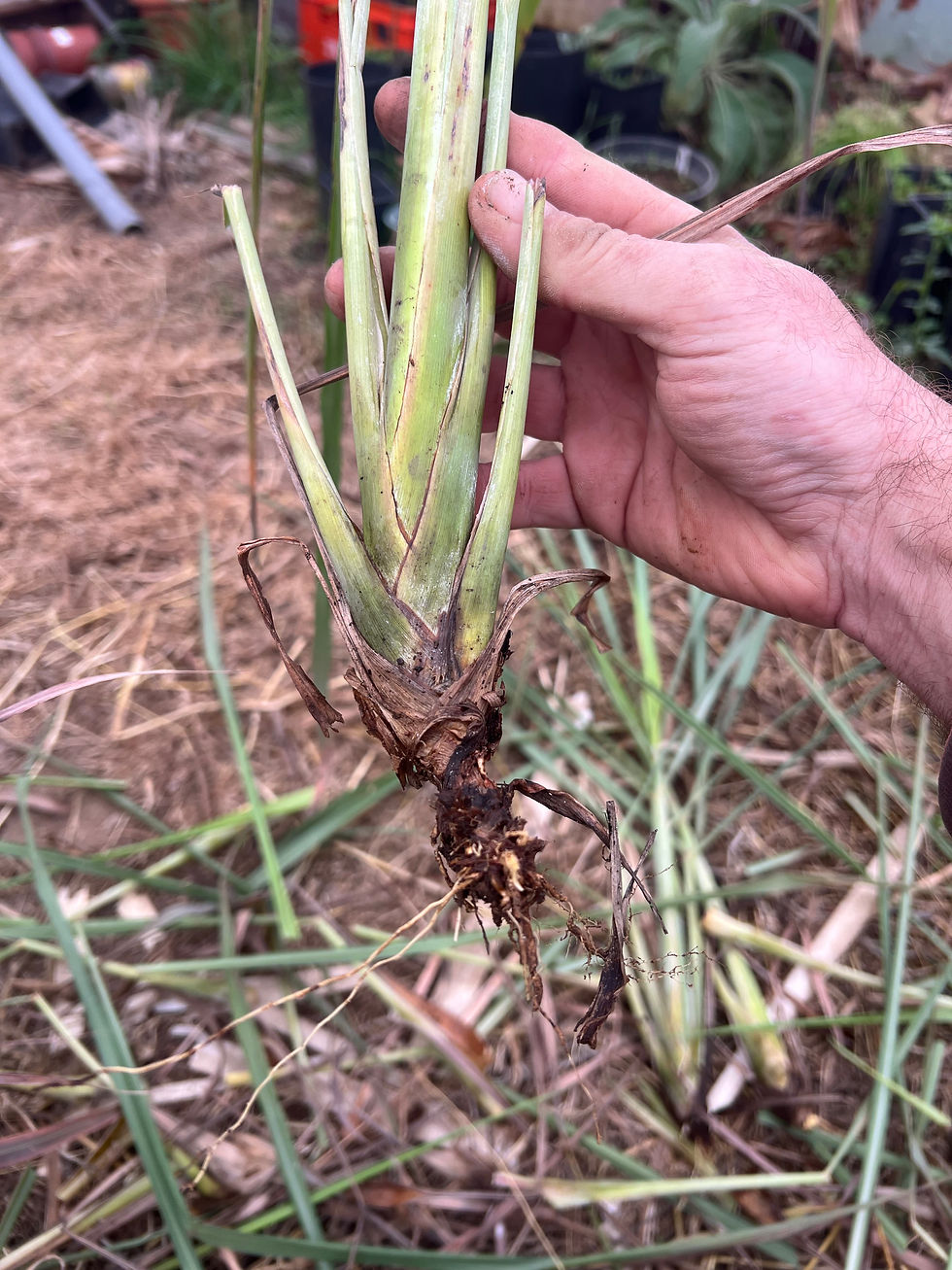
Lemongrass is wonderfully generous once it is established. You can divide strong clumps, pot up sections, and create new plants for other parts of the garden. RHS recommends dividing established clumps in spring, making sure each division has roots and several strong stems. This is one of the reasons lemongrass fits a self-sufficient garden so well. One healthy plant can become many plants over time.
That means you can test lemongrass in different microclimates without constantly buying new stock. Try one clump near the greenhouse, one near a banana circle, one in a large pot, and one in a warmer sheltered garden edge. Over time, the plant will show you where it wants to live.

Once you have one strong plant, propagation becomes part of the harvest.
5. It Adds Biomass to the Garden System
Lemongrass produces plenty of leaves once it is happy. That makes it useful as a biomass plant. Some material goes to the kitchen. Some can go to tea. Some can be chopped back after winter damage and returned to the soil as mulch or organic matter.
This is not the same as growing a dedicated chop-and-drop tree, but it still helps. Every useful plant that also gives you organic material supports the wider garden system.
One caution: lemongrass leaf blades can have sharp edges. Wear gloves when harvesting or cutting back mature lemongrass, especially if the leaves are dry.
6. It Can Help Slow Soil Movement
Lemongrass is not vetiver. Let’s be clear about that.
Vetiver is the specialist erosion-control grass with a reputation for serious slope stabilization. Lemongrass should not be treated as an equal replacement on steep runoff lines, road banks, or major erosion channels.
But lemongrass still has a useful clumping habit. Above ground, it can slow surface movement, catch organic matter, soften runoff, and create a living edge in mild erosion-prone spots. The National Academies Press notes that lemongrass has been used in erosion-control hedges, although vetiver remains the more powerful specialist grass for that role.

For our kind of homestead, that makes lemongrass interesting along gentle edges, garden borders, and experimental planting lines where soil movement is a concern.
Use lemongrass as a support plant for mild erosion control, not as your only solution for serious erosion.
7. It Adds Aromatic Diversity to Mixed Plantings
Lemongrass has strong aromatic foliage, and that makes it interesting in mixed plantings.
We like the idea of aromatic diversity because it makes the garden less like a simple buffet line for pests. A mix of different scents, textures, plant shapes, and flowering times can make the system more complex and resilient.
However, this is where wording matters. A living lemongrass clump is not a guaranteed pest shield. It will not create an invisible force field around your vegetables. Sadly, mosquitoes, aphids, and grasshoppers do not all attend the same rule-following workshop.
The better claim is this: lemongrass can be part of a diverse, aromatic, pest-confusing planting strategy.
8. It Brings Strong Ornamental Structure
Lemongrass has a beautiful upright fountain shape when it is growing well. That makes it useful for design, especially in gardens where you want edible plants that still look intentional. It can soften edges, fill awkward corners, bring height to herb beds, and give summer movement when the wind passes through the leaves.
This is one of the underrated benefits. Many useful plants look messy at certain stages. Lemongrass can be productive and attractive at the same time.
That is especially helpful near visible areas such as the mobile home, greenhouse, outdoor kitchen zones, pathways, or seating spaces.
Treat lemongrass as both an edible herb and an ornamental grass.
9. It Works Well as a Container Backup Plant
If your winters are uncertain, a potted lemongrass backup is a smart idea.

Lemongrass is frost-tender, and cold weather can knock it back hard. Missouri Botanical Garden describes it as frost-tender, while RHS recommends protection before temperatures drop too low.
In our climate, outdoor clumps may return after winter, especially in warmer microclimates. But keeping at least one plant in a pot gives you insurance. If an exposed clump suffers badly, you still have living material to divide and replant.
Container growing also helps if you are still learning your land. Pots allow you to move plants, test locations, and protect valuable stock during cold snaps.
Keep one potted lemongrass plant as backup if frost is a regular visitor in your garden.
10. It Helps You Read Your Microclimates
Lemongrass is a useful “microclimate indicator” plant. Where it grows lush and green, you probably have warmth, decent moisture, protection, and enough fertility. Where it struggles, the site may be too dry, exposed, cold, compacted, or neglected.
That makes it useful for observation-based gardening. Instead of forcing every plant into every place, we can let the plant teach us.

In our Mediterranean context, this matters. A few meters can make a huge difference. A warm wall, sheltered corner, greenhouse edge, or mulch-rich planting pocket may support lemongrass far better than an exposed dry slope.
11. You Can Make Your Own Lemongrass Mosquito Repellent
Another practical reason to grow lemongrass is that it gives you harvestable material for homemade mosquito repellent.
Lemongrass oil is used as an insect-repellent ingredient in some contexts. Cornell’s lemongrass oil profile describes its pesticide uses as including insect repellent, and the EPA lists lemongrass oil among active ingredients eligible for minimum-risk pesticide use in qualifying products.
That does not mean rubbing random leaves on your skin is automatically safe or effective. Prepared repellent recipes still need care, patch testing, and common sense. But growing the plant gives you a useful raw material for simple natural pest-control preparations.
For the full method, see our step-by-step guide to making lemongrass mosquito repellent in our article on Natural Pest Control for Every Gardener: Urban, Rural, and Beyond.
Lemongrass is useful beyond the kitchen when harvested and prepared properly.
Before You Plant Lemongrass: 5 Honest Cautions
Lemongrass is excellent, but it is not perfect.
First, it likes water. Do not confuse green summer growth with true drought-proof toughness.
Second, frost can damage it. In colder gardens, treat it as a tender perennial, container plant, or annual.
Third, the leaves can be sharp, so wear gloves when harvesting or cutting back.
Fourth, dry thatch can build up after winter damage or dry stress. In fire-prone Mediterranean regions, do not let dry grass material accumulate against houses, wooden structures, fences, or other risky areas.
Fifth, use common sense around animals. Our cats, chickens, and visiting dogs have never had issues with lemongrass, but we still would not call it universally animal-safe. Plant thoughtfully if pets or grazing animals are likely to chew it, and be extra cautious with concentrated lemongrass essential oil.
That does not mean panic. It means plant thoughtfully if pets, horses, or browsing animals are likely to chew it.

Best Place to Grow Lemongrass in a Mediterranean Garden
The best place for lemongrass is warm, sunny, sheltered, and easy to water.
Good spots include greenhouse edges, kitchen garden borders, banana circles, large containers, sheltered patios, mulch-rich beds, and experimental planting lines where you want green summer structure.
Avoid the driest, windiest, most neglected spots unless you are deliberately testing survival.
Lemongrass rewards a little care. Give it warmth, mulch, and enough water, and it pays you back with foliage, flavor, biomass, propagation material, and useful harvests.
Would We Grow Lemongrass Again?
Yes. Absolutely. Lemongrass has become one of those plants that feels more useful each year. It looks good in summer, gives us kitchen harvests, freezes easily, propagates well, and supports several parts of the homestead system.
It is not a miracle plant. It is not fully drought-proof, frost-proof, pet-safe, or guaranteed to repel every mosquito on the property. But it is practical, beautiful, productive, and easy to multiply.
For us, that is enough.
When the land turns dry and golden, lemongrass stays green. And on a Mediterranean homestead, that kind of plant deserves a place.
Herman’s Tough Kraut Fixes: Lemongrass Troubleshooting and FAQ
Lemongrass is generally easy, but it still deserves a small troubleshooting and FAQ section because the problems are usually about expectations. Many gardeners treat it like a dry Mediterranean herb, then wonder why it sulks.
Here are the practical questions I would ask before blaming the plant.
Q: Why is my lemongrass not growing strongly?
A: It may be too cold, too dry, too shaded, or planted in poor compacted soil. Lemongrass usually grows best with warmth, sun, moisture, drainage, and organic matter.
Q: Is lemongrass drought-tolerant?
A: Not in the same way as rosemary, lavender, thyme, or olive. It can look summer-lush in the right microclimate, but it still performs best with regular moisture.
Q: Can lemongrass survive frost?
A: It can be damaged by frost, especially above ground. In mild climates, established plants may regrow, but keeping a potted backup is a smart strategy.
Q: Is lemongrass the same as citronella grass?
A: No. Lemongrass and citronella grass are related Cymbopogon plants, but they are not the same species. Do not assume they have identical uses or properties.
Q: Can I grow lemongrass in a pot?
A: Yes. A large pot can work well, especially if you want to overwinter the plant or keep backup propagation material.
For more field-tested tools, propagation gear, and practical garden resources, visit our Tough Kraut Resources page.


Comments