
Historical Context and Climate Challenges in Central Portugal

Every piece of land tells a story.
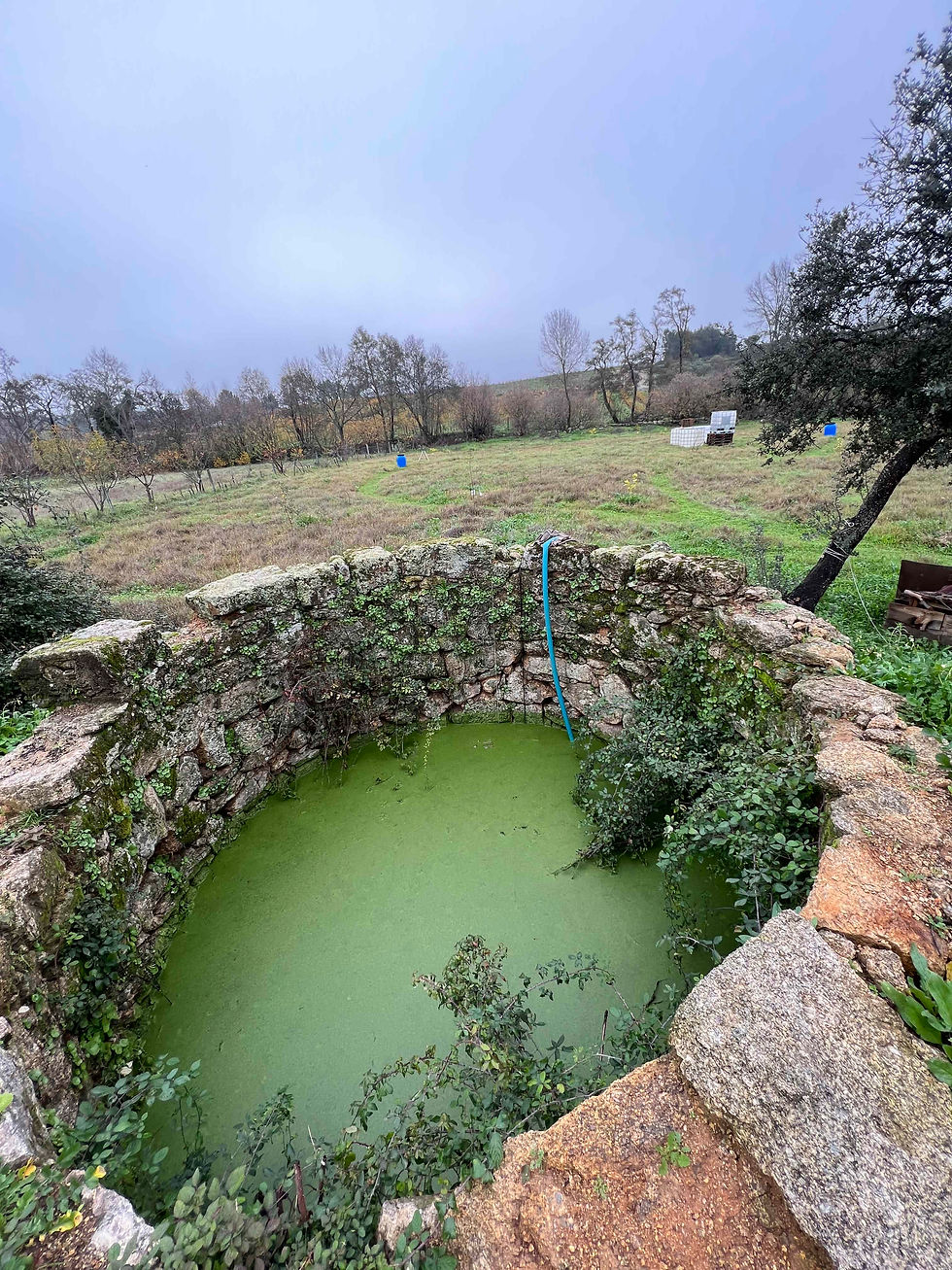
Here in Central Portugal, ours begins with granite — stone terraces stacked by hand generations ago, a deep well chiseled through rock, and soils that have seen both abundance and neglect. When MuDan and I first set foot on this hillside, we thought we were buying a blank slate. We were wrong.

What we really bought was a living archive of decisions made long before us: how water once flowed, where animals grazed, and how trees were cut or spared. This historical context matters more than most newcomers realize. It explains why the ground floods in one spot, dries out in another, and cracks open after a long summer drought.
Understanding the climate challenges in Central Portugal isn’t just about reading rainfall charts or temperature graphs. It’s about reading the land’s memory — every scar, every terrace, every wild olive root pushing through the stones. And that memory still shapes how we design, plant, and build off-grid today.
If you’re planning your own off-grid or semi-rural life in Portugal, start by getting to know your land’s past before shaping its future.
Subscribe to the Kraut Crew — our growing circle of practical dreamers — and get grounded insights, tested tools, and fresh updates from our Quinta straight to your inbox.
Historical Land Use and Legacy Soils of Central Portugal
The land across Central Portugal carries a long memory of human hands. For centuries, families carved terraces into granite slopes to trap precious rain, slow erosion, and create pockets of soil deep enough to grow olives, grapes, and grains. Many of those stone walls still stand — not just as rustic decoration, but as living proof of how our ancestors adapted to Mediterranean climate challenges long before modern irrigation or machinery.
When we arrived, two such terraces framed our property. Both are still intact — each one a testament to careful stonework that holds the slope steady through harsh summers and pounding winter rains. Along the lower edge of our land runs another structure: a granite stone wall built to hold back the river during winter floods. It stretches beyond our boundary, connecting with our neighbors’ properties in a shared defense against overflowing water.
Unfortunately, centuries of roots and runoff have taken their toll. Some sections of the flood wall have crumbled under pressure, and parts of our own wall show the same slow movement — tree roots pushing stones loose, soil eroding beneath. Repairing these walls isn’t just a matter of aesthetics; it’s about land safety and water management. These structures were early climate-adaptation tools, designed with the same purpose we pursue today: resilience through design.
Beneath these terraces lies the region’s defining material — granite. It gives our hills their rugged texture and our wells their depth. Granite soils are usually acidic, low in organic matter, and quick to drain. That’s good for Mediterranean fruit trees like olives, almonds, and figs — but not ideal for shallow-rooted annuals unless compost and mulch are added consistently. Understanding this base geology is crucial before planning gardens, orchards, or greywater systems.
Over centuries, deforestation and grazing stripped many of these slopes bare. Charcoal production, timber exports, and later eucalyptus plantations replaced deep-rooted native trees with fast-growing species that further drained and dried the soil. This legacy still defines much of Central Portugal’s rural landscape — a patchwork of eroded terraces, invasive regrowth, and forgotten wells waiting to be reclaimed.
Understanding the Mediterranean Climate — Cycles, Droughts, and Rain Events
Central Portugal sits at the crossroads of Atlantic moisture and continental heat. That mix creates a rhythm that rewards those who plan ahead and punishes those who don’t. Winters can turn the land into a sponge; summers, into a brick. Recognizing this pattern early will shape every choice you make — from roof size and tank volume to plant selection and composting rhythm.
The Yearly Cycle
Rain usually returns in late October or November, filling wells and topping up rivers after months of drought. By December through March, soils are saturated and creeks swell fast. Then, by May, the heat hardens the ground again. From June to September, expect almost no rainfall — a true test of patience and mulch.
On our land, the well rises nearly a meter in winter and drops low enough in August to expose granite ledges. That seasonal swing shows the limits of local aquifers. The water is there, but it moves slowly, and overuse means trouble for you and your neighbors alike.
Rainfall and Runoff
Mediterranean rain doesn’t arrive politely. It falls hard, sometimes dropping a month’s worth in a single storm. Without groundcover or terraces, water races downhill, stripping away soil. Our old stone walls catch that flow, turning chaos into opportunity — a principle that still guides good design. Simple contour trenches, swales, or mulch basins can make a massive difference in how much water the soil retains through summer.

Drought and Heat
Summer heat often reaches 35–40 °C (95–104 °F) inland. Winds from the east suck out moisture, while coastal breezes can cool by ten degrees but dry leaves just the same. Drought stress is cumulative; shallow watering teaches roots to stay near the surface, making plants more fragile. Deep, infrequent watering combined with thick organic mulch is the key to survival.
Extreme Events
In recent years, weather extremes have grown more frequent: longer dry spells, heavier downpours, and stronger winds. Climate data shows a clear upward trend in fire risk and heatwave duration across Central Portugal. Building firebreaks, maintaining green barriers, and managing fuel load are no longer optional — they’re seasonal chores like pruning or compost turning.
Tough Tip: Keep a small weather log. Record rainfall, wind direction, and soil moisture weekly. After one full year, you’ll know your site better than any online forecast ever could. Patterns you spot — like the first frost date or where dew lingers longest — are pure gold for future planning.
Site Assessment in Practice — Step-by-Step for Off-Grid Projects
Before installing a single solar panel or planting your first tree, you need to understand your land as a whole system — geology, water, wind, access, and microclimate all working together (or sometimes against each other). A good site assessment saves years of rework and regret.
In Permaculture, observation isn’t just a step. It’s the foundation.The first design principle — Observe and Interact — reminds us that the land will always teach, if we take time to listen. Observation reveals what no online map or soil test can: how nature already manages the site. At Tough Kraut, we’ve learned that rushing into “doing” before truly seeing usually means redoing it later.
Here’s how to observe and assess your land the Tough Kraut way — practical, patient, and rooted in real experience.
Step 1: Observe Before Acting
Spend your first days — or ideally, your first season — simply walking, watching, and noting. Follow the sun across the sky. Track shadows from morning to dusk. Watch how wind moves through trees or dust across open soil. Sit quietly after rain and listen where water runs or collects.
Mark areas where grass stays green longest, where ants gather, where birds feed, where frost lingers. These are natural indicators of energy flow, fertility, and microclimate boundaries.
Tough Tip: Don’t rush to clear land or set permanent paths during the first months. Observation takes patience, but it saves both money and soil.
Step 2: Define Your Observation Zones
Walk your property in slow loops. Use flags or stones to mark key features — terraces, slopes, damp spots, animal trails, and natural shade. Notice where moisture lingers after rain or where grass dries first. Early mapping of Zone 0–5 (home base to wild edge) sets the framework for your permaculture layout later on.
Tough Tip: Do this at least three times — once after heavy rain, once in midsummer heat, and once in early spring. Each visit reveals a different side of your land’s character.
Step 3: Track Sun, Shade, and Wind
Take notes at 9 a.m., noon, and 3 p.m. on where shadows fall. Mark them on a simple sketch. In Central Portugal, summer sun can scorch west-facing walls while northern slopes stay cooler and moister.
Wind mapping is equally vital — the dry east wind (Leste) often arrives hot and harsh, while Atlantic fronts bring moist air from the west. Position living hedges, sheds, or solar panels accordingly.
Step 4: Read the Water
Water defines Mediterranean success or failure.
Check existing structures like wells, tanks, and drains.
Observe how stormwater flows down your paths or terraces.
Dig a few test pits (30 cm deep) and fill them with water — measure how long they take to drain. This tells you how much infiltration your soil allows.
Sketch rough contour lines using a transparent hose level, laser, or smartphone app (e.g., GPS Fields Area Measure).
Step 5: Soil and Ground Cover
Granite soils in Central Portugal are usually acidic and low in organic matter. Take samples from several spots (topsoil and subsoil) and send them for basic pH and nutrient testing. Even a €25 test gives valuable direction.
Record where moss grows thick — it marks areas of higher moisture and organic matter. Where soil turns pale or sandy, plan to build life with compost, mulch, and cover crops.
Step 6: Access, Slope, and Drainage
Plan your access before your buildings. Muddy tracks and steep slopes are costly to correct later. Walk your site after a storm — that’s when you see where water truly wants to go. Any track or structure that cuts across natural drainage lines will eventually erode unless guided by a shallow channel or stone diversion.
Tough Tip: Use simple stakes and string to test the slope. Anything steeper than 10–15 % may need retaining walls or contour planting to avoid losing soil each winter.
Step 7: Microclimates and Human Comfort
Every site hides small surprises — a warm corner by a wall, a cool patch under cork oaks, a frost pocket at the bottom of a slope. These microclimates determine where citrus thrives or freezes, where a greenhouse bakes or breathes.
Mark these pockets on your base map and assign them functions: drying racks where wind is strongest, compost bins where shade keeps them from overheating, and seating where breezes cross in summer.
Step 8: Record, Sketch, and Cross-Check
Create a simple binder or digital file. Store your soil tests, contour sketches, rainfall notes, and even mistakes. Site assessment is never finished — it’s a rolling experiment. The more records you keep, the more confident your design becomes.
Tough Tip: If you inherit existing stone walls, terraces, or wells, document their condition early. Cracks and root movement often worsen after winter rains. A few stabilizing stones or a small trench now can prevent a full rebuild later.
Tools, Materials, and Local Regulations You Should Know
Once you’ve observed the land and mapped its patterns, it’s time to equip yourself for hands-on assessment and early setup. You don’t need a professional survey crew — just practical tools, patience, and respect for the law.
Essential Tools for Site Assessment
A small, well-chosen kit can handle most early homestead evaluations. Here’s what earns its keep on our land:
Category | Tools & Notes |
Mapping & Measurement | Measuring tape (30 m), line level or laser level, compass app, GPS Fields Area Measure (mobile app), A4 grid notebook or field sketch pad |
Soil & Water Testing | Soil pH test kit, hand auger or garden trowel, 10 L bucket, small shovel, clear jars for sediment testing, DIY infiltration test (drill holes or dig test pits) |
Weather & Observation | Rain gauge, handheld anemometer, outdoor thermometer, camera or phone for time-stamped photos, field journal for daily notes |
Safety & Comfort | Wide-brim hat, gloves, sturdy boots, refillable water bottle, high-visibility vest (for roadside boundaries), small first aid kit |
Extras Worth Having | Moisture meter, marking stakes with colored tape, foldable shovel, pocket knife, power bank, basic tool belt |
Tough Tip: Label your jars or samples with permanent marker and GPS coordinates. You’ll thank yourself later when comparing seasonal changes or designing greywater systems.
Basic Materials for Early Site Work
Once you’re ready to make small interventions — like erosion control or observation improvements — keep a few materials on hand:
Rocks and Gravel: for temporary drainage channels or to stabilize eroded corners of terraces.
Burlap, Jute, or Straw: quick erosion cover before permanent vegetation takes over.
Wood Stakes and String: for marking contour lines, pathways, and project boundaries.
IBC Totes (1000 L): invaluable for temporary rainwater collection and greywater testing setups.
Mulch Material: wood chips, leaf litter, or shredded prunings to protect exposed soil.
Reusable Buckets and Wheelbarrow: for hauling compost, soil, or stones — always more useful than expected.
Tough Tip: Most of these materials can be sourced second-hand in Portugal. Ask around local building yards, Facebook marketplace, or cooperative groups — many farms sell used IBC tanks or gravel by the trailer load.
Local Regulations to Keep in Mind
Before you bring in machines or dig new wells, learn the local rules. Portugal’s rural bureaucracy moves slowly but expects compliance.
Zoning and PDM (Plano Diretor Municipal):
Each municipality has a PDM zoning plan defining what type of construction is allowed on your land — rural, agricultural, forested, or urban. Check this first at your local Câmara Municipal. Even light structures like greenhouses or tool sheds may require notification.
Water Use and Well Regulations:
Existing wells and boreholes can be registered with APA (Agência Portuguesa do Ambiente).
New boreholes usually require an autorização prévia (pre-authorization).
For rainwater harvesting and small ponds, household use is usually unrestricted, but large storage systems might trigger an inspection if visible from the road.
Fire Safety (Limpeza de Terreno):
Landowners must clear vegetation within 50 m around houses and 10 m along public roads before March 15 each year.
This includes pruning low branches, reducing ground fuel, and keeping trees spaced according to regional law.
Fines can be heavy, but compliance drastically reduces wildfire risk — a real threat in Central Portugal.
Building and Renovation Approvals:
Traditional granite buildings can often be renovated if existing walls remain, even in rural zones.
For off-grid systems (solar panels, compost toilets, or rainwater tanks), you may not need permits, but always verify with your municipality. Regulations vary by parish.
Tough Tip: Portuguese regulations may seem inconsistent — and sometimes they are. A friendly visit to your local Câmara’s technical office usually clarifies more than a week of online searching. Bring photos, maps, and patience.
Sustainability Insights — Adapting Traditional Knowledge to Modern Systems
If there’s one thing this land teaches, it’s humility. Every terrace, every well, every dry-stone wall was built with care, without concrete or diesel — just muscle, observation, and generations of trial and error. Long before the term sustainability became fashionable, Central Portugal’s farmers were already practicing it. The challenge now is to revive those lessons using today’s tools and knowledge.
Water Wisdom: From Wells to Catchments
Granite-country farmers once relied on deep wells, cisterns, and natural springs. They knew how to store every drop of winter rain for the dry months ahead. Today, that wisdom meets technology.
Modern rainwater harvesting systems, slow-release drip irrigation, and greywater reuse expand on what stone basins once achieved.

At Tough Kraut, our granite well and IBC tank system follow the same principle — store water when it’s plentiful, and release it slowly through the soil food web when it’s not.
Tough Tip: Prioritize gravity-fed systems where possible. They save power, reduce maintenance, and work even when inverters or pumps fail.
Soil Resilience: Compost, Cover, and Contours
Traditional farmers used terraces and contour plowing to keep soil in place. You can still see the results in old vineyard walls or ancient olive groves clinging to hillsides. The logic remains solid: control runoff, protect topsoil, and feed the ground regularly.
In modern practice, composting, mulching, and living groundcover continue that tradition. Instead of bare soil baking in the sun, cover it with organic matter. Instead of synthetic fertilizer, feed it with what the land already provides — leaves, prunings, and manure.
Tough Tip: Mix old and new — a modern compost thermometer can help track microbial heat, while ancient wisdom says “a good compost should smell like forest, not rot.” Both are right.
Fire and Forest Management
Fire wasn’t always the enemy. In old times, light ground burns were used to clear stubble or renew pasture under strict timing and supervision. With land abandonment, undergrowth now builds unchecked, turning small flames into unstoppable infernos.
Modern sustainability means active management: pruning, mulching, and selecting fire-resistant species like olive, carob, and cork oak. Combining green firebreaks (rows of moisture-holding plants) with careful zoning around structures builds a defensible landscape that still looks natural.
Tough Tip: A 3 m gravel or stone strip between wild and managed zones can act as both a path and a fire barrier — low effort, high value.
Energy and Building Materials
Portugal’s ancestors built from what surrounded them — granite, clay, cork, straw, and timber. These materials aged gracefully and required minimal maintenance.
Today’s off-grid builders can reapply that principle with upgraded efficiency: solar power, wood-fiber insulation, and lime plaster instead of cement. The materials breathe, the walls last, and repairs remain low-cost.
At our granite stone house, every decision follows this test: If it fails, can we fix it with what we already have? If the answer is no, it’s probably not sustainable for off-grid living.
Biodiversity as Insurance
Traditional mixed landscapes — orchards, herbs, grazing, and woodland — built resilience by diversity. A pest in one crop didn’t mean total failure.
Permaculture takes this further: layering trees, shrubs, and groundcovers into living systems that feed and protect each other.
In Central Portugal, blending native species like cistus, rosemary, strawberry tree, and oak with productive ones like fig, pomegranate, and carob creates beauty and function — an ecosystem that supports itself.
Tough Tip: Diversity isn’t decoration. Each plant is a worker. Ask what job it does — shade, nitrogen, pollination, mulch, or protection — before planting it.

Learning from the Past to Shape Resilient Futures
Every stone terrace, every cracked wall, and every sunburned slope in Central Portugal tells a version of the same story — people adapting to the rhythm of a challenging climate. The tools and technologies may have changed, but the task hasn’t: learning to live with the land instead of against it.
At Tough Kraut, we’ve learned that resilience isn’t built overnight. It’s layered — in compost piles, in terraces rebuilt stone by stone, and in patient observation that teaches more than any manual. Understanding the climate challenges in Central Portugal is less about predicting the next storm and more about preparing your system to handle whatever comes.
When you read the land’s history, honor its patterns, and design with humility, you’re not just creating a sustainable homestead — you’re restoring a conversation between generations. The terraces our ancestors built weren’t monuments; they were messages: adapt, observe, and keep going.
Ready to dig deeper — literally and figuratively?
Head down to the Recommended Books & Resources section below, where you’ll find the exact tools, books, and trusted gear we’ve tested here on our Quinta. Each one links back to the Tough Kraut Resources page — our living library of off-grid essentials, field-tested methods, and affiliate recommendations for building resilience wherever you are.
Because learning never stops once the shovel hits the soil. Equip yourself wisely, and the land will teach the rest.
Herman’s Tough Kraut Fixes: Common Climate Challenges in Central Portugal
Even the best-planned Mediterranean homestead throws a few surprises your way. From stubborn granite soil to paperwork puzzles, these are the challenges we’ve wrestled with — and what actually worked. Use this troubleshooting FAQ as a reference when your land starts testing your patience.
Q: Our soil is mostly granite sand. How can we build fertility without hauling in truckloads of compost?
A: Granite soils drain fast and don’t hold nutrients well — but that’s fixable. Start by protecting the surface. Mulch heavily with wood chips, prunings, or leaves. Add compost little by little each season instead of dumping large quantities at once. Over time, roots, worms, and fungi will do the mixing for you.
We also plant dynamic accumulators like comfrey, tagasaste, and lupine to draw minerals up from deeper layers. Their leaves become mulch, feeding the topsoil naturally. It’s slow, but each season brings visible improvement — from pale dust to dark, sponge-like humus.
Q: Our stone terraces and river wall show movement from tree roots and erosion. Should we rebuild or repair?
A: If the wall is still standing, repair — not rebuild. Remove small trees whose roots are shifting stones, but leave deep-rooted ones stabilizing the slope. For cracks, wedge new stones firmly in place and backfill behind the wall with gravel for drainage.
Q: The summers are too dry for seedlings, and our well drops low by August. Any water-saving strategies?
A: Welcome to the Mediterranean reality — a test of storage and timing. The fix is not more water, but smarter use.
Install rainwater tanks or IBC totes to capture roof runoff in winter.
Switch to deep, infrequent watering instead of daily sprinkles.
Use terracotta olla pots or buried bottles near roots to deliver water slowly underground.
Build shade and mulch into your planting strategy — a 5 cm (2 in) mulch layer reduces evaporation by half.
We’ve also learned to plant new trees in late autumn, not spring. That way, roots establish through the wet season before summer hits.
Q: The bureaucracy feels overwhelming — permits, zoning, and inspection delays. How do you deal with it?
A: With patience, persistence, and good humor. Every municipality (Câmara Municipal) has its quirks. Start by visiting in person — face-to-face conversations go further than emails. Bring printed maps, sketches, and photos. When the process stalls, ask questions like “What information do you need from me to move forward?” rather than “When will this be done?” It turns the conversation from complaint to collaboration.
Q: I’m unsure how to start building sustainably on a small budget. What’s the first investment that really matters?
A: Invest in observation and water. A €10 rain gauge and a €50 soil test can save thousands later. From there, prioritize passive systems — terraces, swales, shade trees — before power tools or pumps. The land’s natural design will reduce your need for technology later.
Recommended Books & Resources
Books
Earth Restorer’s Guide to Permaculture by Rosemary Morrow
A modern, plain-spoken permaculture manual that prioritizes observation, water, soils, and design logic you can apply right away. Great bridge between ethics and on-the-ground steps.
Rainwater Harvesting for Drylands & Beyond, Vol. 1 by Brad Lancaster (3rd ed.)
The best starter on catching, slowing, spreading, and storing rain. Clear diagrams and stepwise design thinking for drought-to-deluge climates like ours.
The Water-Wise Home by Laura Allen
Greywater 101 done right. Practical system choices, safety, simple plumbing layouts, and real parts lists for legal, effective reuse at home scale.
Cork Oak Woodlands on the Edge by James Aronson et al.
Deep dive into the ecology and management of Portugal’s emblematic montado landscapes. Helps you read the wider ecosystem your site lives in.
The Dry Garden by Beth Chatto
A classic on plant selection and design for low-water regions. Great for thinking in microclimates and matching plants to place.
Resources
Stratus Precision Rain Gauge
Simple, accurate rainfall data that makes irrigation and storage planning real, not guesswork. Mount once, read after every storm
Luster Leaf 1601 Rapitest Soil Test Kit (pH + NPK)
Fast baseline on acidity and nutrients from several spots on your land. Pair with a lab test later for detail.
GrowOya Terracotta Olla (buried irrigation pot)
Slow-release, root-zone watering that saves seedlings in summer and cuts evaporation dramatically. Works well in mulch basins.
REOTEMP Backyard Compost Thermometer (20 in.)
Keeps your compost on track so you’re building spongey, water-holding soil for next season. Read, turn, repeat.
Tough Kraut Resources
Tough Kraut Resources is our living library of field-tested tools, books, off-grid gear, and build materials we trust on our own land.


Comments