
How to Grow Blue Potato Bush: Simple Care Guide for Mediterranean Gardens

Blue Potato Bush, or Lycianthes rantonnetii, is a frost-tender ornamental shrub with violet-blue flowers, yellow centers, and a slightly theatrical habit of looking dead after winter before returning from the base. It is also known by the older synonym Solanum rantonnetii, and belongs to the nightshade family, Solanaceae. Kew lists its native range from Bolivia to southeastern and southern Brazil, northeastern Argentina, and Paraguay, where it grows as a subtropical shrub.
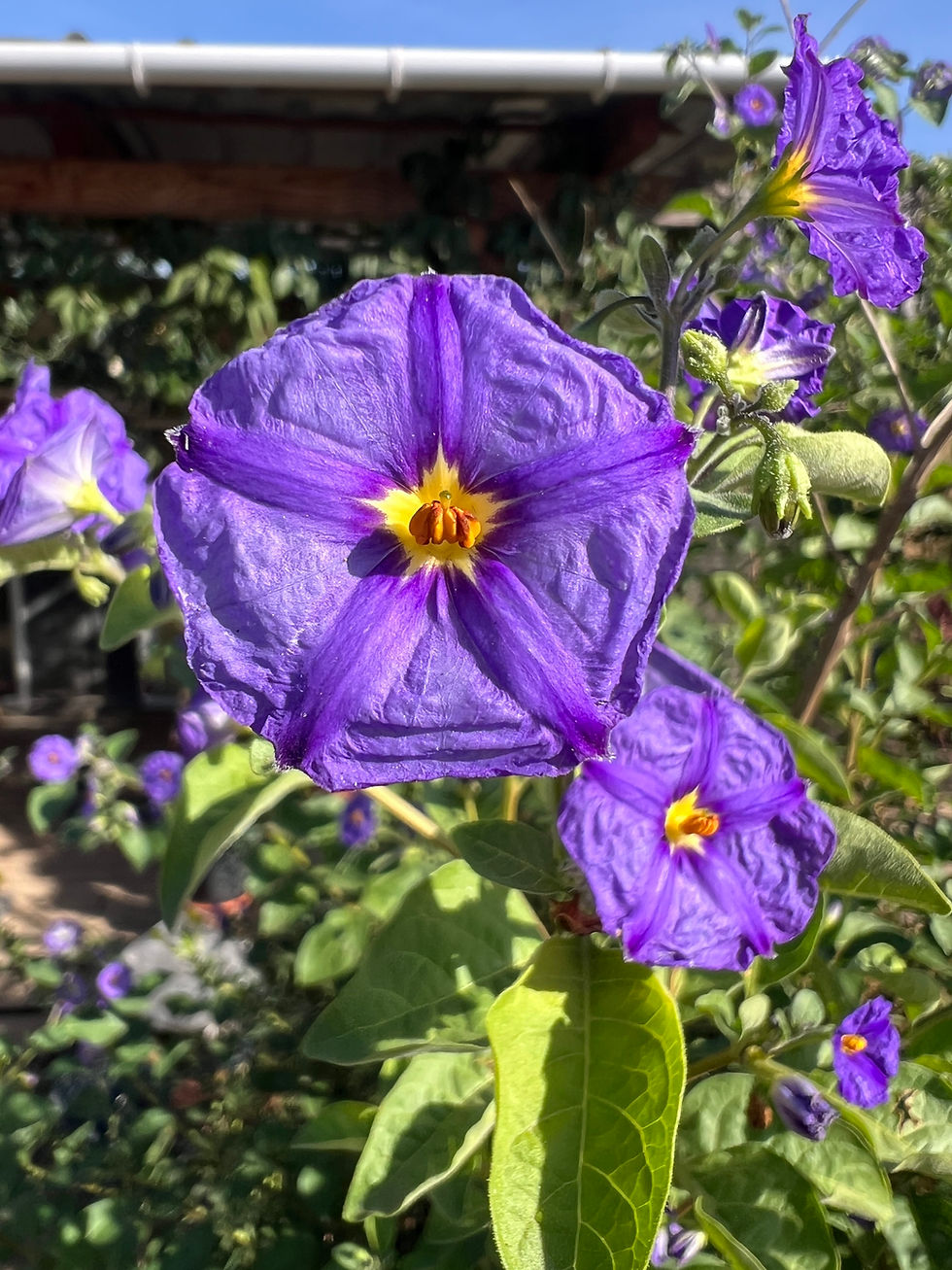
In Mediterranean gardens, Blue Potato Bush is useful as a porch plant, fence-line shrub, informal flowering screen, or warm-wall accent. On our Central Portugal homestead, ours grows by the little fence around the mobile home porch, dies back after frost, and reliably resprouts in late spring. This season, the basal shoots have already reached about 30 to 40 cm, which is exactly the kind of stubborn plant behavior we appreciate around here.
Quick Answer: How to Grow Blue Potato Bush
Grow Blue Potato Bush in a sunny, sheltered position with well-drained soil, moderate summer watering, and protection from hard frost. It flowers best with good light, but in hot Mediterranean summers, young plants may appreciate a little afternoon protection until they are established. RHS describes it as a lax evergreen shrub with purple-blue funnel-shaped flowers in summer and autumn, followed by red berries.

In Zones 8-10, treat Blue Potato Bush as a frost-tender perennial shrub rather than a guaranteed evergreen. In mild Zone 9-10 pockets it may keep more top growth, while in Zone 8a it may die back to the ground and return from the roots. Do not rush to remove it in spring. Sometimes this plant likes to make gardeners question their life choices before casually reshooting in May.
Best Place to Grow Blue Potato Bush in a Mediterranean Garden
The best place for Blue Potato Bush is warm, bright, sheltered, and well drained. Think porch edges, sunny fences, south or west-facing walls, courtyard corners, and stone-wall microclimates where stored heat can soften winter cold. RHS recommends full sun, a south or west-facing aspect, and sheltered exposure.

In Central Portugal, “full sun” still needs a little common sense. A mature Blue Potato Bush can handle a bright position, but a newly planted one may struggle if thrown straight into all-day summer sun, wind, dry soil, and reflective heat. Give young plants mulch, steady watering, and possibly light afternoon shade during their first harsh summer.
Avoid frost pockets if you want to keep more woody structure through winter. Lower ground near water, exposed slopes, and open windy areas are riskier. If your garden has a warm wall, porch, greenhouse edge, or protected courtyard, start there. In colder Zone 8a spots, plant it where root survival is the goal, not perfect evergreen top growth.
Soil, Water, and Mulch Tips for Blue Potato Bush
Blue Potato Bush prefers moist but well-drained soil. RHS lists loam and moist but well-drained conditions as suitable, while the Tough Kraut Plant Library notes that sandy soils can work if improved with compost and not allowed to become completely exhausted.
Drainage matters more than pampering. This is not a plant for soggy winter clay or places where rainwater sits around the crown. In Mediterranean climates, the tricky balance is simple to describe and harder to master: not bone-dry in summer, not waterlogged in winter.

Mulch helps protect the root zone from both summer heat and winter cold. Use straw, leaves, wood chips, or mixed organic mulch, keeping it slightly away from the stem base to reduce rot risk. During dry summer weather, deep watering once a week is usually more useful than shallow daily sprinkling. Let the topsoil dry slightly between waterings.
How to Plant and Establish Blue Potato Bush
In mild Mediterranean areas, spring planting after the last frost is usually safest for Blue Potato Bush, especially in Zone 8a. This gives the plant a full growing season to build roots before winter. The Tough Kraut Plant Library also recommends planting after frost risk has passed and spacing plants at least 1 m apart if used as a hedge.
Dig a generous planting hole, loosen the surrounding soil, and mix in compost if the ground is poor or sandy. Plant at the same depth it was growing in the pot, water deeply, then mulch. If the plant is tall or trained as a standard, provide support because the growth can be loose and flexible. RHS also notes that plants may require support.
For colder or more exposed gardens, container growing is a smart backup. A large pot with excellent drainage can be moved to a protected place during winter. This is especially useful if you want flowers without gambling the whole plant on one nasty frost night.
Seasonal Care for Blue Potato Bush in Zones 8-10
In spring, wait before declaring the plant dead. If frost has cut it back, remove dead stems once new growth is clearly visible. Your current resprouting shoots from the base are a good sign that the root system survived winter.

In summer, water deeply during hot dry spells, mulch well, and prune lightly to encourage branching and flowering. Flowers form on new growth, so gentle shaping can help the plant become bushier. Watch tender shoots for aphids and whiteflies, especially if plants are stressed or grown under cover. RHS also notes susceptibility to aphids and glasshouse red spider mite under glass.
In autumn, enjoy the late flowers but avoid heavy feeding. In winter, protect the root zone with extra mulch. In harsher nights, fleece or frost cloth over the crown can help. Also remember that all parts should not be eaten. RHS warns that all parts can cause severe discomfort if ingested and recommends gloves and washing hands after handling.
Frequently Asked Questions About Growing Blue Potato Bush
Q: Can Blue Potato Bush survive frost?
A: Blue Potato Bush may survive light frost by resprouting from the base, especially in protected Mediterranean Zone 8-10 gardens, but hard frost can kill the top growth. In Zone 8a, treat regrowth as possible, not guaranteed.
Q: Can Blue Potato Bush grow in full sun?
A: Yes, Blue Potato Bush flowers best in good sun, but young plants in hot Mediterranean gardens may need temporary shade, mulch, and careful watering until established.
Q: Can Blue Potato Bush grow in pots?
A: Yes, Blue Potato Bush can grow well in a large pot with free-draining compost. Containers are especially useful in frost-prone gardens because the plant can be moved under cover in winter.
Final Thoughts on Growing Blue Potato Bush
Blue Potato Bush is one of those plants that rewards patient gardeners. It may look finished after frost, then suddenly send up fresh shoots from the base as if nothing happened. In Mediterranean gardens, success comes down to warmth, drainage, mulch, moderate water, and not panicking too early in spring.
For the full growing record, photos, and our longer notes from Central Portugal, visit the Blue Potato Bush Plant Library entry.


Comments