
How to Grow Honey Drop Fig: Simple Care Guide for Mediterranean Gardens

Honey Drop Fig, Ficus carica ‘Pingo de Mel’, is a Portuguese fig cultivar well suited to warm Mediterranean conditions. Known locally as Pingo de Mel, it produces greenish-yellow figs and is traditionally grown in Portugal, including around Torres Novas. Portuguese research describes it as a bifera cultivar capable of producing two crops, although crop performance can vary with climate and growing conditions.
For gardeners in USDA Zones 8-10, it can be a remarkably forgiving fruit tree once established. It handles summer heat, responds enthusiastically to pruning, and can grow in surprisingly difficult ground, as our old tree on the Quinta continues to demonstrate.
Quick Answer: How to Grow Honey Drop Fig
If you want to know how to grow Honey Drop Fig, start with plenty of sunlight, good drainage, room for the roots, and consistent watering while the tree establishes. Mature fig trees cope much better with dry Mediterranean summers, although occasional deep watering can support fruit development during prolonged drought.

Plant in autumn or early spring during mild weather. Honey Drop Fig is generally low-maintenance once established, but give careful thought to its eventual size and root system. A fig planted too close to foundations, drains, pipes, or other infrastructure may become a long-term inconvenience.
Best Place to Grow Honey Drop Fig in a Mediterranean Garden
Choose a sunny, warm position with enough space for a spreading canopy. Full sun generally promotes good fig production and ripening, although a young tree planted into intense Central Portugal summer conditions may appreciate temporary protection while its roots establish.
A south- or west-facing slope can work particularly well. In colder Zone 8 locations, shelter from strong winter winds and severe frost is useful because young shoots and overwintering fruitlets can be damaged even when mature wood survives.
Avoid the wettest frost pockets if you have better options available.
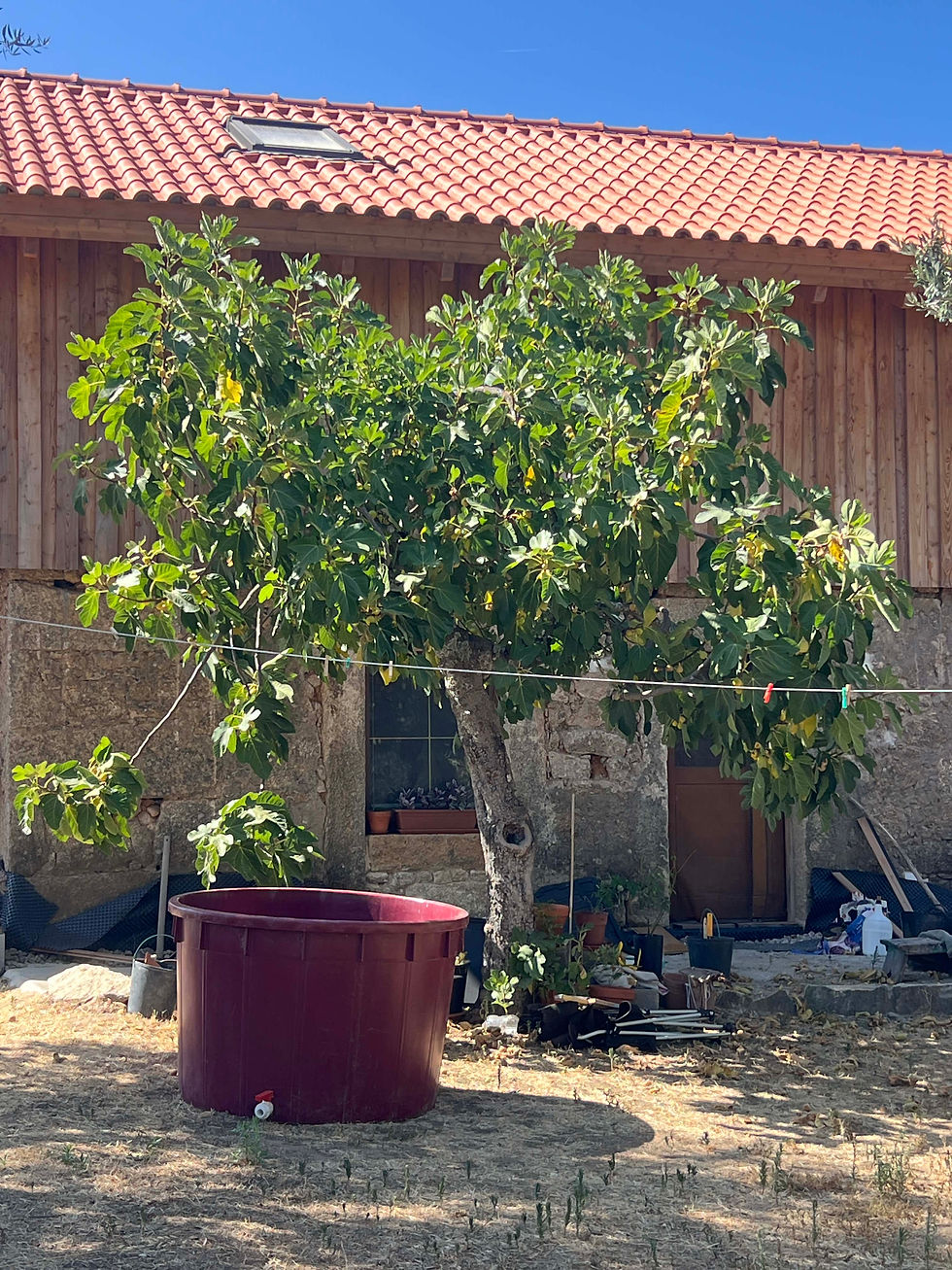
Most importantly, leave room underground. Our mature Pingo de Mel grows beside the old granite house, where we discovered fig roots around 85 cm (33 in) below ground and extending into areas being excavated for French drainage.
Soil, Water, and Mulch Tips for Honey Drop Fig
Perfect soil is less important than drainage. Common figs adapt to many soil types and can tolerate relatively difficult conditions, but persistently waterlogged ground should be avoided.
Young figs need more attention. Water deeply enough to encourage roots downward rather than repeatedly wetting only the surface. During their first Mediterranean summers, check them regularly and do not assume that being a “drought-tolerant fig” means a newly planted tree can immediately fend for itself.

Once established, reduce watering frequency and water deeply during serious drought or when the tree carries a heavy crop.
Add organic mulch around the root zone to slow summer moisture loss and moderate soil temperatures. Keep mulch slightly away from the trunk rather than piling it directly against the bark.
How to Plant and Establish Honey Drop Fig
Autumn is an excellent planting season in Mediterranean climates because cooler temperatures and winter rainfall give roots months to establish before summer.

Dig a hole roughly as deep as the existing root ball and wide enough to loosen the surrounding soil. Set the tree at approximately its previous growing depth, backfill, water thoroughly, and mulch the surrounding area.
During the first year, concentrate on establishment rather than forcing rapid growth with heavy fertilizer.
And resist the temptation to squeeze a fig into the smallest available corner. Ficus carica can eventually become a substantial shrub or tree with an equally ambitious root system.
Seasonal Care for Honey Drop Fig in Zones 8-10
In spring, remove frost-damaged, crossing, weak, or poorly positioned branches once the main risk of hard frost has passed. Figs respond strongly to pruning, so hard pruning can trigger vigorous replacement shoots.
We have heavily pruned our old Pingo de Mel twice, and both times it returned with impressive growth. These days, selective thinning and height control make more sense than repeatedly cutting the entire tree back hard.
Through summer, monitor soil moisture and harvest frequently as figs soften and ripen. Birds, ants, and other wildlife may quickly discover ripe fruit.

Remove spoiled or fallen figs rather than leaving them beneath the tree. When pruning, gloves and covered skin are sensible because fig sap can irritate skin.
Hardwood cuttings are also one of the simplest ways to propagate a known cultivar because the resulting plant is a clone of the parent rather than a genetically variable seedling.
Frequently Asked Questions About Growing Honey Drop Fig
Q: Can Honey Drop Fig grow in full sun?
A: Yes. Honey Drop Fig generally performs best with plenty of direct sunlight, although newly planted trees may need extra water and temporary protection during exceptionally hot Mediterranean summers.
Q: How often should I water Honey Drop Fig?
A: Water young Honey Drop Fig trees regularly while they establish, then transition toward less frequent, deeper watering. Mature trees tolerate dry conditions much better but can benefit from water during prolonged drought and heavy fruiting.
Q: Can Honey Drop Fig survive frost?
A: Established common figs tolerate considerable winter cold, but young trees, fresh shoots, and overwintering fruitlets are more vulnerable. A sheltered position becomes increasingly valuable toward the colder end of Zone 8.
Q: What is a bifera cultivar?
A: A bifera fig cultivar can produce two crops in one growing season: an early breba crop on the previous year’s wood and a later main crop on new growth.
Q: What is a breba crop?
A: A breba crop is the first fig harvest of the season, produced on the previous year’s growth and ripening before the main crop that forms on new shoots.
Final Thoughts on Growing Honey Drop Fig
Honey Drop Fig is a good example of why Mediterranean gardening often rewards observation more than rigid rules. Give the tree sunlight, drainage, enough rooting space, reliable water while young, and sensible pruning, then watch how it responds to your particular microclimate.
Our mature tree has dealt with hard pruning, shallow granite bedrock, dry summers, hungry wildlife, and years of changing activity around the old house. It is still producing more figs than we can comfortably eat fresh.
For our complete growing observations, harvest notes, propagation experience, and photos from Central Portugal, visit the Pingo de Mel Fig Plant Library guide.
If you’re building a more resilient garden and homestead, our Self-Sufficiency Toolkit brings together the resources and tools we’ve found most useful along the way.


Comments