
January Garden Planning: Seed Orders & Succession Planting for Year-Round Harvest

January has a funny reputation. It looks like a dead month in the garden, but it is the loudest month in your head. Seed catalogs arrive, inboxes fill with “new for 2026,” and suddenly you are convinced you need purple carrots, climbing spinach, and 27 tomato types.

Here’s the Tough Kraut truth. January is not for buying more seeds. January is for buying better decisions.
And if you garden in a Mediterranean climate (Zones 8–11), January is not just planning. It is a quiet growing window. Cool soil, mild days, and fewer pests make it a solid time to start cool-season crops, set up your successions, and lock in crop rotation so problems do not pile up later.
Scroll on to discover where to order organic, non-GMO seeds, including free seed catalogues that make January planning slower, smarter, and far less overwhelming.
At the end, don’t skip Herman’s Tough Kraut Fixes. It’s the Troubleshooting FAQ that saves you from seed regret and spring chaos.
January Garden Planning Starts With a “Bed Map,” Not a Seed Cart
Before you touch a catalog, touch reality.
Do this first (15 minutes):
Sketch your growing spaces. Beds, pots, balcony boxes, greenhouse beds.
Label them with sun and shade. Full sun, part shade, winter shade.
Note what grew where last season, even roughly.
Why? Because succession planting and crop rotation are not the same thing, and January is when they finally become friends instead of enemies. Succession is about timed waves for steady harvests. Rotation is about moving crop families to reduce pest and disease build-up.

Tough Tip: If you only have one bed, you can still “rotate” by rotating families in time. Leafy greens now, legumes next, then alliums. Tiny space, big logic.
Seed Catalogs Without the Rabbit Hole: Order in Waves, Not Wishes
Seed catalogs are designed to make you feel behind. You are not behind. You are in January, and January is early.
The 3-list system (simple, ruthless, effective)
List A: Dinner Seeds (your staples)
Things you actually eat weekly.
List B: Resilience Seeds (your climate insurance)
Heat-tough, cold-tough, pest-tough.
List C: Joy Seeds (your experiments)
Limit this. Your future self will thank you.

Now here’s the move that stops overwhelm:
Stagger your seed orders
Order 1 (January): cool-season crops + long-lead crops you will start under cover
Order 2 (late February): warm-season staples
Order 3 (April): gap fillers and late sowings
This prevents the classic mistake: buying everything early, then forgetting what you even own.
Tough Tip: If you can’t explain where a seed will grow (bed or pot) and when it will be sown, it goes back in the cart.
Seed Catalogues by Region (Organic & Non-GMO)
North America
High Mowing Organic Seeds (USA)
Certified organic, non-GMO seeds with a free print catalogue and a clean online version for winter planning.
Seed Savers Exchange (USA)
Heirloom, open-pollinated seeds focused on preservation, with a printable catalogue and a browsable digital edition.
Johnny’s Selected Seeds (USA)
Professional-grade varieties with excellent crop notes, available via free print catalogue and full online catalogue.
Europe
Bingenheimer Saatgut (Germany)
Organic, open-pollinated (“samenfest”) seeds offering free catalogue ordering and downloadable PDFs.
Association Kokopelli (France)
Diverse, resilient varieties rooted in seed sovereignty, with online catalogues and optional print requests.
Irish Seed Savers (Ireland)
Conservation-driven organic seeds presented in a clear annual catalogue for browsing and ordering.
Asia & Asia-Pacific
Annadana Seed Bank (India)
Organic, open-pollinated seeds shared through a catalogue-style system focused on local resilience.
Sahaja Seeds (India)
Farmer-owned organic seed company providing a free downloadable catalogue for easy variety planning.
Eden Seeds + Select Organic (Australia)
Asia-Pacific catalogue favorite offering mailed color catalogues plus online and PDF versions.
Succession Planting Schedule: The “Every Two Weeks” Rhythm That Feeds You
Succession planting is how you avoid empty beds and also avoid drowning in 10 kilos (22 lb) of one crop.
This simply means planting small amounts of the same crop at regular intervals instead of all at once. In Mediterranean climates, this spreads harvests across months, avoids gluts, and keeps beds productive even as temperatures rise and fall. The schedule below shows when to start each crop and when to repeat sowings to keep food coming steadily.

Start with three repeat crops
Pick three that you will happily harvest again and again:
lettuce or salad mix
radish
coriander or spinach
Then use the easiest rule in gardening:
Sow a small amount every 2 weeks.
That’s it. You do not need a complex spreadsheet to get real results. In Mediterranean systems, this rhythm is gold because growth slows in mid-winter, then speeds up hard as light returns.
What to plant in January (Mediterranean Zones 8–11)
Outdoors (with frost awareness):
broad beans and peas
onions and garlic
hardy greens depending on your microclimate
Under cover (greenhouse, polytunnel, cold frame):
lettuce, spinach, coriander
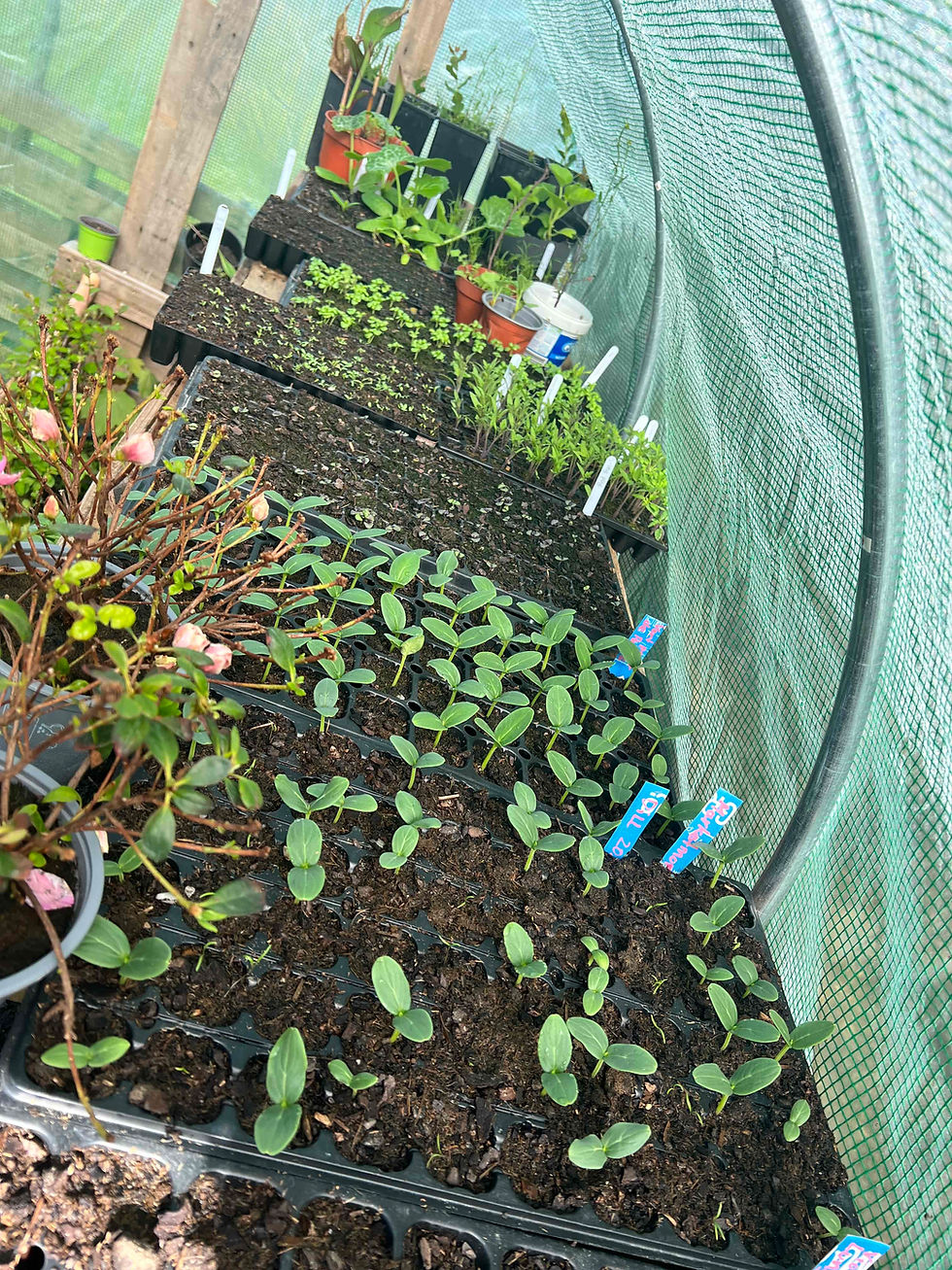
This is straight from the Mediterranean succession calendar logic we use at Tough Kraut.
Tough Tip: Check the 10-day forecast before sowing. A “mild winter” still throws a nasty night frost when you get smug.
Crop Rotation in January: The Quiet Work That Prevents Loud Problems
Rotation is boring. That’s why it works.
If you plant brassicas in the same spot again and again, pests and disease stop being “bad luck” and start being “a routine.” Our own guides call this out clearly: rotating crop families reduces carryover pressure, even in small gardens.
A simple rotation you can actually follow
Bed 1: roots
Bed 2: brassicas
Bed 3: legumes
Bed 4: alliums
No perfection needed. Just avoid repeating the same family in the same bed back-to-back.

January soil moves that pay off in April
Top-dress compost.
Mulch bare soil so rain does not compact it.
Pull tired plants and remove disease residue (compost only if healthy).
These basics are the same foundation we lean on in our Mediterranean cool-season planting approach.
Tough Tip: If you do one thing this month, keep soil covered. Bare soil is wasted water and wasted life.
January Is Where Year-Round Harvests Are Born
If you want a steady harvest, January is your start line.
Map your beds first.
Order seeds in waves.
Build a simple 2-week succession rhythm.
Rotate crop families so problems do not stack.
You do not need more time. You need a cleaner plan.
Ready to turn January planning into real harvests?
Jump to the Recommended Books & Resources section for proven books and tools that help you plan smarter before spring arrives.
Herman’s Tough Kraut Fixes: Troubleshooting FAQ for January Seed Orders & Succession Planning
January brings big energy and small daylight. That combo makes gardeners do strange things, like ordering seeds at 01:00 and calling it “planning.” This Troubleshooting FAQ is here to keep your winter motivation useful, not chaotic.
Q: Everything I want is out of stock. What now?
A: Treat “sold out” like a gift. Buy the function, not the fancy name. If your goal is a winter green, swap varieties within the same crop type. For lettuce, pick any cool-season cut-and-come-again mix. For peas, choose a reliable shelling or snap type suited to cool weather. Then set a reminder to check restocks once, not daily.
Q: My January sowings germinate slow or patchy. Did I mess up?
A: Maybe not. Winter light and cold soil slow everything down. Under cover, keep seed mix just damp, not wet. Outdoors, use a light mulch layer and water gently so seeds do not wash away. If nights drop near freezing, use fleece or a cloche as cheap insurance.
Q: Succession planting sounds good, but I get overwhelmed fast.
A: Shrink it. Pick two crops and repeat them every 2 weeks. Lettuce and radish is enough to feel the system working. Once that rhythm is real, add a third crop.
Q: I keep getting pests or disease in the same bed each year.
A: That’s rotation calling. Do not follow brassicas with brassicas, or tomatoes with tomatoes. Even a basic family switch breaks cycles and lowers pressure. Succession keeps beds full. Rotation keeps beds healthy. The Complete Succession Plantin…
Q: My seedlings get leggy indoors.
A: Light is the limit in January. Put trays in the brightest spot you have, rotate them daily, and keep them cooler at night if possible. If you use lights, lower them closer and run them longer. Also do not overfeed. Soft growth flops.
Recommended Books & Resources
Books
The Year-Round Vegetable Gardener by Niki Jabbour
The practical “grow something in every month” playbook that makes succession planting and season extension feel simple, even when winter is acting dramatic.
The New Seed-Starter’s Handbook by Nancy Bubel
Your seed-starting safety net for January, packed with clear steps and fixes so your trays stop looking like a science experiment.
The Vegetable Gardener’s Guide to Permaculture by Christopher Shein
A beginner-friendly bridge between “I grow veggies” and “I design an edible system,” with strong ideas for rotations, diversity, and long-term soil wins.
The Vegetable Gardener’s Bible, 2nd Edition by Edward C. Smith
A classic for planning, high-yield bed layout, and consistent harvests, perfect when your 2026 goal is “less chaos, more food.”
Resources
Seed Packet Organizer (photo-case style with 16 inner cases)
The “wait, this exists?” tool that turns seed catalogs and packets into a sortable system by month, crop family, or bed, so January garden planning stays tidy all year.
8-Cell Soil Blocker (seed-starting block maker)
Makes sturdy soil cubes that transplant fast with less root stress, which is gold when you’re running tight successions.
Seeding Square (seed and seedling spacing template)
A simple spacing guide that keeps sowing consistent, cuts thinning time, and helps your succession planting schedule actually land like you planned it.
Tough Kraut Resources
Want the no-fluff shortlist? Tap Tough Kraut Resources for our best homestead picks for January garden planning, seed-starting gear, and succession planting tools that fit real-life gardens.


Comments