
Mimosa Management on Mediterranean Land

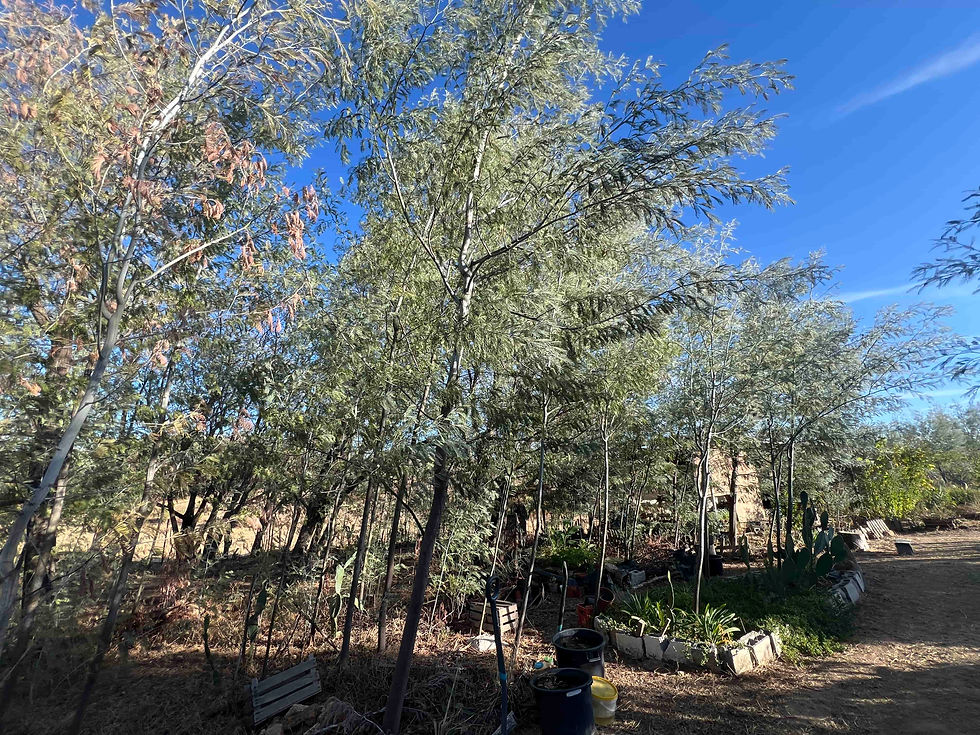
Mimosa was already established when we bought this land in early 2020. More than a dozen mature trees stand in three dense clumps on the upper property. The job is not whether to plant it. The job is mimosa management: where it stays, where it goes, when we cut, and how we use what we cut.
A quick naming check. In Portugal, mimosa usually means Acacia dealbata (silver wattle). In the US, “mimosa” often means Albizia julibrissin (Persian silk tree). We mean Acacia dealbata. Stick around for Herman’s Tough Kraut Fixes at the end. The Troubleshooting FAQ covers suckers far from the trunk, one cut that fails, seed timing, food-bed chaos, and firewood before our own pile is ready.
For field-tested homestead tools and reading, start at our Resources page. For the plant profile on biomass, nitrogen, and pioneer role, see our companion on Acacia dealbata as a pioneer. This article stays on the management system alone.
Why Mimosa Management Comes First on This Land
Before we lived here full-time, local sheep grazed this land for decades. They ate young mimosa leaves and bark and kept seedlings and suckers in check. A dozen or more mature trees were already on site. Fencing was our first big job. Sheep still find gaps and summer river-bed routes, so grazing pressure never fully vanishes. After the fence went up, suckers along shallow running roots showed up often several meters from the parent, growing up to 2 m (6.5 ft) per year.
Portugal lists Acacia dealbata as invasive. On this land it grows hard and fast. We manage it. We do not leave it to run. That is why mimosa management comes before pretty planting plans on the upper clumps. Sheep bought us time. Fencing changed the rules. Suckers and seedlings became our weekly work. Walk the root zone after rain. Mark shoots that sit meters from any trunk. Those are not new volunteers from nowhere. They are the same plant pressing into open ground.

Tough Tip: Treat sheep history and fencing as part of the mimosa system. When browsers leave, root suckers take their place. Plan for that gap.
Where It Stays, Where It Goes
Not every shoot is an enemy. Young mimosa can act as a fast pioneer beside cash crops: early shade and a wind buffer while slower plants establish. We selectively replant small suckers, collect seed, and set plants in chosen spots such as the southern fence line. We coppice, thin, and harvest as functional pioneers.

Food beds are different. Mimosa returns from seed and from root suckers. In a food bed it is not “good chaos.” It takes space, light, and moisture from crops. Cut it out of beds. Keep chosen fence-line pioneers. Move small suckers on purpose. Kill seedlings in beds after rain, when they pull easiest.
Mature trees on the upper land are a safety question. Shallow roots, brittle wood, storm hazards. We remove some for safety and for usable wood. Larger logs can become bed edges, raised-bed borders, and pathway barriers that slow erosion, hold soil, and feed fungal habitat. Weaving willow and mimosa branches into fence mesh helps where 10 cm (4 in) squares are too wide and sheep push their heads through.

Tough Tip: Draw a simple map: food beds = out; fence line and chosen pioneer spots = keep; mature hazard trees = remove on a plan. Do not manage by mood.
Cut Timing, Mulch, and Firewood
Cut before seed pods mature. One late cut can seed the next problem for years. Seedlings are easiest after rain. Repeated cuts weaken resprouts. One cut is a prune. Mimosa expects that and comes back harder unless you follow through.
Cut material becomes mulch. Nitrogen releases slowly as the woody bits break down. Chip or chop finer pieces for paths and rings. Keep coarse chips off soft stems if you worry about nitrogen draw while they decompose. Larger wood seasons for fuel. We do not claim a finished winter of Quinta mimosa heat yet. Our wood burner went in December 2025. We currently burn oak and eucalyptus, and we plan to burn our own mimosa as we cut and season it. Future fuel, not a finished stack story.

Safety removals and planned thinning feed that fuel pile over time. Coppice stumps will resprout. Expect to cut again. That is management, not failure. Keep cut timing on a calendar so pods never beat you to the ground.
Tough Tip: Calendar the cut before pods harden. Then schedule the follow-up cuts. Mulch the small stuff. Stack and season the large stuff. Do not call one cut a win.

Final Thoughts on Mimosa Management
Mimosa management on Mediterranean land is a system, not a war. Sheep once held the young growth. Fencing changed the balance. Suckers, seedlings, cut timing, mulch, and planned firewood are the tools now. Keep fence-line pioneers where they serve. Clear food beds. Cut before seed. Use the wood.
Join the Kraut Crew for more field notes like this, and use the Resources page for tools we actually rely on.
Herman’s Tough Kraut Fixes: Common Challenges with Mimosa Management
Mimosa questions on this land usually come down to roots, timing, and beds. This Troubleshooting FAQ keeps the answers short.
Q: Why do suckers appear several meters from the trunk?
A: Shallow running roots send up shoots far from the parent, often several meters away, and young growth can race up to 2 m (6.5 ft) per year. Walk the root zone after rain. Dig or cut suckers at the source when you can. One shoot far out is still the same plant.
Q: I cut a stem once. Why did it return stronger?
A: One cut is a prune. Mimosa resprouts from the stump and from roots. Repeated cuts weaken the plant. Follow a cut with another pass before the flush hardens. Leaving a single cut as “done” invites a thicker return.
Q: When should I cut so I do not spread seed?
A: Cut before seed pods mature. Late cuts drop seed into beds and paths. Watch pods as they form. If pods are already set, bag or remove fruiting branches carefully and keep that material out of open mulch piles that will blow or wash seed around.
Q: Can mimosa stay in a chaos-style food bed?
A: No. Mimosa returns from seed and root suckers and takes food-bed space. Chaos that feeds you is useful. Mimosa in a bed is takeover. Pull seedlings after rain. Cut suckers. Keep food beds for food.
Q: Can we heat with Quinta mimosa firewood yet?
A: Plan for it. Cut, split, and season larger wood. We currently burn oak and eucalyptus and will burn our own mimosa as stacks season. We have not burned a winter of Quinta mimosa yet. Build the pile as you manage the trees, then burn what is dry.


Comments