
Native Shrubs of Portugal: A Simple Guide to Portugal's Mediterranean Shrubland

Portugal’s native shrub layer is easy to overlook. Trees get the attention, but shrubs often do the early work of rebuilding damaged land.

They cover bare soil, shelter young trees, feed insects and birds, soften wind, and survive conditions that defeat many garden plants. For restoration, wildlife gardening, and permaculture, that makes them valuable allies.
Mainland Portugal supports many native shrubs and subshrubs, so this is not a complete list. Instead, here are 14 species that give a quick view of Portugal’s shrubland, from hot Mediterranean scrub to cooler acidic heath and hedgerows.
14 Native Shrubs of Portugal at a Glance
Shrub | Scientific Name | Best Fit |
Common myrtle | Myrtus communis | Dry woodland, hedges |
Mastic tree | Pistacia lentiscus | Hot, dry Mediterranean sites |
Narrow-leaved mock privet | Phillyrea angustifolia | Dry evergreen scrub |
Mediterranean buckthorn | Rhamnus alaternus | Woodland edges, hedges |
Kermes oak | Quercus coccifera | Rocky, drought-prone ground |
Gum rockrose | Cistus ladanifer | Dry acidic soils |
Sage-leaved rock rose | Cistus salviifolius | Open scrub, poor soils |
Tree heath | Erica arborea | Acidic woodland and scrub |
Spanish heath | Erica australis | Acidic hills |
Common heather | Calluna vulgaris | Cool acidic heath |
Flax-leaved daphne | Daphne gnidium | Dry scrub, woodland edges |
Portuguese broom | Cytisus striatus | Disturbed acidic ground |
Prickly juniper | Juniperus oxycedrus | Rocky, dry landscapes |
Blackthorn | Prunus spinosa | Hedgerows, woodland edges |
Native Shrubs of Portugal for Hot, Dry Ground
Mastic tree, common myrtle, narrow-leaved mock privet, Mediterranean buckthorn, and Kermes oak are strong examples for warm, dry sites.
Most are evergreen, giving year-round cover and shelter. Kermes oak often stays shrubby rather than becoming a full-sized oak, while common myrtle adds aromatic foliage, flowers, and berries. Narrow-leaved mock privet is also a useful evergreen for dry, well-drained ground.
Together, shrubs like these fill the middle layer between low plants and canopy trees.
Tough Tip: Do not plant a “Mediterranean shrub” just because your summers are hot. Check drainage and winter moisture too. A dry-summer site can still drown roots during a wet winter.
Rockroses, Heaths, and Pioneer Shrubs
Gum rockrose and sage-leaved rock rose are classic plants of open Mediterranean scrub. They cope with poor ground, flower heavily, and can colonize disturbed areas quickly.
On acidic land, tree heath, Spanish heath, and common heather add another layer. Portuguese broom is especially interesting for restoration because, as a legume, it can form nitrogen-fixing relationships with soil bacteria.
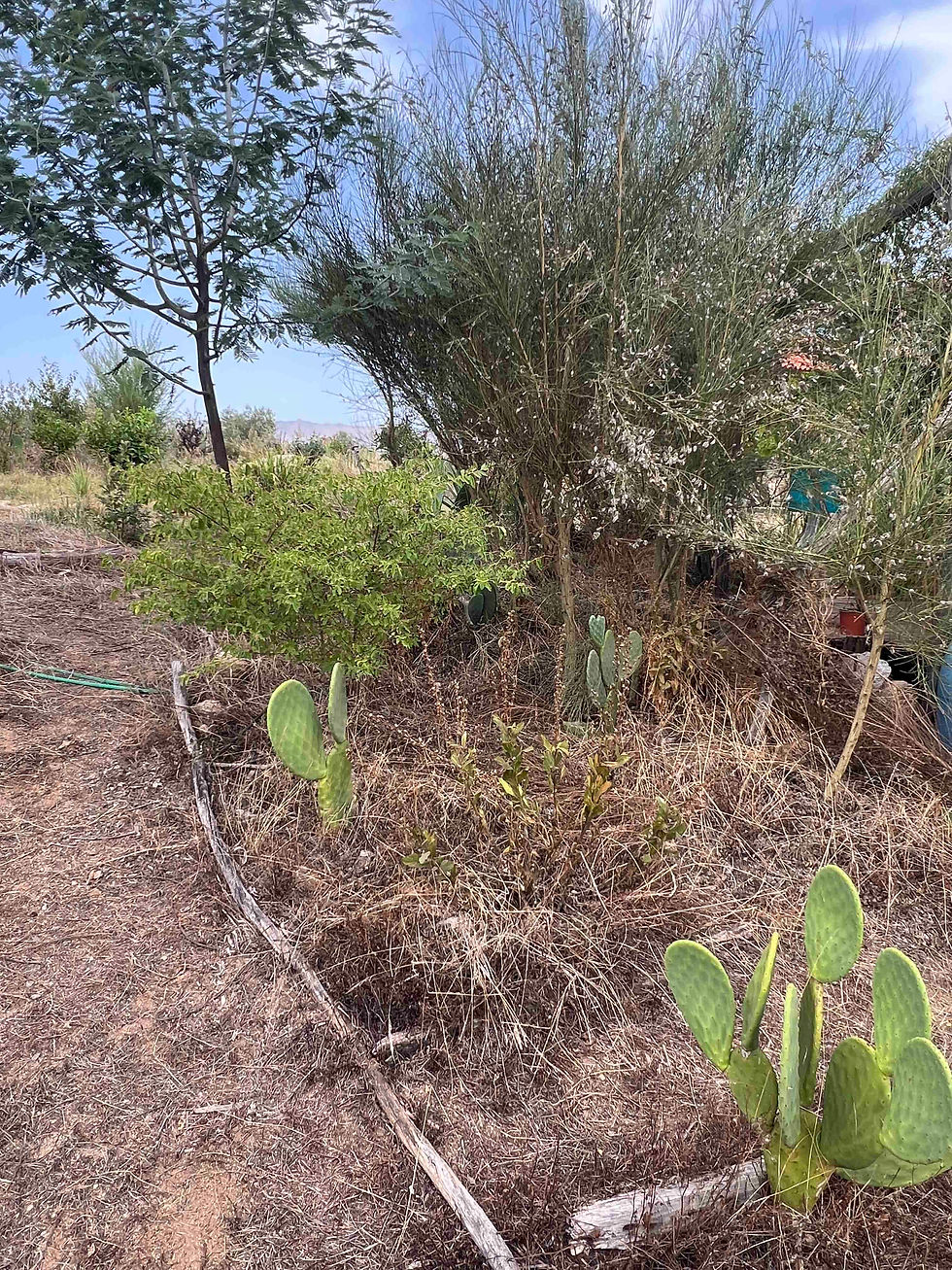
These plants can help stabilize and cover damaged ground, but dense scrub can also add summer fuel.
Tough Tip: Native does not mean fireproof. Near buildings, break vegetation into patches, remove dead material, and avoid creating one continuous wall of woody growth.
Wildlife, Hedges, and the Shrub Layer
Blackthorn brings a different character to the guide. It is deciduous, thorny, and well suited to hedgerows and woodland margins. Its spring flowers feed insects, while its fruits support wildlife.
Prickly juniper adds evergreen shelter on dry, rocky sites. Flax-leaved daphne also fits dry woodland edges, but it is toxic and should not be treated as an edible shrub.
Mixed hedges can combine several native species instead of relying on a single plant. This creates more flowers, fruit, nesting cover, and seasonal diversity.
Shrubs also matter in food forests. They connect groundcovers to the canopy, slow wind, protect soil, and can shelter young trees while a system establishes.

Tough Tip: Before clearing wild scrub, identify it. You may already have useful habitat, nurse plants, or soil protection growing for free.
Build From What Already Grows
The best native shrub still depends on the site. Look at summer dryness, winter waterlogging, soil type, frost, fire risk, and what already thrives nearby.
Strawberry tree (Arbutus unedo) shows why plant categories overlap. It may grow as a shrub, but mature specimens can become proper trees. For this mini-series, we kept it in our Native Trees of Portugal guide rather than listing it twice.

Native shrubs are not garden filler. They are part of the structure that makes woodland resilient.
Pair this guide with our Native Trees of Portugal overview, then explore individual species in the Tough Kraut Plant Library as we continue documenting plants that can support more resilient landscapes.
Small shrubs can do surprisingly big jobs. Start with what your land already tells you, then build the missing layers around it.
Herman's Tough Kraut Fixes: Common Challenges with Native Shrubs of Portugal
Native shrubs can still fail when planted in the wrong place or managed like thirsty ornamentals. This Troubleshooting FAQ covers common problems with native shrubs of Portugal, including establishment, fire risk, hedges, and restoration.
Q: Are all native shrubs drought tolerant?
A: No. Many Mediterranean species handle summer drought well, but others prefer cooler or moister conditions. Match the shrub to the site.
Q: Are rockroses useful for restoring degraded land?
A: Yes, especially on sunny, poor soils where they occur naturally. They establish quickly, cover exposed ground, and provide flowers for insects.
Q: Should I remove wild shrubs before planting trees?
A: Not automatically. Existing shrubs may shelter young trees, reduce wind, protect soil, and provide wildlife habitat. Selective thinning is often better than clearing everything.
Q: Can native shrubs make good hedges?
A: Yes. Common myrtle, mastic tree, Mediterranean buckthorn, and narrow-leaved mock privet can all contribute to mixed evergreen hedges.
Q: Are native shrubs fire-resistant?
A: Do not assume so. Fine twigs, oils, and dry summer growth can burn readily. Spacing, pruning, fuel breaks, and removing dead material matter.


Comments