
Natural Fertilizer Alternatives for Mediterranean Gardens: What Actually Works in Dry Climates

Updated: May 6
Fertilizer used to be something you could just buy.
Now it’s tied to global supply chains, rising costs, and events far beyond your garden fence. When global trade routes choke, inputs disappear fast.
But here’s the truth we learned early on our land in Central Portugal:
Mediterranean gardens were never meant to rely on bought-in fertility.
On our Quinta, we started with poor soil, no irrigation system, and no easy access to inputs. What we had instead was time, observation, and a growing pile of “waste” that slowly turned into our most valuable resource.
Because in a dry climate, the real question is not:
“How do I feed my plants?”
It is:
“How do I build soil that holds water, cycles nutrients, and keeps working through summer?”
And that’s where most natural fertilizer advice falls apart.
In this guide, we break it down honestly:
what actually works in hot, dry summers
what builds long-term soil fertility
and what is mostly overhyped
When you’re done, check out Herman’s Tough Kraut Fixes for real-world troubleshooting from the field.
What Makes a Fertilizer Alternative Actually Useful in a Dry Climate?
A fertilizer alternative only works if it survives summer.
That means:
it doesn’t disappear after one watering
it doesn’t bake into dust
and it still functions when soil moisture drops
The best options usually do at least one of three things:
add organic matter
reduce evaporation
improve nutrient cycling
If it does all three, you’re building something real.
We learned this the hard way. In our first year, we focused too much on planting and too little on soil cover. Seeds went in, but the system wasn’t ready. Ants, dry soil, and lack of moisture did the rest.
Compost: Still the Best All-Round Foundation
Our compost system started simple.
Now it’s a 3-bay system fed by everything:
kitchen scraps
weeds and grass clippings
chicken bedding
rough biomass

And just as important: It’s constantly being inoculated with biology from our bathtub worm farm. Compost on our land is not a fertilizer. It’s the engine behind everything else.
We use it:
when establishing new beds
before the rainy season
in planting holes for trees
In shallow, rocky soil like ours, compost doesn’t just feed plants. It creates soil where there wasn’t much before.
Tough Tip: If your soil is weak, don’t spread compost thin everywhere. Concentrate it where you want results first.
Mulch Is Not Just Mulch. It Is Fertility Strategy.
This is where things clicked for us. We stopped thinking of mulch as a “nice extra” and started treating it as core infrastructure.
On our land, mulch comes from:
cut grasses
weeds
prunings
anything we can drop and reuse

Nothing leaves the system. One of the biggest shifts was realizing that even rough, ugly mulch works. It doesn’t need to look clean to do its job.
Mulch is what allows everything else to function:
it keeps compost active
it protects soil biology
it reduces watering pressure
Without it, you’re constantly reacting.
Tough Tip: We don’t have endless mulch yet. So we prioritize trees first. That’s where the long-term return is.
Need a summer field check? Once you start building soil and mulch systems, use my free Summer Survival Garden Checklist to see where your garden is still drying out, where mulch is too thin, and which areas need action first.
Worm Castings: Small Volume, High Value
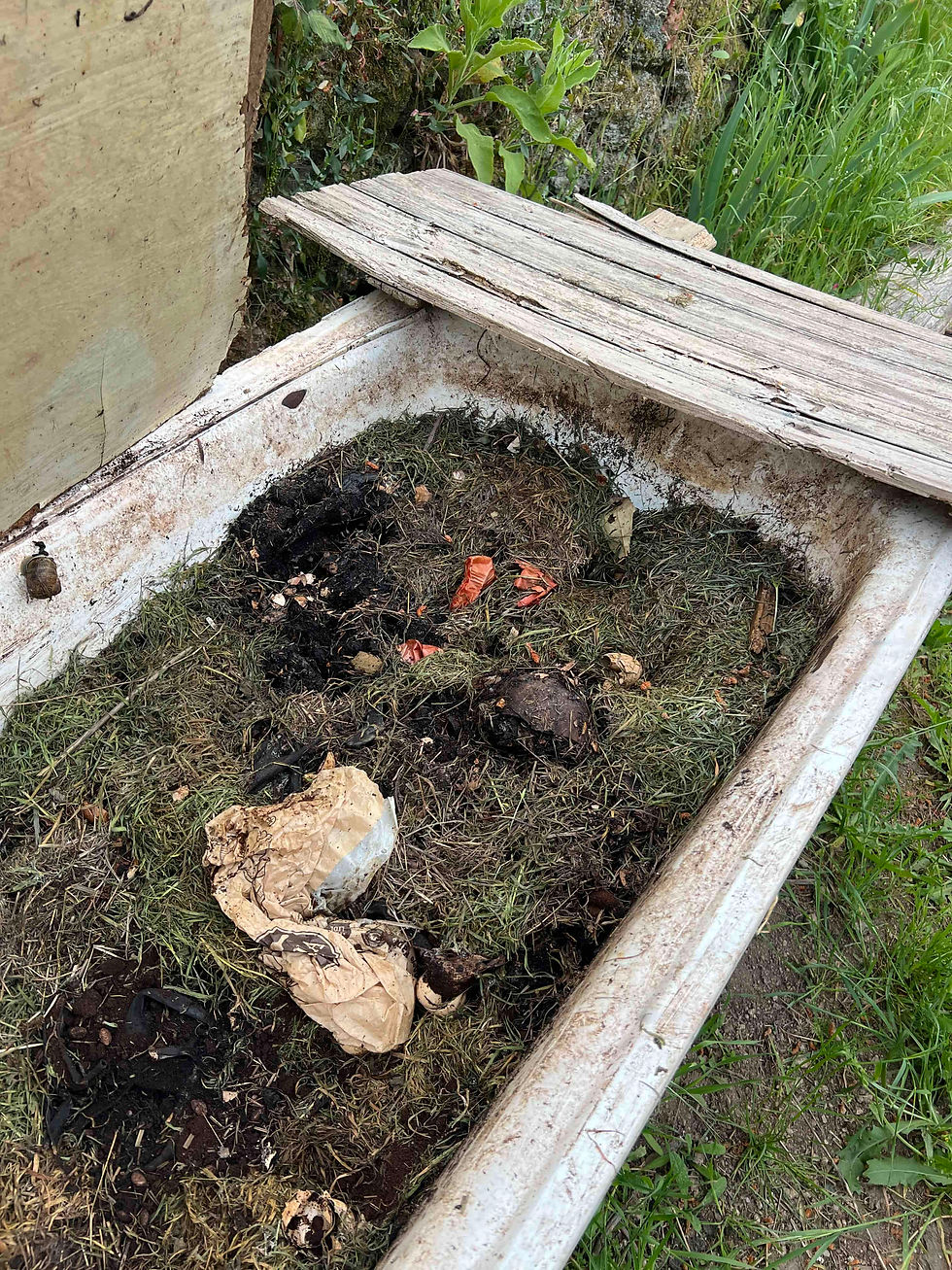
Our worm farm started with a scrap-yard bathtub. Not pretty. But incredibly effective. We don’t produce enough castings to spread everywhere. So we don’t try.

Instead, we use them where they matter most:
mulched garden beds
greenhouse beds
transplants
The biggest difference we noticed was in early plant strength. Better roots. Less stress. Faster recovery. Worm castings are not bulk fertility. They are precision biology.
Composted Manure: Powerful, but Only When Needed
We’ve used horse manure in the past. And we have access to more through a friend. That changes things. Because manure is one of the few inputs that can:
quickly improve poor soil
increase nutrient levels significantly
boost growth in struggling areas
But there’s a catch. Transport becomes the real limiting factor. It’s not about availability. It’s about:
time
logistics
effort
So we treat manure as a targeted input, not a default solution.
We use it:
where soil is clearly lacking
when establishing new zones
in combination with compost and mulch
Tough Tip: If you can get manure locally, it’s one of the best boosts you’ll find. But build a system that works without depending on it.
Legume Cover Crops: Best Used in the Cool Season
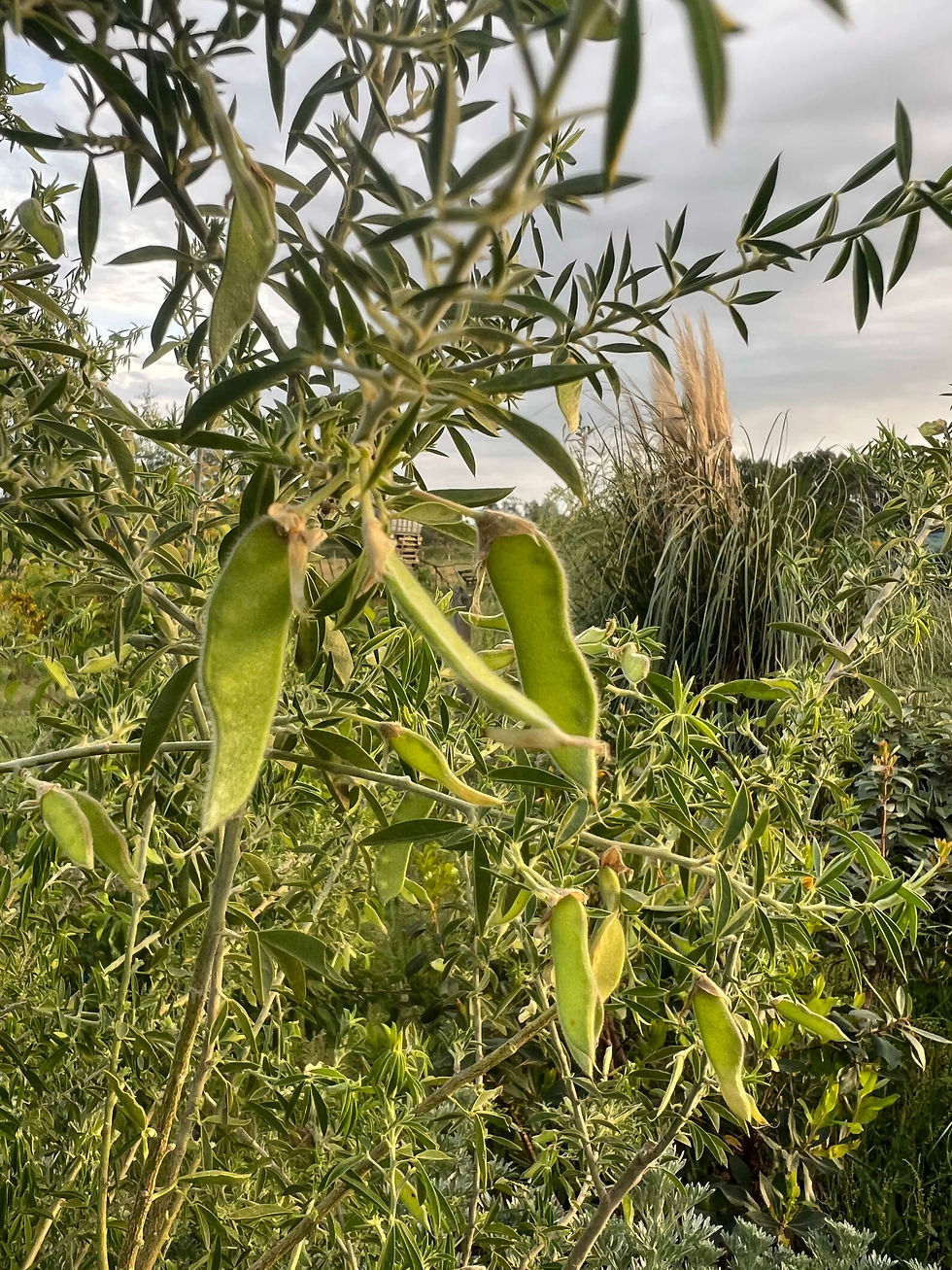
We’ve been experimenting with lupines across our land. Not in neat rows. Just scattered across different areas to see what sticks. Some thrive. Some disappear.
But the principle is clear:
Nitrogen doesn’t come from inputs. It comes from biology. Lupines and other legumes:
fix nitrogen
add organic matter
support soil life
But timing matters. In Mediterranean climates:
autumn and winter = opportunity
summer = competition
We let nature guide part of this. Some areas self-seed. Others we assist.
Tough Tip: Don’t force cover crops in summer. Work with the seasons, not against them.
Chop-and-Drop: Only as Good as Your Biomass
We use chop-and-drop wherever possible. Tree lucerne. Mimosa. Wild growth.
But here’s the honest part:
It only works when you have enough biomass. In early stages, you don’t.
So we combine it with:
collected mulch
imported material (when available)
slow system building
Over time, the goal is simple:
The land produces its own fertility.
We’re not fully there yet. But it’s moving in that direction.
Liquid Feeds: Useful, but Not the Foundation
We make:
nettle tea
use urine
experiment with liquid inputs

And yes, they help. Especially:
for transplants
in greenhouse conditions
for quick support
But they don’t replace soil building. We learned quickly that feeding plants without fixing soil just creates more work.
Tough Tip: Liquid feeds are great tools. But they don’t fix a broken system.
What Works Best
From real experience in dry conditions (From Strongest to Weakest):
Compost
Mulch
Composted manure
Legumes (like lupines)
Worm castings
Chop-and-drop
Liquid feeds
This is not about nutrient content. It’s about what keeps working when summer hits.
What Usually Fails in Dry Climates
We’ve made most of these mistakes ourselves:
planting without soil cover
relying on watering instead of building soil
using liquid feeds as a shortcut
expecting small inputs to scale
underestimating how fast soil dries
The biggest one? Trying to skip the slow part.
My Practical Mediterranean Fertility Strategy
Right now, our system looks like this:
compost everything we can
run a worm farm for biology
use chickens as mobile fertility
mulch with whatever grows on-site
integrate nitrogen-fixing trees
experiment with legumes like lupines, Tree Lucerne
use manure when available
recycle all nutrients (including urine and humanure)
And moving forward:
greywater reuse
vermicomposting toilet
full closed-loop system
The goal is simple:
Less input. More resilience.
Build Soil First, Fertilize Second
If I had to reduce everything to one line:
In dry climates, the natural fertilizer alternatives that work best are the ones that build moisture-holding soil first and deliver nutrients second.
That’s what changed everything for us. Once the soil improves:
plants become more resilient
watering becomes easier
and the system starts working with you
Not against you.
Herman’s Tough Kraut Fixes: Common Challenges Using Natural Fertilizer Alternatives
Building fertility with natural fertilizer alternatives in a dry Mediterranean climate can feel slow at first, especially if your soil is compacted, low in organic matter, or exposed to long, hot summers. That is why this Troubleshooting + FAQ section matters. Many gardeners try compost tea, manure, mulch, worm castings, or legume cover crops and expect instant results, only to wonder why plants still struggle. In reality, the best natural fertilizer alternatives for dry climates work by improving soil structure, reducing evaporation, and strengthening nutrient cycling over time. These are the most common questions readers ask when trying to build long-term soil fertility without synthetic fertilizer, and they will help you avoid the mistakes that waste time, money, water, and momentum.
Q: Why do my plants still struggle even with compost?
A: Compost needs moisture and mulch to work effectively. Without cover, benefits are limited.
Q: Is horse manure worth the effort?
A: Yes, if local. Transport is the real constraint, not effectiveness.
Q: Are lupines enough to fix nitrogen?
A: They help, but work best as part of a larger system, not a standalone solution.
Q: Why does my soil dry out so fast?
A: Lack of mulch and organic matter is usually the main cause.
Q: Can I skip compost if I use liquid feeds?
A: No. Liquid feeds don’t build soil structure or long-term fertility.
Recommended Books & Resources
Books
The Dry Gardening Handbook by Olivier Filippi
The best big-picture pick for your readers because it connects drought-resistant planting, water-saving technique, and plant behavior into one serious dry-climate manual.
Building Soil: A Down-to-Earth Approach by Elizabeth Murphy
A practical, no-nonsense soil book for gardeners who want healthier ground, better structure, and stronger plants without leaning on synthetic inputs.
Composting for a New Generation by Michelle Balz
A reader-friendly compost guide that makes the science digestible and shows how to turn everyday waste into nutrient-rich soil without overcomplicating the process.
Teaming with Microbes by Jeff Lowenfels and Wayne Lewis
The best “why this works” companion because it explains the soil food web and shows how compost, mulch, and biology work together below the surface.
Resources
REOTEMP Backyard Compost Thermometer
A simple tool that takes the guesswork out of composting by showing when to turn, water, feed, and finally harvest the pile.
Worm Composter
A stackable vermicomposting system that turns kitchen scraps into castings in a compact footprint, making it a strong fit for readers who want a cleaner version of your bathtub-worm-farm idea.
Lotech Compost Crank Twist Compost Aerator
A corkscrew-style compost aerator that most readers probably have never considered, but it makes turning dense, viney, messy compost far easier than a fork.
Tough Kraut Resources
Explore the tools, books, and field-tested gear behind our off-grid systems, and steal the shortcuts that save time, water, and costly mistakes on a Mediterranean homestead.


Comments