
Rhododendron hybrid (Japanese Evergreen Azalea)

Common Name: Japanese Evergreen Azalea
Scientific Name: Rhododendron hybrid
Plant Family: Ericaceae
Lifecycle: Perennial evergreen shrub
Japanese evergreen azaleas are compact ornamental shrubs valued for their glossy foliage and colourful spring flowers. Growing Japanese Evergreen Azalea in Zone 8a is possible in containers, but Mediterranean heat, strong afternoon sun and alkaline water can make summer care more demanding than winter protection.
Because our plants arrived without a confirmed cultivar label, we are documenting them as Rhododendron hybrids rather than assigning a cultivar based only on flower colour or growth habit.
For in-depth guides and curated tools, be sure to check out our Resources Self-Sufficiency Toolkit.
Plant Profile
Characteristic | Information |
Climate Suitability | Commonly USDA Zones 6–9, depending on the hybrid; Köppen Cfb and Csb, with summer protection in hotter Csa climates |
Sun / Shade Needs | Bright partial shade or morning sun; protect from strong afternoon sun |
Watering Needs | Regular, even moisture; never allow the root ball to remain waterlogged |
Soil Preferences | Acidic, humus-rich and well-drained; approximately pH 4.5–6.0 |
Spacing & Height | Usually 0.6–1.2 m (2–4 ft) apart; commonly 0.5–1.2 m (1.5–4 ft) tall and wide, depending on the hybrid |
Propagation Method(s) | Semi-hardwood cuttings, layering |
Planting Timeline | Spring or early autumn, avoiding frost and severe summer heat |
Companion Plants | Camellia, heather, Pieris, ferns, blueberries and other acid-loving plants |
Edible / Medicinal / Ecological Uses | Ornamental evergreen shrub; flowers provide nectar for visiting insects |
Pest / Disease Considerations | Vine weevil, lace bug, spider mites, scale, iron chlorosis and root rot |
Pruning / Harvest Notes | Prune lightly immediately after flowering; remove dead or damaged growth |
Quick Plant Reference
Care Level: Moderate
Optimal Sunlight: Bright partial shade or gentle morning sun
Water Needs: Consistently moist but well-drained
Mature Size: Approximately 0.5–1.2 m (1.5–4 ft) tall and 0.6–1.2 m (2–4 ft) wide
Soil Type: Acidic, organic-rich ericaceous compost
Humidity: Medium
Toxicity: Toxic if ingested by humans, pets and livestock
Beneficial Pollinators: Bumblebees, solitary bees, honeybees and other spring insects
Health Benefits: None; ornamental plant only
Chilling Hours: No standard chilling-hour requirement
Pollination Requirements: Not required for ornamental flowering
Our Rhododendron hybrid Application @ Tough Kraut
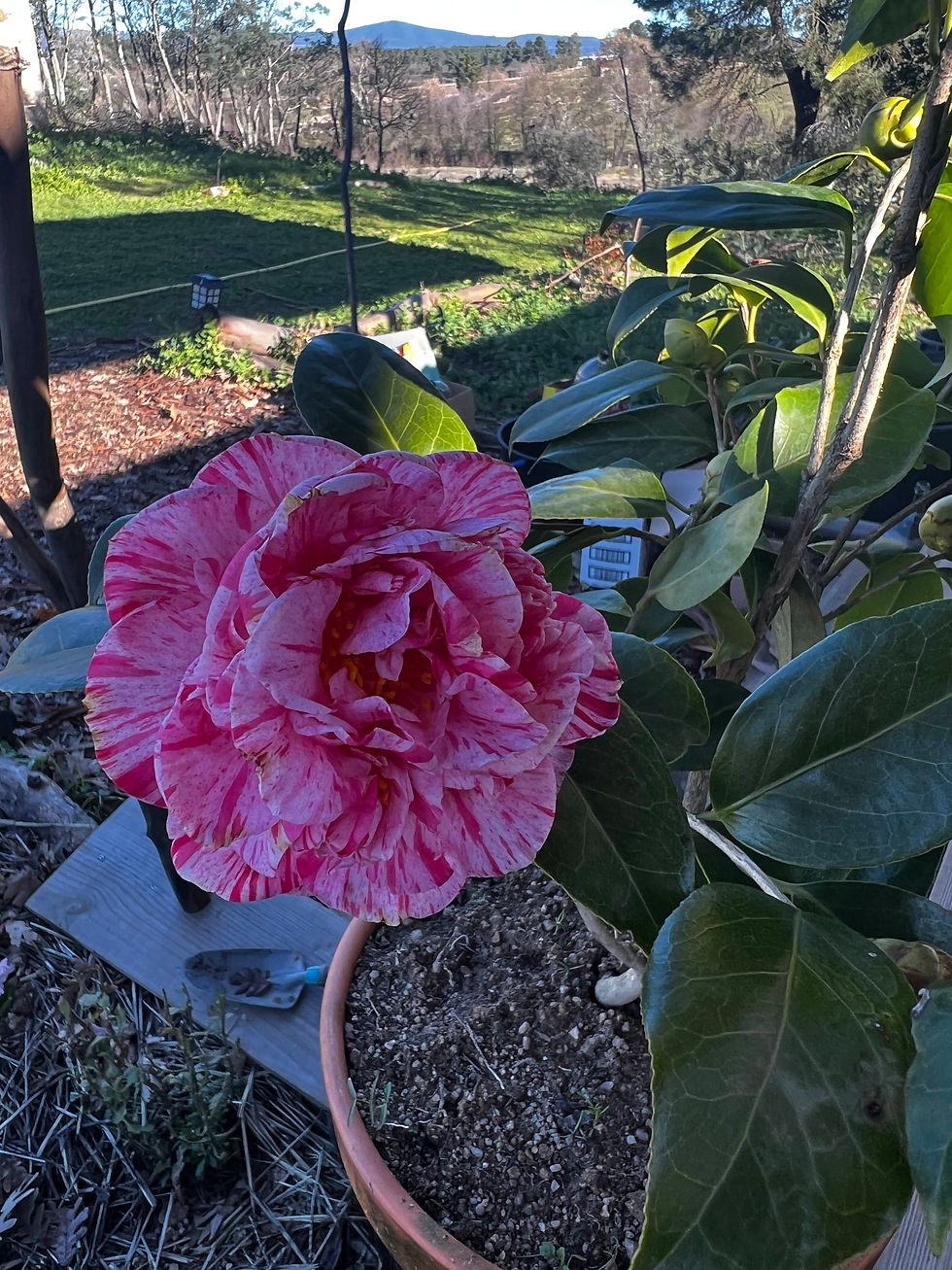
MuDan bought two Japanese evergreen azaleas at a weekly market in our region around a year ago. She repotted both shrubs into larger terracotta pots, with one overwintering outdoors beneath our larger Mimosa trees and the second spending winter inside our greenhouse.
Both plants survived and formed numerous flower buds by the end of March. MuDan moved them onto our balcony in early spring, but once temperatures rose above 30 °C (86 °F), the direct afternoon sun caused visible stress.
They are now positioned indoors beside our terrace door while MuDan searches for a better year-round container location. One plant is currently shedding leaves, so we are monitoring light, watering, drainage and the effects of moving it between different microclimates.
Step-by-Step Growing Guide
Japanese evergreen azalea problems often have overlapping causes. Leaf drop, yellow foliage and wilting may result from dry roots, excessive moisture, unsuitable pH, heat stress or a sudden change of location, so make one adjustment at a time.
1. Choose the Right Site
Choose bright partial shade or a location receiving gentle morning sun. In Mediterranean climates, protect the plant from intense afternoon sun, reflected heat and drying wind.
2. Prepare the Soil
Use acidic ericaceous compost enriched with fine pine bark or leaf mould. The mixture should retain moisture while still draining freely.
3. Plant the Tree/Plant
Plant at the same depth as the original root ball and never bury the crown. Use a pot with several open drainage holes and avoid choosing a container that is excessively large.
4. Water Consistently
Water thoroughly whenever the upper compost begins to dry, allowing excess water to drain away. Rainwater is preferable where tap water is hard or alkaline.
5. Ensure Proper Pollination
A second plant is not needed for flowering. Allow blooming plants to remain accessible to bees and avoid spraying insecticides across open flowers.
6. Prune Annually
Prune lightly immediately after flowering to maintain the desired shape. Remove dead, weak or damaged growth without cutting away large amounts of healthy foliage.
7. Manage Pests and Diseases
Check leaf undersides for lace bugs, mites and scale, and inspect container roots for vine weevil larvae. Prevent root rot by maintaining good drainage and avoiding permanently saturated compost.
8. Harvest and Store
There is no edible harvest. Enjoy the flowers on the shrub and remove spent blooms carefully without damaging new growth or developing buds.
9. Note
Terracotta pots dry faster than plastic or glazed containers, particularly during hot weather. Shade the pot as well as the foliage and check moisture below the compost surface rather than judging only by appearance.
Kraut Crew Insight
Our two azaleas handled winter better than the balcony’s summer afternoon sun. They are reminding us that plant hardiness describes cold tolerance, not permission to place a pot anywhere and hope for the best.
The next trial is a stable outdoor position with morning brightness, afternoon shade, cool roots and easier access to rainwater.
Photos
March 21, 2026 March 21, 2026 March 21, 2026 March 21, 2026 July 24, 2026 July 24, 2026
Herman’s Tough Kraut Field Notes: Solving Rhododendron Hybrid Cultivation Challenges
Japanese evergreen azalea troubleshooting often begins with leaf drop, yellow foliage or flower buds that fail to open. This FAQ focuses on container problems particularly relevant to growing Rhododendron hybrid azaleas in Mediterranean Zone 8a.
The important lesson is to diagnose before treating. Extra water, fertiliser and another change of location applied together may stress the plant further and make the original cause harder to identify.
Q: Why is one of our azaleas shedding leaves?
A: Recent heat exposure and relocation may both contribute. Check whether the root ball is dry, waterlogged or unusually warm, then keep the plant in one bright, sheltered location while it recovers.
Q: Can Japanese evergreen azaleas stay indoors permanently?
A: They can remain indoors temporarily during extreme heat, but they generally perform better outside in bright shade with natural airflow. A sheltered position with morning light and afternoon protection is usually preferable.
Q: Why are the leaves turning yellow?
A: Yellow leaves with greener veins often indicate iron chlorosis caused by an unsuitable pH or alkaline irrigation water. General yellowing may also result from wet roots, dry roots or damaged fine feeder roots.
Q: Are terracotta pots suitable for azaleas?
A: Yes, but they lose moisture quickly in hot, dry conditions. Check them frequently in summer, shade the container and consider applying a thin layer of pine bark mulch over the compost.
Q: Was the greenhouse or the outdoor winter location better?
A: Both plants survived, so both provided adequate protection during this first trial. The greenhouse reduced exposure to frost and rain, while the Mimosa canopy offered natural shelter and airflow; longer observation will show which produces healthier spring growth.
For more field-tested tools, propagation gear, and practical garden resources, visit the Tough Kraut Resources page.
Entry last updated: 2026-07-24
This post is part of the Tough Kraut Plant Library, documenting what really grows on our off-grid homestead in Central Portugal.


Comments