
Wild Neighbors: Iberian Honey Bee (Apis mellifera iberiensis) On Our Portuguese Homestead

Common Name: Iberian Honey Bee
Scientific Name: Apis mellifera iberiensis
Animal Group: Invertebrate (Insect)
Status in Portugal: Native and Resident
IUCN Status: Not Evaluated (Subspecies)

Some wildlife neighbors quietly move in without an invitation. Others arrive in a buzzing cloud and make their intentions very clear.
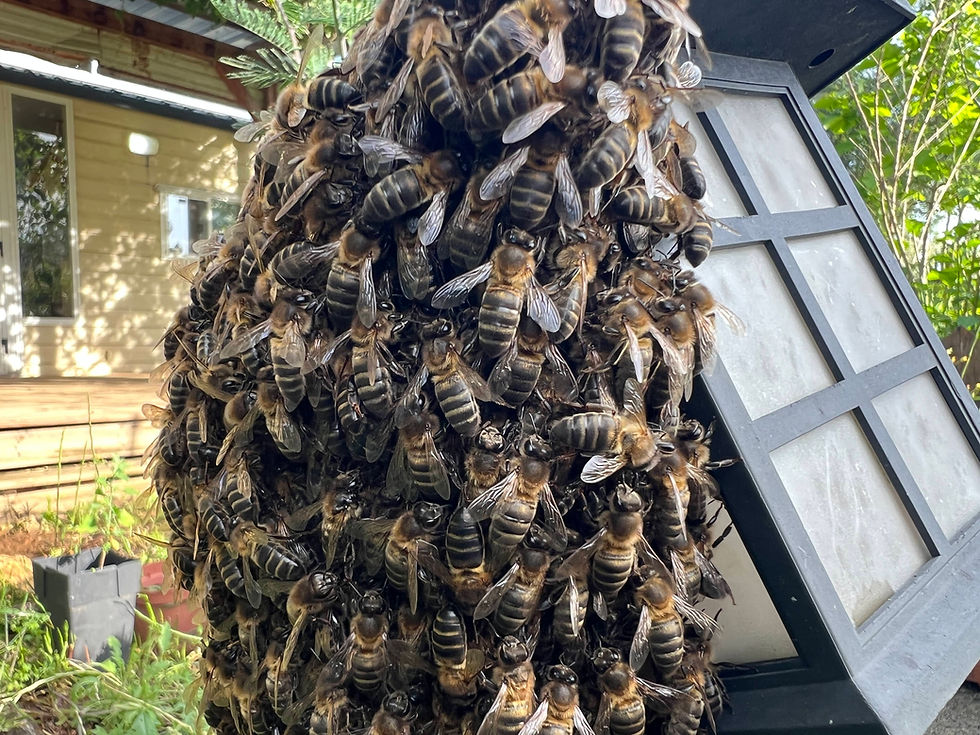
We first met our Iberian honey bees on May 12, 2026, when a swarm suddenly appeared on a solar light near our mobile home. The funny part is that we were not actively looking for bees at the time. We had talked about keeping bees someday, but nature decided to move the schedule forward. After carefully relocating the swarm into a wooden chicken nesting box, the colony settled into its new home overlooking our terrace.
If you'd like to read the full story of how these bees first arrived on our Quinta, check out our earlier article, Honey Bee Swarm: Free Farm Helpers, where we documented the day a wild swarm chose our homestead as its new home.
Today, we regularly see workers visiting flowers throughout the property, from herbs and fruit trees to wildflowers and vegetables. For homesteaders, honey bees are among the most valuable wild neighbors imaginable. They improve pollination, support biodiversity, and help transform flowers into future harvests.
If honey bees have sparked your interest, be sure to visit our Resources Self-Sufficiency Toolkit.
Quick Facts At A Glance
Characteristic | Information |
Common Name | Iberian Honey Bee |
Scientific Name | Apis mellifera iberiensis |
Size | Workers 10–15 mm; queens up to 20 mm |
Activity Pattern | Diurnal |
Typical Diet | Nectar, pollen, honey stores |
Predators (Portugal) | Bee-eaters, hornets, spiders, wasps |
Predators (General) | Birds, mammals, reptiles, insects |
Preferred Habitat | Woodlands, orchards, gardens, agricultural landscapes |
Human Risk Level | Low (defensive stings possible) |
Role On Our Homestead | Pollination and biodiversity support |
How To Recognize Iberian Honey Bee On A Mediterranean Homestead
Visual ID
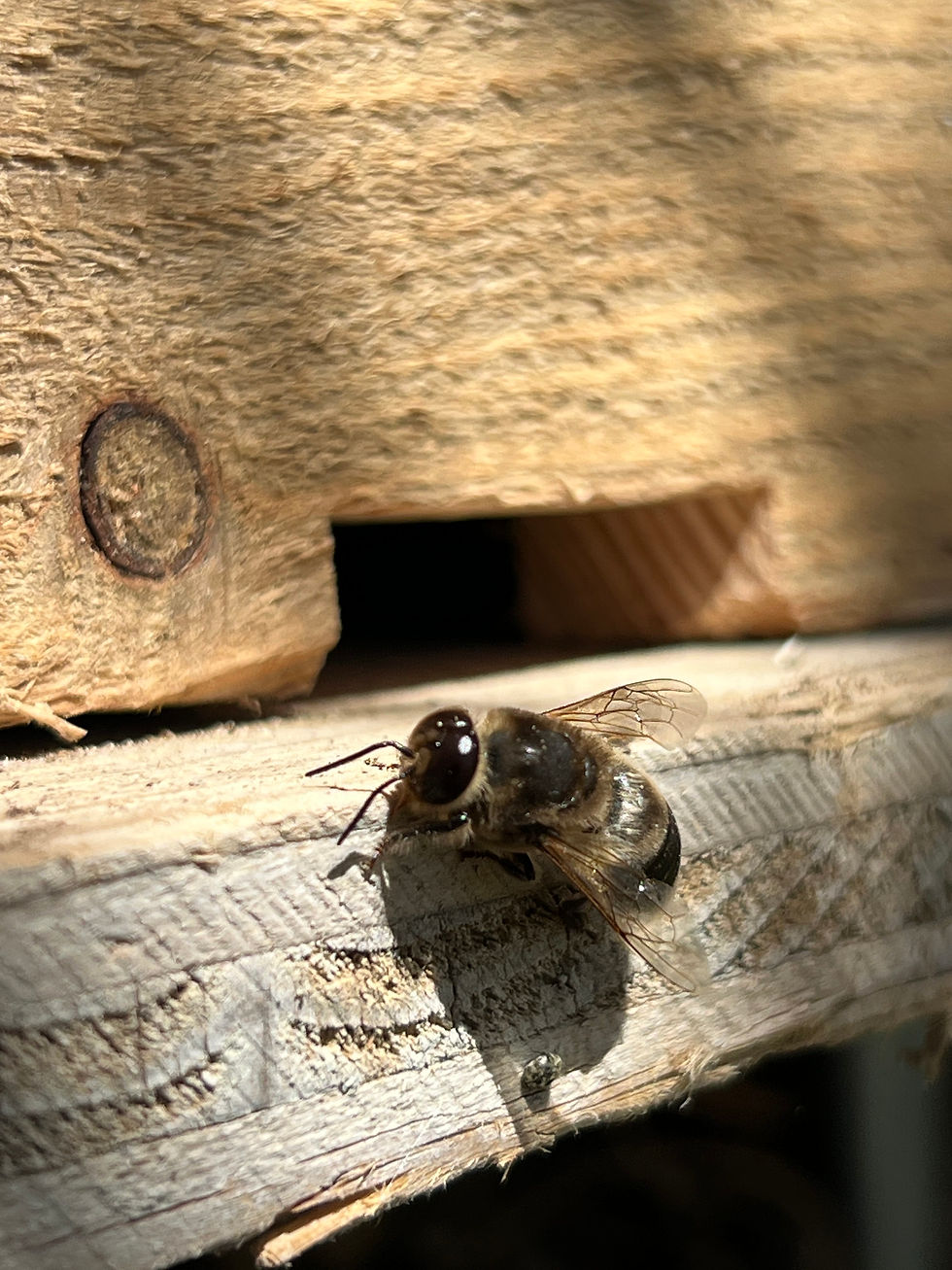
The Iberian honey bee looks similar to other western honey bee subspecies. Workers are relatively small, with fuzzy thoraxes, striped abdomens, and two pairs of transparent wings. Coloration ranges from dark brown to golden brown with darker abdominal bands.
Queens are noticeably larger and longer-bodied than workers. Drones are stouter, with larger eyes and a more rounded appearance.
When foraging, workers often carry bright yellow, orange, or cream-colored pollen pellets on their hind legs.
Sounds & Behavior
The most obvious sign of honey bees is their distinctive buzzing flight. Around our homestead, activity peaks during warm, sunny weather when flowers are abundant.
Worker bees travel impressive distances searching for nectar and pollen. Around the garden, they move methodically from flower to flower, often ignoring nearby human activity completely.
During spring and early summer, colonies may swarm as part of their natural reproductive cycle. This is exactly how we first encountered our colony.
Tracks, Droppings & Other Signs
Honey bees leave few obvious signs on the ground. Instead, look for:
Regular flight paths between flowers and the hive
Workers returning with pollen baskets loaded
Wax comb inside cavities or hive boxes
Increased bee traffic around water sources
On our land, Apis mellifera iberiensis is often easiest to spot around flowering rosemary, lavender, citrus blossoms, and vegetable flowers inside the greenhouse.
Where Iberian Honey Bee Lives: Portugal and Beyond
The Iberian honey bee is native to Portugal and Spain and has evolved under the region's Mediterranean climate. It is well adapted to hot summers, mild winters, seasonal drought, and highly variable forage conditions.
Across Portugal, colonies occupy forests, orchards, agricultural land, urban gardens, and natural landscapes. Wild colonies can still be found nesting in tree cavities, rock crevices, and abandoned structures.
The wider honey bee species, Apis mellifera, occurs naturally across Europe, Africa, and parts of the Middle East, with many regional subspecies adapted to local conditions.
On our homestead, the colony currently occupies a wooden nesting box positioned near our IBC system above the terrace. The entrance faces east, catching the morning sun while avoiding the hottest afternoon conditions.
What Iberian Honey Bee Eats (And What Eats Iberian Honey Bee)
Diet
Honey bees rely primarily on nectar and pollen. Nectar provides carbohydrates and is converted into honey for long-term storage. Pollen supplies protein, fats, vitamins, and minerals needed to raise young bees.
Throughout the year, our bees visit:
Rosemary
Lavender
Citrus blossoms
Loquat flowers
Vegetable flowers
Wildflowers growing throughout the property
Flowering shrubs and trees in the surrounding landscape
The diversity of forage available across a homestead can significantly improve colony resilience.
Predators & Threats
In Portugal, honey bees face a variety of natural predators, including European bee-eaters, spiders, wasps, hornets, and certain bird species.
Additional threats include:
Habitat loss
Pesticide exposure
Drought
Disease and parasites
Reduced floral diversity
For wild and managed colonies alike, a landscape rich in flowering plants remains one of the most effective forms of support.
Living With Iberian Honey Bee On An Off-Grid Homestead
Helpful Roles
Honey bees provide several valuable ecosystem services:
Pollination of fruit trees
Improved vegetable production
Increased seed production
Support for biodiversity
Enhanced resilience of food forests and gardens
Many of the future harvests on our homestead begin with a bee visiting a flower.
Potential Issues
The primary concern is defensive stinging behavior when bees feel threatened.
Other considerations include:
Swarming
Hive placement near high-traffic areas
Conflicts with pets or livestock
Water competition during dry summers
Practical Coexistence Strategies
Provide diverse flowering plants throughout the year.
Maintain reliable water sources.
Avoid broad-spectrum insecticides.
Allow some wild flowering areas to remain undisturbed.
Give colonies adequate space and avoid unnecessary disturbance.
Living alongside honey bees reminds us that productive landscapes depend on relationships. The healthier the ecosystem becomes, the more wildlife wants to participate.
Herman's Tough Kraut Field Notes: Wild Neighbors Edition – Apis mellifera iberiensis
Honey bees generate more questions than almost any other wildlife neighbor. Here are some of the most common ones we've encountered.
Q: Are Iberian honey bees aggressive?
A: Generally no. Most workers are focused entirely on collecting food. Colonies become defensive mainly when they perceive a threat near the hive.
Q: Why did the swarm choose our property?
A: Swarms search for suitable nesting sites. Your land may simply provide shelter, water, forage, and a favorable environment.
Q: Do honey bees compete with wild pollinators?
A: They can overlap in resource use, but diverse landscapes with abundant flowers often support many pollinator species simultaneously.
Q: How can I help honey bees without keeping a hive?
A: Plant flowering species, provide water, avoid pesticides, and allow some wild habitat to remain.
Q: Should I try to capture every swarm I see?
A: Not necessarily. Swarm management requires knowledge, equipment, and local compliance considerations. When in doubt, consult local beekeepers or beekeeping associations.
For more field-tested tools, propagation gear, and practical garden resources, visit the Tough Kraut Resources page.


Comments