
7 Benefits of Growing Hazelnut Beyond the Nut Harvest

When most people think about growing hazelnut, they imagine bowls of homegrown nuts, woodland snacks, or maybe a future jar of homemade hazelnut spread that probably disappears faster than expected.
Fair enough. Hazelnuts are delicious.

But on our land in Central Portugal, our common hazel, Corylus avellana, has been teaching us a slightly different lesson. We planted it in the center of our food forest on April 3, 2022, and so far, we have not harvested a single nut from it.
And yet, I would still call it useful. That may sound strange at first. Why grow a hazelnut if you have not harvested hazelnuts? Because in a food forest, a plant can earn its place long before the first edible crop arrives. Our hazelnut shrub is now nearly two meters tall, has grown multiple stems from the base, shades the soil around itself with its leaves, and has become part of the structure of the young food forest.
Even better, after its first summer in the ground, it has mostly grown on full neglect. Not because neglect is a strategy I recommend, but because a well-placed, well-established plant can sometimes surprise you.
So this post is not a “look at our giant hazelnut harvest” story. Not yet. This is about the seven benefits of growing hazelnut beyond the nut harvest, especially in a Mediterranean food forest where shade, resilience, propagation, and microclimate matter just as much as food.
Is Growing Hazelnut Worth It?
For us, yes. But not as a quick-result crop.
Hazelnut is best seen as a long-term food forest shrub with multiple uses. It can support wildlife, create shade, produce flexible woody growth, feed the soil with leaf litter, and possibly produce nuts once the right pollination partners and growing conditions are in place.
Best for: Food forests, woodland edges, edible hedges, coppice systems, wildlife gardens
Care level: Easy to moderate once established
Water needs: Needs support during establishment, especially in dry summers
Main benefit: Structure, shade, wildlife value, and long-term edible potential
Biggest caution: Nut production is not guaranteed from one plant
Tough Kraut verdict: Worth growing if you think in decades, not just harvest baskets.
Growing Hazelnut for More Than Nuts
The biggest mistake with hazelnut is judging it only by the nut harvest. Yes, nuts are the obvious prize. But if you are building a permaculture system, especially in a dry-summer climate, you quickly learn that the “support plants” are often just as important as the “headline crops.”
A hazelnut shrub can become a living framework inside a food forest. It adds vertical structure, soft shade, organic matter, habitat, and future coppice material. If it eventually gives you nuts too, fantastic. If it takes longer than expected, it can still work hard in the background.
That is exactly what we are seeing here.
1. Hazelnut Adds Food Forest Structure
A young food forest often looks messy before it looks abundant. Small trees, herbs, groundcovers, mulch rings, and random experiments all compete for light, moisture, and attention. Structure helps bring order to that chaos.

Hazelnut naturally grows with multiple stems from the base, which gives it a bushy, layered form. That makes it very different from a single-trunk orchard tree. It is more like a living pillar in the mid-layer of the food forest.
On our land, the hazelnut is now nearly two meters tall and has become one of the more visible structural plants in its area. It is no longer just “the little plant we put there in 2022.” It is starting to shape the space around it.
That matters because food forests are not built from fruit trees alone. They need shrubs, nitrogen fixers, pollinator plants, herbs, mulch plants, and living edges. Hazelnut can sit comfortably in that middle layer, especially where you want something productive but not too massive.
Even before it produces nuts, hazelnut can help give a young food forest shape, height, and layered structure.
2. It Creates Useful Summer Shade
In Mediterranean climates, shade is not a luxury. It is a survival tool.
Our summers can be brutally dry, and full sun is not always a blessing. Many young plants need protection during their first years, especially if they are planted into exposed soil, shallow ground, or windy areas.
One of the best things our hazelnut is doing now is creating shade.

The leaves cover the area around the base of the plant, helping shield the soil from direct sun. That leaf canopy also opens up new planting possibilities nearby, especially on the cooler side of the shrub. Over time, this could become a useful pocket for herbs, groundcovers, or shade-tolerant companions.
This is one of those benefits that does not show up in a harvest basket, but you can feel it when you walk through the food forest in summer. A shaded patch of soil is often the difference between a struggling planting and a living microclimate.
Hazelnut can help create small shade pockets that protect soil and support future underplanting.
3. It Supports Wildlife and Biodiversity
A food forest should not only feed humans. It should feed the whole system.
Hazelnut offers dense growth, leaves, catkins, pollen, shelter, and eventually nuts. In a wildlife-friendly garden, those are valuable features. Birds can use shrubby growth for cover. Insects benefit from habitat diversity. Soil organisms benefit from the leaf litter. And if nuts eventually arrive, you may find that wildlife notices them before you do. That last part may be slightly annoying, but it is also a sign that the system is becoming alive.
I do not see hazelnut as a sterile orchard crop in our context. I see it more as a woodland-edge plant that can help soften the food forest and make it more welcoming to beneficial life. The more diverse the planting, the more chances we have to build resilience.
Hazelnut can increase habitat value, especially when grown as part of a diverse food forest rather than as an isolated crop.
4. It Offers Coppice and Flexible Woody Growth
Hazel has a long history as a coppice plant. When managed correctly, it can produce straight, flexible stems that can be used for garden stakes, small structures, weaving, plant supports, kindling, or other practical homestead projects.
We are not at that stage yet with our plant, but the growth habit already shows why hazel has been useful for so long. Multiple stems from the base mean you can manage it as a renewable woody resource rather than treating every branch as precious.
For a self-sufficient garden, this is a big deal.
Every stake you grow is one less stake you need to buy. Every bit of woody material you produce on-site becomes part of the local resource loop. It may not sound glamorous, but neither does carrying store-bought bamboo canes around forever.
Hazelnut gives you the possibility of food and material. That combination fits beautifully into a practical permaculture system. Hazelnut can become a renewable source of small woody material if managed with coppicing or selective pruning.
5. It Feeds the Soil With Leaf Litter
One benefit I did not fully appreciate at first is how the leaves naturally cover the soil around the base.
That may sound simple, but in a dry-summer garden, covered soil is protected soil. Leaves reduce direct sun exposure, slow moisture loss, and eventually break down into organic matter. Over time, this creates a more forgiving root zone.

This does not replace intentional mulching, especially during establishment. But it does mean the plant starts helping itself. Once the canopy expands, the hazelnut begins creating its own little mulch zone.
This is one of my favorite signs that a plant is settling into the system. In the beginning, you support the plant. Later, the plant starts supporting the soil around it.
That is when a garden begins to feel less like maintenance and more like a partnership. Hazelnut leaf fall can help protect and feed the soil around the plant, especially when combined with mulch and compost.
6. It Is Surprisingly Easy to Propagate From Cuttings
This is one of the most exciting benefits we have noticed.

We tried propagating our hazelnut from hardwood cuttings, and the cuttings rooted easily. That is the good news.
The bad news? They dried out in summer. If summer is where most of your seedlings, cuttings, or young plants struggle, our free Summer Survival Garden Checklist is a practical starting point for preparing your garden before the heat does the testing for you.
That little failure taught us something useful. Propagation success is not only about getting roots. It is also about keeping the young plant alive through heat, drought, and stress.
Next time, I would not just stick cuttings into the ground and hope for the best. I would root them in pots, keep them in partial shade, protect them from summer extremes, and water them consistently until they are strong enough to plant out.
Still, the fact that they rooted easily is a big encouragement. If we can improve the aftercare, hazelnut could become a plant we propagate regularly for hedges, food forest edges, or coppice areas.
For Tough Kraut, that is huge. Buying one plant is useful. Learning how to multiply it is where the real resilience starts. Hazelnut can be promising from hardwood cuttings, but rooted cuttings need protection from summer heat and drying out.
7. It Becomes Low-Maintenance Once Established
This may be the biggest surprise so far.
After its first summer in the ground, our hazelnut has grown mostly on neglect. It was not pampered. It was not constantly watered. It was not treated like a delicate garden celebrity with a personal assistant.
And yet, it kept growing.
That does not mean hazelnut should be planted anywhere and forgotten. Young plants still need care, especially in dry climates. Site choice matters. Mulch matters. Establishment watering matters. Protection from extreme exposure matters. But once settled, our hazelnut has shown a level of resilience that makes it feel very compatible with a low-input food forest.
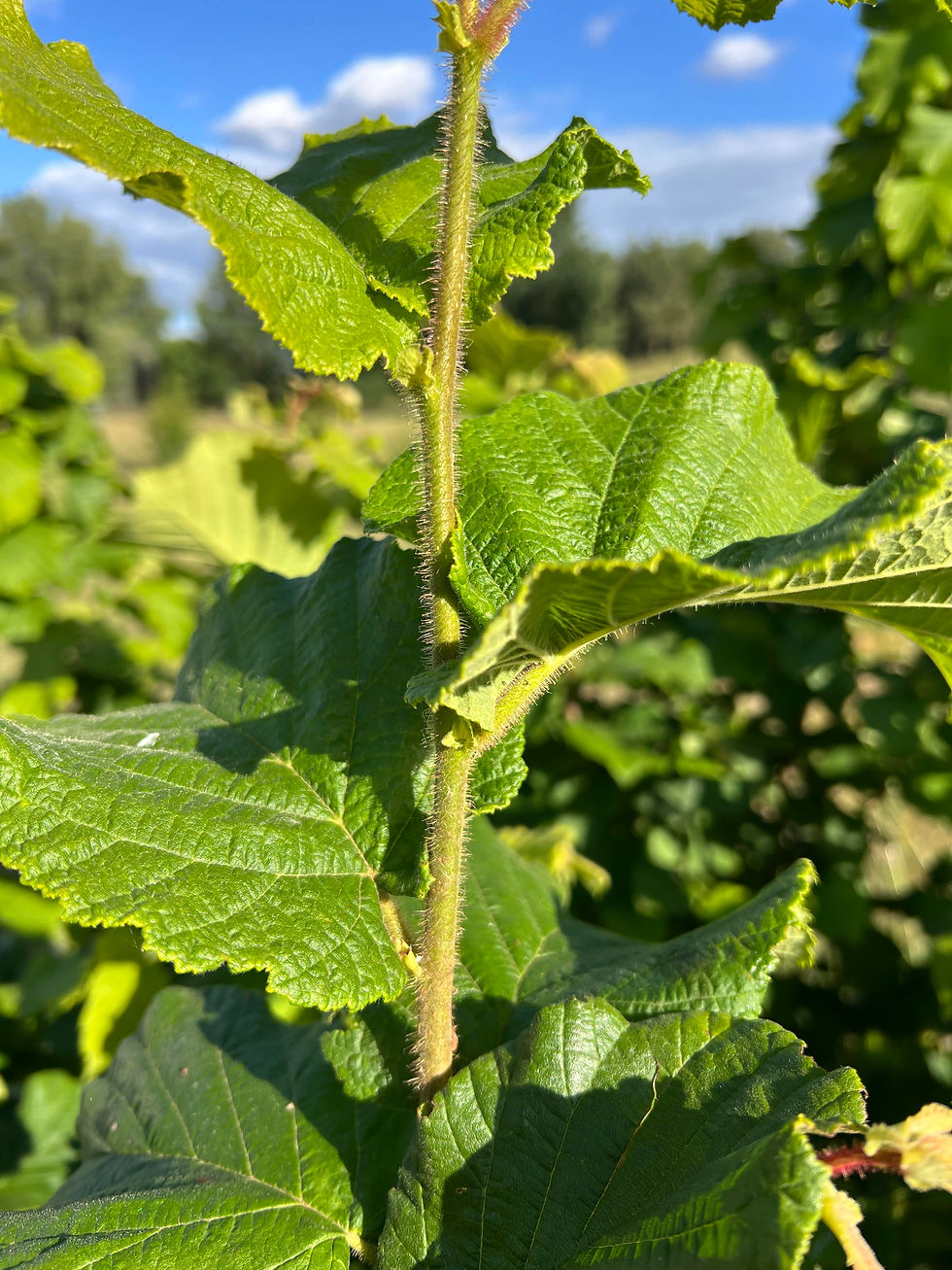
This is exactly the kind of plant I want more of. Not because I enjoy ignoring plants, but because a homestead has limits. There are always too many jobs, too many unfinished projects, and at least one tool hiding exactly where you did not put it.
Plants that can keep growing without constant attention are valuable. Hazelnut is not maintenance-free, but once established in a suitable spot, it can become surprisingly self-reliant.
What We Would Do Differently Next Time
If I planted hazelnut again, I would still do it. But I would make a few changes.
First, I would plan pollination from the beginning. A single hazelnut can grow beautifully, but reliable nut production usually needs compatible plants nearby. If nuts are the goal, planting only one shrub is not the strongest strategy.
Second, I would be more intentional with propagation. Since our cuttings rooted but dried out, I would use pots, shade, and more consistent watering next time.
Third, I would plant companions earlier. Hazelnut creates useful shade as it grows, but the surrounding guild could be developed sooner with comfrey, clover, wildflowers, herbs, or other soil-supporting plants.
Finally, I would track flowering and catkin development more carefully. If we want to understand future nut potential, we need better observations, not just hopeful staring.
Which, to be fair, is still part of the process.
Best Place to Grow Hazelnut in a Mediterranean Garden
In a Mediterranean climate, I would not place hazelnut in the harshest, driest, most exposed part of the land unless irrigation and mulch are available.
It is better suited to a food forest edge, woodland-style planting, sheltered slope, or area with decent soil moisture. Full sun can work, but in hot climates, some protection from extreme afternoon heat may be helpful.
Good locations include:
Food forest mid-layers
Edible hedges
Woodland edges
Areas near compost-rich guild plantings
Sites with deep mulch and occasional summer support
Places where shade and coppice material are useful
Avoid planting hazelnut where the soil stays waterlogged, where summer drought is extreme, or where wind exposure dries everything out too quickly.
Who Should Think Twice Before Growing Hazelnut?
Hazelnut is useful, but it is not perfect for every garden. You may want to think twice if you have very limited space, because hazelnut naturally wants to become a multi-stemmed shrub. It is not a tiny balcony plant. You should also think twice if you expect a fast nut harvest from one plant with no pollination planning.
Growers in very dry areas should also be realistic. Hazelnut can become resilient, but it is not an olive tree, fig tree, rosemary bush, or cactus. It appreciates moisture, especially while young.
If your site is hot, dry, windy, and neglected from day one, hazelnut may struggle. If your site has mulch, some establishment water, and a bit of microclimate protection, it becomes much more interesting.
Would We Grow Hazelnut Again?
Yes, absolutely. But I would grow it with the right expectations.
Hazelnut is not a quick harvest miracle. It is a long-term food forest plant. It may eventually give us nuts, but even before that, it has already started earning its place through shade, structure, leaf litter, propagation potential, wildlife value, and low-maintenance growth.
For us, that is enough to keep testing it. Our hazelnut shrub is now nearly two meters tall, multi-stemmed, leafy, and quietly improving its corner of the food forest. It has not filled a basket yet, but it has created shade, covered soil, and shown us that some plants become useful before they become productive in the obvious sense.
That is one of the best lessons a young food forest can teach.
For the full plant profile, planting notes, and growth timeline, visit our Corylus avellana Plant Library entry.
And if you are building a food forest of your own, remember this: sometimes the best plants are not the ones that give you a harvest first. Sometimes they are the ones that make future harvests possible.
Herman’s Tough Kraut Fixes: Troubleshooting and FAQ
Growing hazelnut brings a few classic troubleshooting questions, especially when the goal is food forest resilience rather than instant nut production. This FAQ covers the issues we are already watching on our own land.
Q: Can I grow hazelnut if I only have one plant?
A: Yes, you can grow one plant for shade, structure, wildlife value, and coppice potential. For reliable nut production, you usually need compatible pollination partners nearby.
Q: Why did my hazelnut cuttings root and then die?
A: Rooting is only the first stage. Young cuttings can dry out quickly in summer heat, so start them in pots, keep them shaded, and water them consistently until established.
Q: Is hazelnut drought-tolerant?
A: Established plants can handle drier periods better than young plants, but hazelnut should not be treated like a true dryland plant. Mulch and establishment watering are important.
Q: Should hazelnut be grown as a tree or a shrub?
A: For most food forest systems, treating it as a multi-stemmed shrub makes sense. You can thin weak stems, keep the best structure, and manage it for shade, coppice, and airflow.
Q: When will we harvest our first hazelnuts?
A: We do not know yet. Our plant is still being observed, and because pollination matters, we are not treating nut production as guaranteed from a single shrub.
For more field-tested tools, propagation gear, and practical garden resources, visit our Tough Kraut Resources page.


Comments