
Grapefruit Care in a Mediterranean Climate

If you already have a heat-loving citrus waiting on its first real crop, solid grapefruit care matters more than another nursery promise. Citrus paradisi (grapefruit; horticulture often writes Citrus × paradisi) is the tree we keep under the EU plant passport name Citrus paradisi, with no cultivar listed (field D blank on the passport). Botanical naming is complicated; for this Quinta tree we stick with the passport spelling.
We planted ours mid citrus grove on November 15, 2022, together with Citrus sinensis 'Dom João' (Valencia orange). Height and canopy stayed modest for years, then 2026 brought first fruit - a small welcome vote of confidence. Slow is not the same as dead. Stick around for Herman’s Tough Kraut Fixes: watering rhythm, frost-aware placement, light pruning, and reading ripeness when the cultivar name is blank.

For field-tested tools and reading, see our Resources page.
Quick Answer: How to Care for Grapefruit
Give grapefruit the warmest practical full-sun spot you can spare, with protection from cold winds and frost pockets. Prioritize drainage over elaborate soil recipes, plant wide into native ground, and keep the root flare and any graft union above soil. Young trees need regular deep water through hot, dry summers, then less in cool weather, without permanent saturation. Mulch a wide ring but never pile material against the trunk. Prune mainly for dead wood, damaged branches, and rootstock suckers, and inspect for scale, aphids, and citrus leafminer before you spray.
Best Light and Placement for Grapefruit
Grapefruit is heat-loving and only moderately frost tolerant, so Zone 8a is ambitious. Full sun is the baseline; south- or west-facing microclimates earn their keep. Site the tree out of cold wind lanes and obvious frost pockets without turning frost-pocket mapping into a separate project. Frost-cloth readiness for hard cold snaps is sensible insurance.
Ours sits mid-grove. Slightly east of the trunk we planted salvias and Caryopteris × clandonensis (Bluebeard) as a long-flowering understory layer, including Salvia microphylla 'Hot Lips'. Leave the grapefruit its sunlight; do not crowd the trunk or compete hard in the watered root zone. Where space permits, allow at least 4.5 m (15 ft) between full-sized citrus; final size still depends on rootstock and pruning.

Tough Tip: Warm air and open light beat a pretty pocket that collects cold. Place for heat first, then refine the understory so it never steals the canopy’s sun.
Watering and Mulching Grapefruit
Young grapefruit care is mostly uniform moisture through establishment. Water deeply in hot, dry summers, then reduce as weather cools. Avoid permanently saturated ground. Once settling, deep infrequent watering beats daily shallow wetting.
Mulch a wide ring to hold winter rain and buffer summer heat, but keep mulch clear of the trunk and graft union. If dry-season timing feels like guesswork, our free Summer Survival Garden Checklist is a light companion for heat and drought framing.
Tough Tip: Deep soak, then walk away. A wet collar invites root trouble faster than a lean summer ever will.
Soil and Feeding Needs for Grapefruit

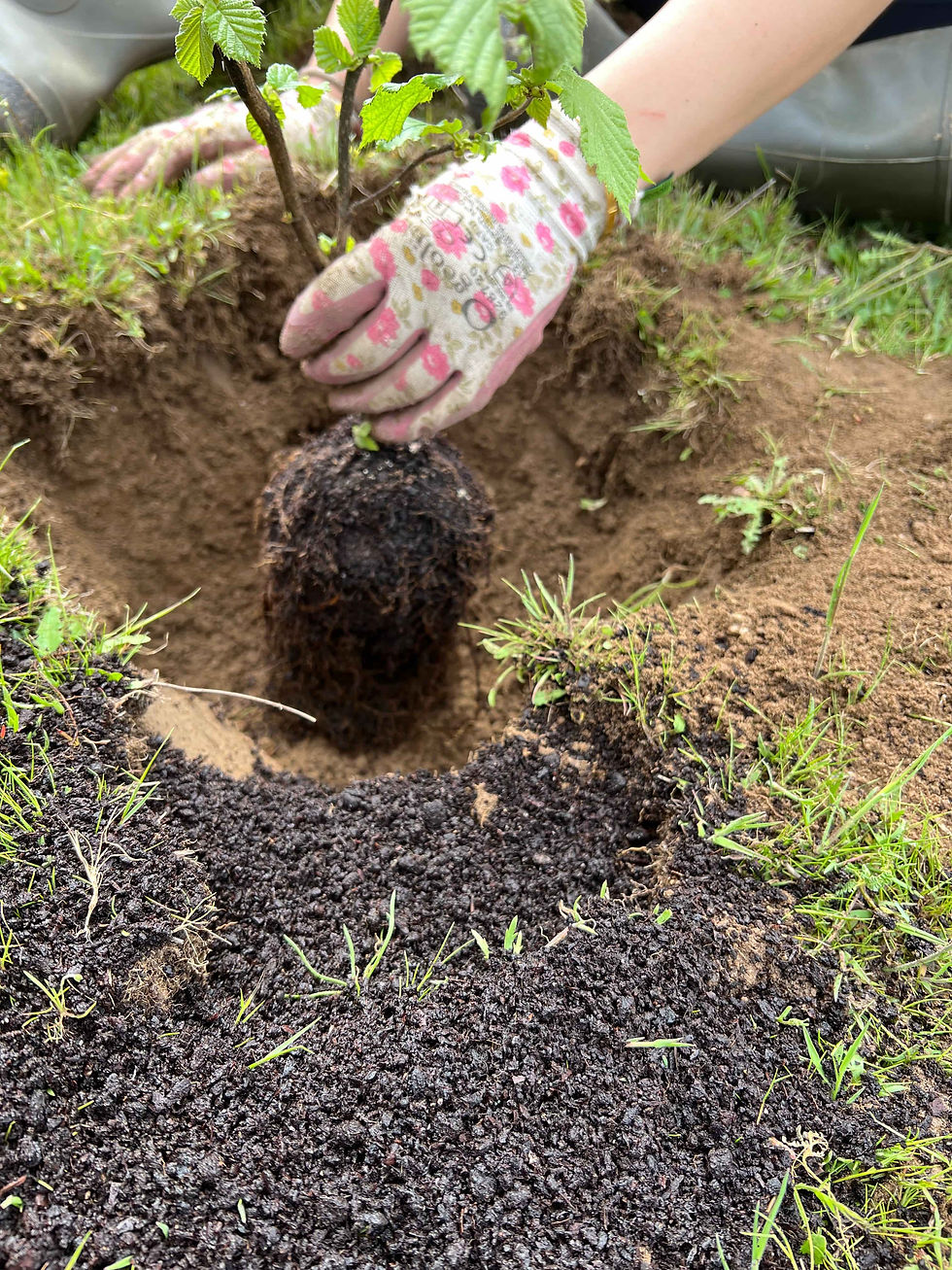
Drainage beats elaborate amendments. Dig wide into native soil, keep the root flare and graft union above grade, and fix persistent wet spots before planting. Deep, fertile, well-drained soil suits citrus; roughly pH 5.5-6.5 is the usual sweet spot.
This is not a soft overfed bowl crop. Nutrient deficiencies happen, but so do root problems from poor drainage that look like hunger from above. Correct structure first, then feed with a citrus-appropriate approach if leaves still signal a gap.
Tough Tip: If the soil holds a puddle after rain, fix drainage before you buy another bag of fertilizer.
Pruning and Seasonal Care for Grapefruit
Citrus like ours are usually budded or grafted; seed does not reliably reproduce the parent, so this companion stays on ongoing care rather than a grow-from-seed guide. Light pruning is enough: dead wood, damaged branches, and rootstock suckers. Skip heavy yearly haircuts without a clear reason.

Fruit set generally does not need a second grapefruit cultivar. Encourage pollinators nearby and avoid broad-spectrum insecticides while blooming. Watch for scale, aphids, citrus leafminer, nutrient deficiencies, drainage-related root problems, and region-specific citrus diseases. Inspect before you spray; prefer targeted treatment.
Ripeness on an unknown cultivar is a multi-season lesson. Do not rely on rind color alone. Taste, weight, juice, acidity, sweetness, and the tree’s seasonal pattern teach more than one photograph. One fruit is not reliable ID for rind or flesh color, seediness, flavor, size, or ripening period. Our first 2026 fruit can stay for information; if a stressed young tree ever sets a heavy crop, thinning some fruit can redirect energy into growth.

Fresh fruit, juice, salads, preserves, and zest are the kitchen upside, but this post stays on care. Brief caution: grapefruit can interact with certain medications, so check guidance that applies to you. That is not medical advice.
Tough Tip: Prune for health and suckers, not for a perfect shape every winter. The tree’s modest pace already asks for patience.
Herman’s Tough Kraut Fixes: Common Challenges with Grapefruit Care
Ongoing grapefruit care on Quinta ground is mostly troubleshooting: heat versus frost, water rhythm, slow canopy, blank cultivar labels, and pests.
Q: Why is our grapefruit still so modest after several seasons?
A: Modest height and canopy since our November 2022 planting matches much of the citrus grove. First fruit in 2026 was the welcome signal; slow growth is not automatic failure when the tree stays alive and finally sets.
Q: How much summer water does a young tree really need?
A: Regular deep watering in hot, dry summers, then less in cool weather, with uniform moisture rather than constant saturation. Keep mulch off the trunk so the collar can dry between soaks.
Q: Do we need a second grapefruit cultivar for fruit?
A: Generally no. Encourage bees and other flower visitors, and avoid broad-spectrum insecticides while citrus is blooming.
Q: How do we know when an unknown grapefruit is ripe?
A: Do not trust rind color alone. Use taste, fruit weight, juice, acidity, sweetness, and the seasonal pattern you document over years. One fruit is useful information, not a finished cultivar ID.
Q: What pests and problems should we watch first?
A: Scale, aphids, citrus leafminer, nutrient deficiencies, and root trouble from poor drainage, plus region-specific citrus diseases. Inspect before spraying and keep treatments targeted.

Final Thoughts on Caring for Grapefruit
Solid grapefruit care in Zone 8a stays practical: warmest full sun you can give, drainage over fancy soil recipes, deep summer water while young, mulch clear of the trunk, light pruning, and frost-aware placement without overcomplicating the map. Ours shares the grove with Citrus sinensis 'Dom João', keeps a modest canopy, and finally offered first fruit in 2026.
Open the full Citrus paradisi Plant Library companion for the species profile, join the Kraut Crew for more Quinta field notes, and use the Resources page for tools we rely on.


Comments