
Autumn Tree Planting for Mediterranean Quintas: Woody Plants That Root Before Summer

On our Quinta in Central Portugal, I do not plant woody stock into the ground in summer heat. If something must grow then, it stays in a pot. In-ground planting starts in October, when soil is still warm and the rains return. There is even a Portuguese saying for it: em outubro pega tudo: in October, plant all.
That is the kinder ask of autumn tree planting: settle roots while the weather helps, then spend winter building underground. Woody plants (trees, shrubs, and multi-stem fruiting stock) fail less from “wrong species” than from wrong season, buried collars, mulch volcanoes, and no first-summer plan. This is the how-to, not a shopping list.

Stick around for Herman’s Tough Kraut Fixes at the end. The Troubleshooting FAQ covers timing, root balls, wet winter bowls, east-side bark split, and first-summer water.
For more field-tested homestead tools and reading, start at our Resources page.
Why October Beats Summer Heat for Woody Roots
Hot months teach you to chase water. Cool months teach you to use it.
In Mediterranean climate, soil often stays warm deep into autumn while nights ease and storms restart. Roots keep growing when tops look quiet, so by next summer a well-planted tree already has a wider grip on the ground. Force the same stock into open ground in July and you fund a hose schedule that may still lose, which is why we keep summer woody starts in pots and plant out in October.
Autumn tree planting sits at the center of Quinta systems work: timing, hole shape, water and mulch, trunk shade, and matching species to microclimate and drainage. Pair this post with our Native Trees of Portugal and Native Shrubs of Portugal guides when you choose what to plant. For Quinta-tested species notes, the Plant Library holds entries such as narrow-leaved mock privet and strawberry tree.
One heat note: the same basin that saves a sapling in August can drown it in January if it holds standing water against the trunk. Design for both seasons.
Hit the October Window While Soil Is Still Warm
For Central Portugal, the plant-out window for autumn tree planting opens in October, once extreme heat eases and the first real rains soften the ground. Container stock can go in from then through early winter. Bare-root often follows once nurseries ship dormant plants.
Watch the land, not only the calendar. If topsoil is powder and nights still feel like summer, wait. If rain has returned and a shovel bites cleanly to 40–50 cm (16–20 in), you are in the useful zone. Stop when the ground is waterlogged and every step leaves a slick clay smear. Cold mud is not warm, moist root weather.

Keep summer woody plants in pots until October. Once you plant out, water them in and protect fresh root balls from drying winds. Bare-root stock wants dormancy and quick planting once unwrapped: roots moist, not swimming in a bucket for days.
Tough Tip: Plant for root weather, not leaf weather. October warmth plus returning rain beats a pretty nursery display in peak heat.
Dig Wide, Set the Root Collar at Grade
Width beats depth. Dig a hole two to three times the width of the root ball, but no deeper than the ball’s height. Scarify the sides so roots do not hit a smooth clay wall and circle. Loosen the bottom lightly, then firm it so the plant does not sink after the first soak.
Set the root collar (where roots flare into stem) at or slightly above final grade. On clay terraces, a touch high is safer than a sunken dish. Graft unions on fruit trees stay above soil. Tease circling roots outward on pot-bound stock. If the ball is a hard spiral, score vertical slits and spread what you can without shredding the core.
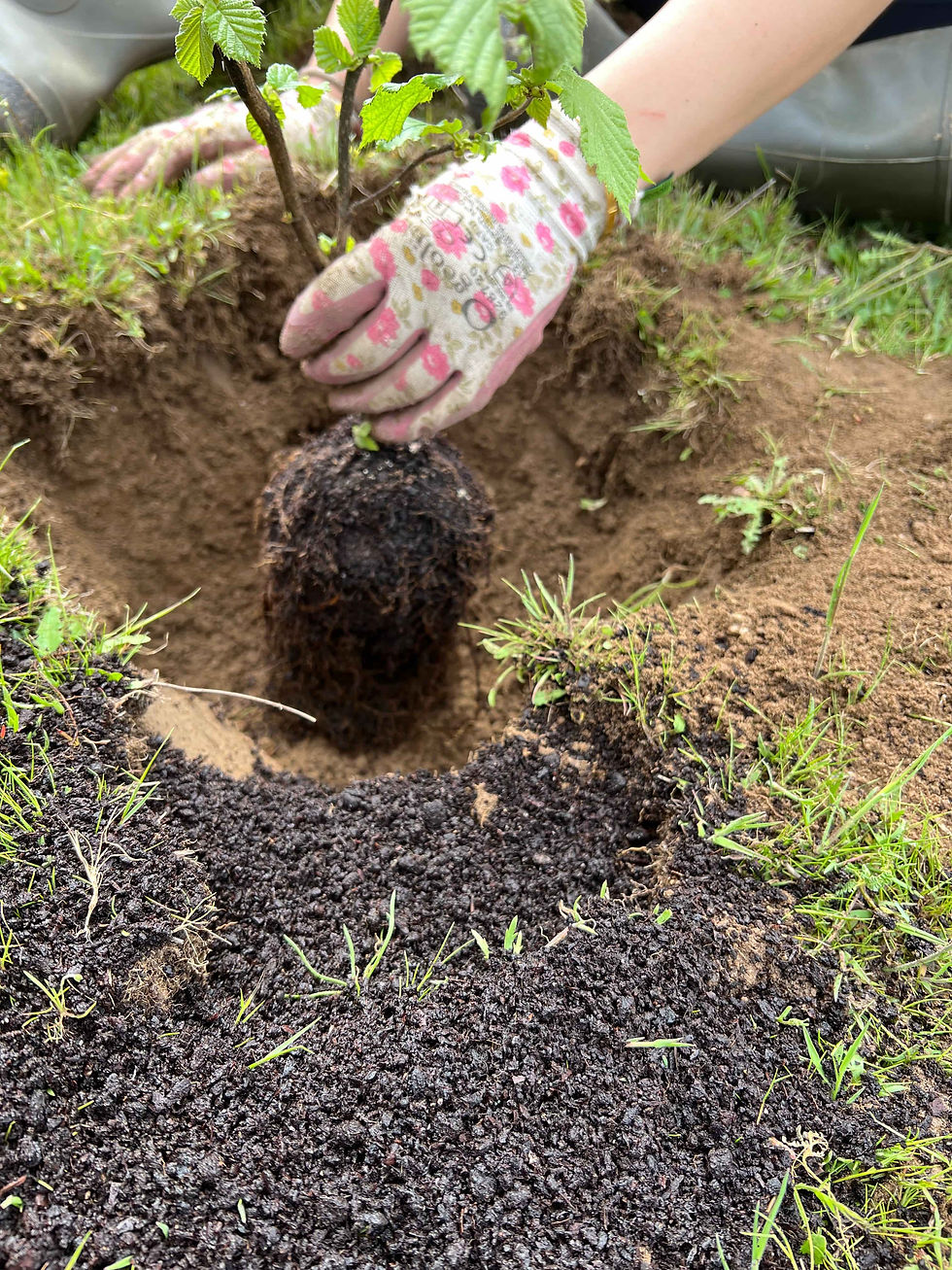
Backfill with the soil you dug out. Heavy compost “improvements” in a clay bowl create a bathtub. Mix a modest amount of coarse organic matter only if structure is already poor, and keep the mix continuous with the surrounding ground so water can leave. Firm gently as you fill, water to settle voids, then check that the collar did not drop.
Stake only where wind will rock the root ball loose. Use soft ties, allow a little flex so the trunk strengthens, and remove stakes once the plant stands on its own.
Tough Tip: If you cannot see the root flare after planting, dig it back up. Buried collars rot slowly and quietly.
Water In, Mulch Off the Trunk, Shade the East Side
Water deeply right after planting until the root zone is moist, not flooded. Build a wide, shallow basin that holds a soak, then open a small spillway on the downhill side if winter rains will pool. Mulch 5–8 cm (2–3 in) deep in a wide ring, several centimeters (an inch or two) clear of bark. Never pile a volcano against the stem.

Through the first wet season, let rain do most of the work and only top up during long dry gaps. Through the first dry summer, use deep, infrequent soaks that wet the whole root zone, then let the surface dry between events. Young woody plants earn drought tolerance; they do not arrive with it fully paid.
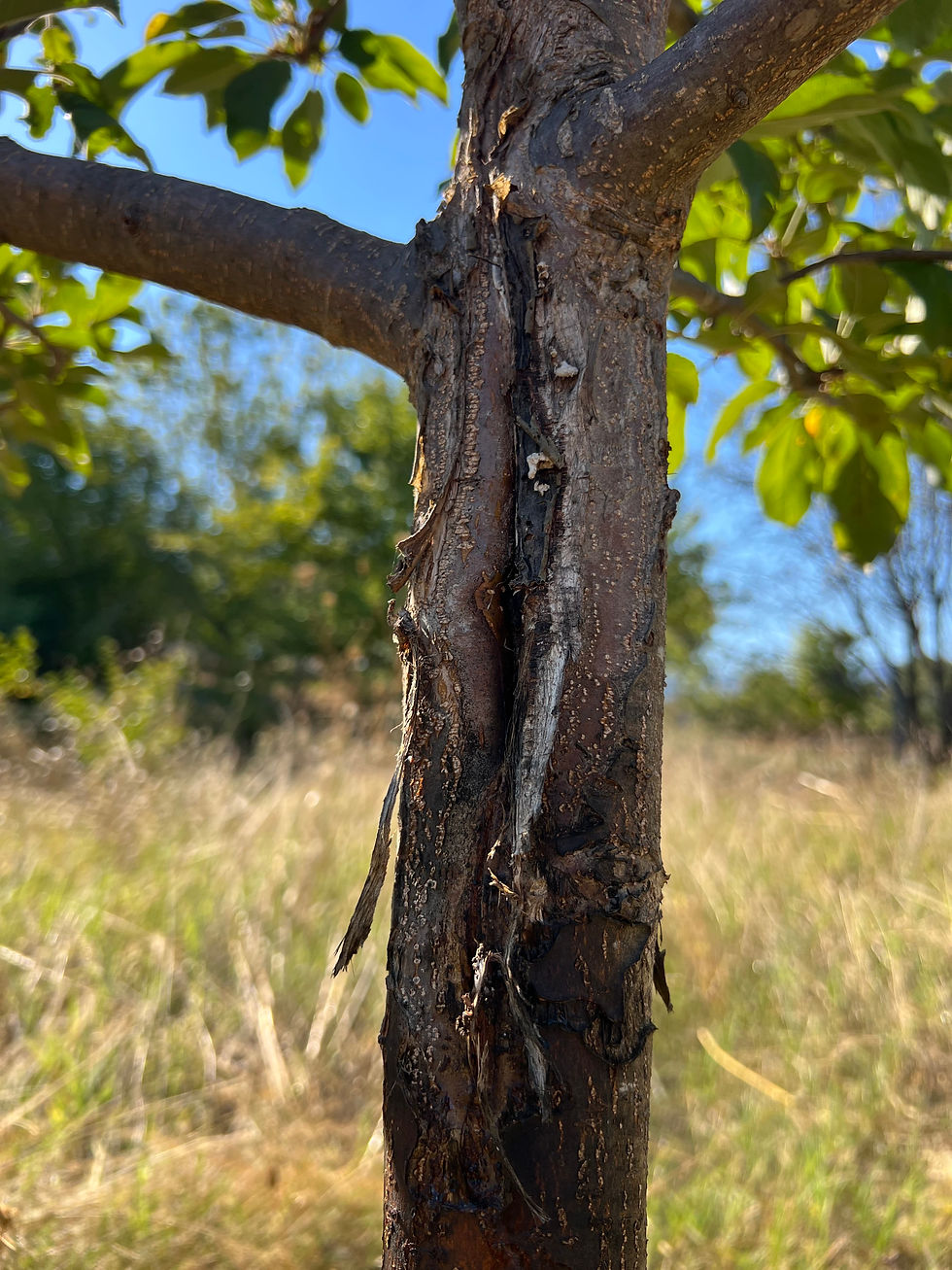
If the new tree stands alone with no other canopy nearby, plant a shrub on the east side to shade the trunk from the rising summer sun. On our Quinta, hazelnut grows well and fills out, and raspberry also works. We have seen east-side bark split on trees such as our apple ‘Gala’: frosty nights, then a sudden jump when strong morning sun hits the cold trunk. An east shrub softens that shock better than hoping white paint alone will fix it.
Mark a simple first-summer plan: check soil moisture at 15–20 cm (6–8 in) with a trowel or finger, water when that zone is dry, and keep east shade in place while bark is still thin. When our Autumn Quinta Planting Checklist landing is live, it will bundle these checks into one field sheet. Until then, keep notes on what each planting needed.
Tough Tip: Mulch the soil, not the stem. Shade the east trunk when the tree stands alone. Water deep and rare once rains fade.
Match Species to Microclimate and Drainage
Autumn tree planting fails when a “Mediterranean” label lands in the wrong hole. Walk frost pockets, wind tunnels, wet terrace backs, and free-draining slopes before you buy. Put wet-sensitive evergreens on mounds or freer ground. Save lower bowls for species that shrug occasional winter wet, or redesign the bowl first.
Use natives and proven Quinta stock as your backbone. Phillyrea angustifolia is a quiet hedge workhorse on freer-draining edges. Arbutus unedo wants drainage and patience. Fruit trees need sun, air flow, and a collar that stays out of sludge. For the drainage half of the puzzle, see our wet winter drainage guide when it is live: puddle maps, raised planting lines, hugelbeds, check dams, and overflow paths.
Do not invent a perfect shopping list for someone else’s hillside. Match one woody plant to one honest microclimate, then expand. Diversity helps, but placement decides survival.
Tough Tip: Native is not a free pass. The right shrub in a winter puddle still sulks. Fix drainage or move the plant.
Root Now, Stress Less Later
Wait for October, dig wide, keep the collar at grade, mulch off the trunk, shade the east side when the tree stands alone, water with a first-summer plan, and match the plant to drainage and frost. Do that, and woody stock spends winter earning roots instead of summer begging for rescue.
Join the Kraut Crew for more Quinta field notes like this, and use the Resources page for tools we actually rely on.
Herman’s Tough Kraut Fixes: Common Challenges with Autumn Tree Planting
Autumn tree planting problems show up late: buried collars, mulch against bark, east-side bark split, wet winter bowls, or a summer hose schedule that never catches up. This Troubleshooting FAQ covers the usual fixes.
Q: Can I plant woody plants into the ground in summer here?
A: No. Keep woody stock in pots through the heat. Plant out from October. Em outubro pega tudo.
Q: How late can I still plant woody plants in autumn?
A: Through early winter if soil is workable and not waterlogged. Earlier in the October window is kinder. If the hole is soup, wait or use a mound.
Q: The root ball is a hard spiral. Plant anyway?
A: Score a few vertical cuts, tease outer roots out, and set the collar at grade. Soak and loosen a brick-hard ball; favor a wider hole over a deeper one.
Q: How much should I water the first summer?
A: Deep and infrequent. Wet the whole root zone, then check at 15–20 cm (6–8 in) before the next soak. Roots should chase moisture down, not sit in a soggy collar.
Q: Why is bark splitting on the east side of my young tree?
A: Frosty nights, then strong morning sun on cold bark. We have seen it on apple ‘Gala’. If the tree stands alone, plant hazelnut or raspberry on the east side to shade the trunk.
Q: My new tree yellows after long winter rains. Bad plant?
A: Often a basin that holds water against the trunk. Open a spillway, raise the planting line next time, and fix drainage before you blame the nursery.
Q: Do I fertilize at planting?
A: Usually no. Get hole width, collar height, water, mulch, and east shade right first. Feed lightly only after steady new growth shows.


Comments