
How to Care for Loquat: Simple Guide for Mediterranean Gardens

Loquat (Eriobotrya japonica) is a small evergreen fruit tree that does things backwards, because while most of our Quinta is winding down in late autumn, loquat sets flower buds and opens fragrant blossoms through the cool months. That timing is also why knowing how to care for loquat in a Mediterranean garden matters, since the tree handles our winters once established, while young trees, flowers and tiny fruit are far more fragile.
Our first loquat, bought at a local market and planted in the food forest, did not survive, so every loquat we grow now started as a seed, with two in front of our mobile home, one on the way down between the veggie terrace and the greenhouse terrace, and more seedlings in the greenhouse, and none of them has fruited yet.
This post mixes what we have seen on the Quinta with general practice for Mediterranean gardens in Zones 8 to 10, so anything beyond our own young trees is how loquat is usually cared for, and more reading sits on our Resources page.

Quick Answer: How to Care for Loquat
Loquat care comes down to a warm, sheltered spot in full sun or light shade, deep watering for young trees through dry summers, a generous mulch, well-drained soil with modest feeding, light pruning after harvest and protection for young plants on frosty nights. The key warning is that the tree is much tougher than its winter flowers and small fruit, so a cold pocket can cost every crop.
Best Light and Placement for Loquat
Loquat usually grows and fruits best in full sun, although young trees in a Central Portugal summer generally appreciate a little afternoon shade, since their big leaves can scorch in strong sun and drying wind. The usual advice is to choose a spot sheltered from cold winds and away from low ground where frost settles, and warm spots near stone walls or buildings tend to suit it best.
On our Quinta the two loquats in front of the mobile home get the most attention simply because we walk past them every day.

Watering and Mulching Loquat
The common approach is to water young loquats deeply about once a week through the dry months and to ease off once the autumn rains return, because the roots dislike sitting in wet soil through a rainy winter. Established trees cope with dry spells far better, but they generally flower and hold fruit better with steady moisture, and brown leaf tips often point to drying out or salt buildup.
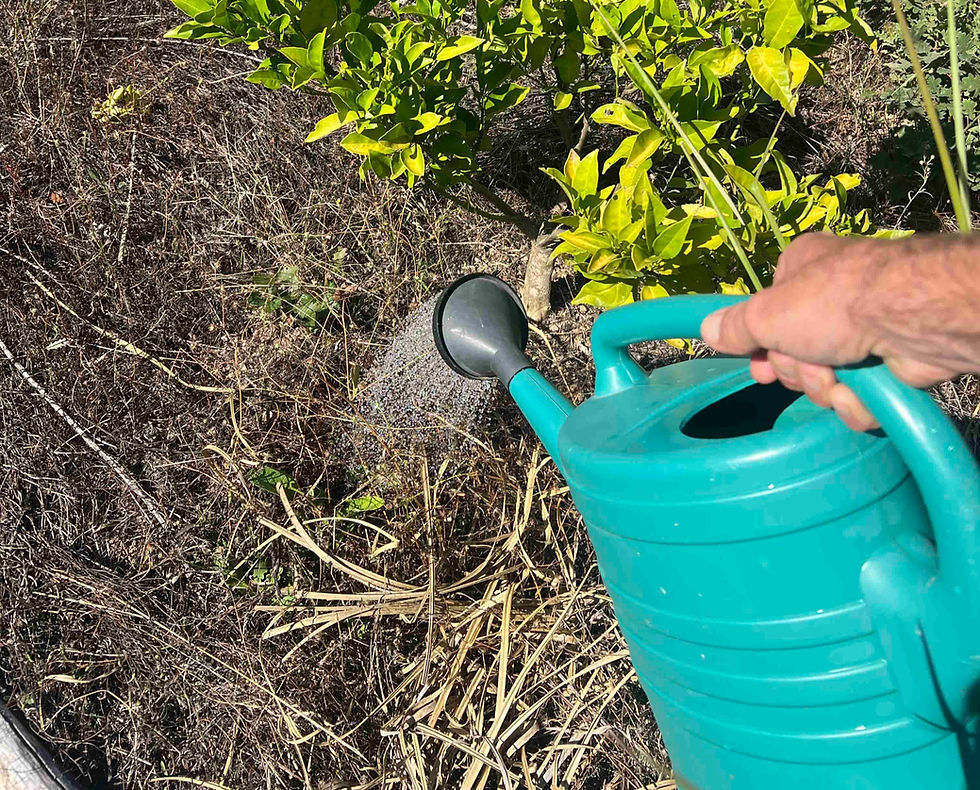
Our own summer routine was lighter than that, because our three planted trees got frequent but shallow drinks from the hose on my daily watering tour, and I have now stopped and probably won't water again until May or June. When the terrace tree showed a few brown leaf tips, I put it down to too little water and gave it a deep soak now and then, which is closer to what the general advice means. A thick mulch over the root zone, kept a hand's width from the trunk, helps hold that moisture.

Soil and Feeding Needs for Loquat
Loquat is generally adaptable about soil as long as drainage is good, and slightly acidic to neutral soil suits it well. A layer of compost or well-rotted manure in late winter or spring is usually enough for young trees, and heavy nitrogen feeding tends to push soft growth that is more prone to fire blight.
Pruning and Seasonal Care for Loquat
MuDan leads the pruning on our Quinta, though none of our loquats has been pruned yet, so what follows is general practice, and the usual approach for loquat is light pruning after harvest, removing dead and crossing branches, while avoiding cuts in late summer and autumn because the flower buds form at the branch tips.
Established trees usually tolerate a few degrees of frost, but the flowers and young fruit are damaged at only slightly below freezing, so clear, still winter nights are the main risk, and young seedlings need covering on cold nights, which we learned after losing some seedlings to surprise frosts.
Our current seedlings spent last winter in the greenhouse, although my guess is that they would likely be fine outdoors in a pot in a slightly sheltered spot. This autumn there is not a single flower bud on any of our loquats, which is normal for trees this young.

Common Care Problems with Loquat
Fire blight can blacken shoot tips so they look scorched, and the usual fix is to cut well below the damage in dry weather. Scale insects and aphids sometimes gather on young shoots, leaving sticky honeydew and sooty mold, and leaf spots can appear in wet weather.
A seed-grown tree that grows well but has not fruited is usually just young, since seedlings commonly take six to ten years, while flowers that brown and drop in winter point to frost.
Herman's Tough Kraut Fixes: How to Care for Loquat Problems
Most loquat problems in a Mediterranean garden trace back to youth, water or winter cold rather than serious disease, so here are quick answers to the questions that come up most often.
Q: Why is my seed-grown loquat not fruiting?
A: A seed-grown loquat commonly needs six to ten years before its first fruit, and frost, deep shade or heavy feeding can delay it.
Q: How do I protect loquat flowers from frost?
A: Plant loquat in a sheltered, warm spot away from frost pockets, and cover small trees with fleece on clear, still nights when frost is forecast.
Q: When should I prune a loquat tree?
A: Prune loquat lightly right after harvest, or in spring on young trees, and avoid late summer and autumn cuts that remove the coming flower buds.
Final Thoughts on Caring for Loquat
Learning how to care for loquat is mostly a matter of shelter, steady water while the tree is young, mulch and a lot of patience. Our seed-grown trees, two in front of the mobile home, one between the veggie terrace and the greenhouse terrace and the seedlings in the greenhouse, are still growing toward that first crop, and the backstory is in how we grow loquat from seed.
Read more in our Loquat profile, and join the Kraut Crew if you want to follow how they get on.


Comments