
How to Care for Mediterranean Cypress in Zone 8a

If you already have dark columns by a gate or driveway, learning how to care for mediterranean cypress matters more than another nursery photo. Cupressus sempervirens (Mediterranean cypress, Italian cypress, cipreste-comum in Portugal) is architecture first: a living gatepost, wind accent, and eventual timber tree that wants full sun, sharp drainage, and a dry summer once roots are down.
We planted two as future gateposts left and right of our entrance, aiming for a natural Mediterranean gate. Stick around for Herman’s Tough Kraut Fixes: sheep, cages, and canker show up before the postcard silhouette does.

For field-tested tools and reading, see our Resources page.
Quick Answer: How to Care for Mediterranean Cypress
Give Cupressus sempervirens full sun, well-drained sandy, stony, or loamy soil, and deep infrequent water through the first two or three dry summers, then back off. Keep a mulch ring off the bark, leave the leader alone, and prune only dead, broken, or cankered wood in dry weather. With livestock, enlarge the cage before you shop for a spray: sheep and goats treat the lower third as a salad bar, and prickly pears on the same strip do not stop them.
Best Light and Placement for Mediterranean Cypress
Mature Mediterranean cypress wants full sun. Shade thins the column and loosens the pencil form. Plan for 15-30 m (49-98 ft) of height and about 1-3 m (3.3-10 ft) of columnar width. For a gate pair, set each tree 1.5-3 m (5-10 ft) from the opening and keep cages clear of the fence line.
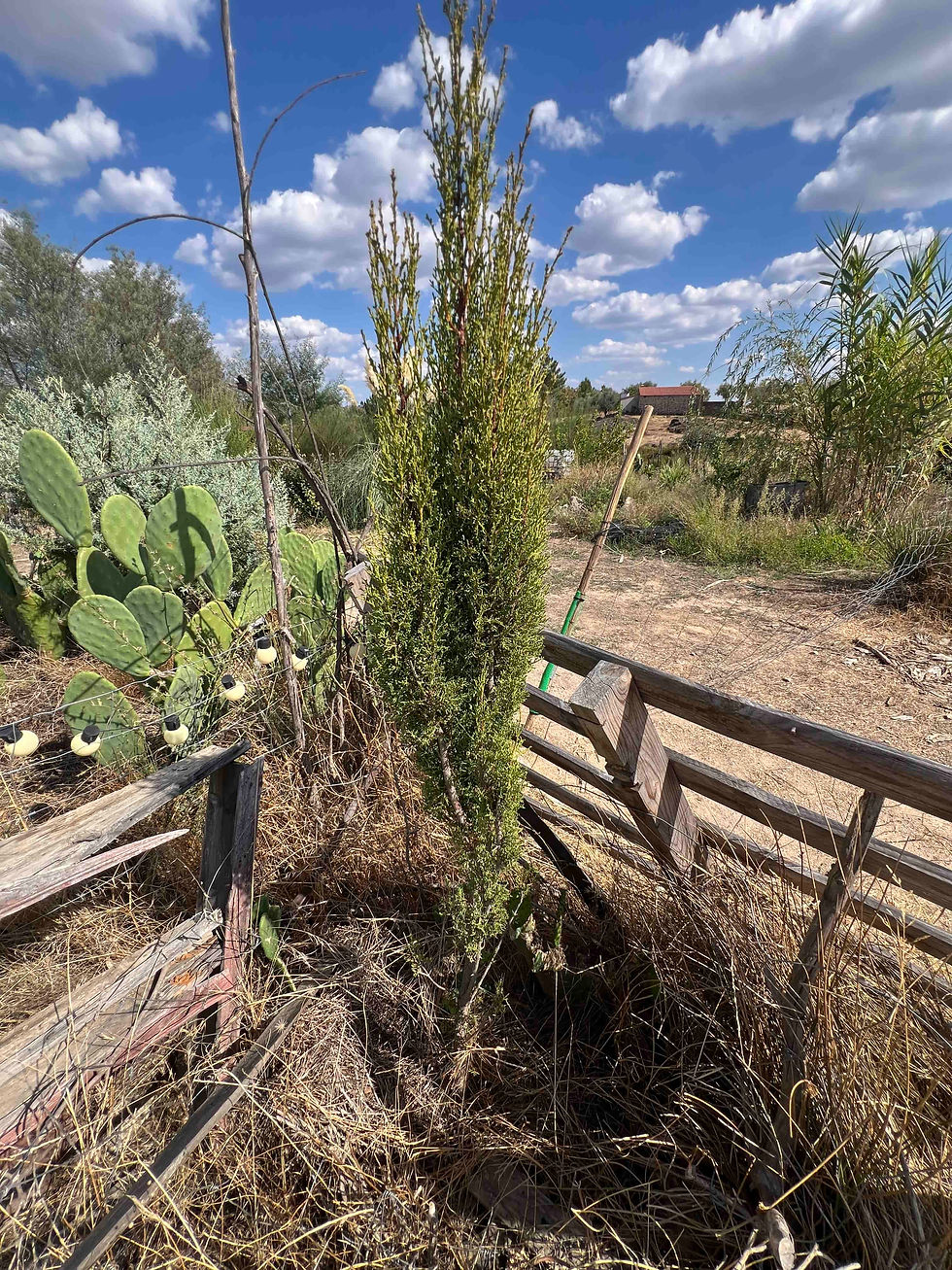
Our pair sits in front of the fence with companion prickly pears on the same strip, so the flock gets a two-course prune: soft cypress spray first, cactus pads if they reach. A fence-line hole means years of defending. Pull the tree a step into the property or push protection past the fence so the animal meets wire before foliage.

Tough Tip: Site the column for a century, but site the cage for the first decade. A polite wire circle that still lets a ewe lean in is not a gate plan.
Watering and Mulching Mediterranean Cypress
Young trees need deep soaks through the first Mediterranean droughts. Once established, Cupressus sempervirens is built for dry summers and hates wet feet. Frequent shallow sprinkling and wet foliage overnight invite root rot and canker. In rainy winters, watch for water sitting on the collar, especially on heavy ground. Mulch a wide ring off the bark, and give each cypress its own unshared collar so cactus roots and sheep traffic are not compacting the same wet winter circle.
Tough Tip: Deep soak, then leave the surface alone. Shallow daily wetting feeds weeds and still leaves the root zone thirsty or soggy in the wrong season.
Soil and Feeding Needs for Mediterranean Cypress
Drainage beats richness. Prefer well-drained sandy, stony, or loamy soil around pH 5.5-8.0; lean, rocky, and calcareous ground is fine, while compacted waterlogged clay is not. Dig a hole no deeper than the root ball and two to three times as wide, set the root flare at soil level, and mound slightly on heavy ground with grit or coarse sand. This is not a heavy feeder. Skip programs that push soft, dense growth.
Tough Tip: Do not bury the flare in a compost sump. Cypress wants air and drainage at the collar more than a rich bowl.
Pruning and Seasonal Care for Mediterranean Cypress
Leave the leader intact if you want a true column. Do not flat-top a gate pair to even them up, and do not shear into a tight box. In dry weather, remove dead, snapped, or cankered wood; sterilize tools between cuts and destroy infected wood. Plant or reset in autumn or early spring. Stake only if the site is wind-thrashed. Once settled, typical growth is about 30-60 cm (1-2 ft) per year; a readable gate is a five- to fifteen-year picture, closer to ten years. Watch for spider mites in hot dusty spells and hose foliage in the cool morning so it can dry. Cypress canker (Seiridium cardinale and kin) shows as sunken resinous lesions with dead foliage flags: cut well below the lesion.
Livestock remain the urgent pest. We have added extra fencing and piled branches around the trunks; the cage is still too polite and not fully solved. Site trees, then build a wider, taller browse guard before you expect living gateposts.

Tough Tip: Protect first, prune second, water third. Height only accumulates if the flock stops resetting the lower third.
Herman’s Tough Kraut Fixes: Common Challenges with Care for Mediterranean Cypress
Ongoing care for mediterranean cypress on Quinta ground is mostly troubleshooting: browse, canker versus mites, fence-line cages, and a slow living gate.
Q: How long until two young trees look like a natural entrance gate?
A: Think in years, not seasons. Settled columnar trees often put on 30-60 cm (1-2 ft) a year. A pair that reads as a gate from the road is a five- to fifteen-year picture. Do not flat-top them to even them up.
Q: Brown flags in the foliage: spider mites or cypress canker?
A: Check the wood. Mites leave stippled dusty spray and often fine webbing in heat; a hard morning hose-off usually helps. Cypress canker is a sunken resinous lesion with foliage dying beyond it: cut well below the lesion in dry weather, sterilize tools, and destroy the wood.

Q: Can we keep cypress right against the fence with prickly pears at its feet?
A: You can plant there, then spend years defending it. Fence-line holes give the flock a fixed working edge and leave no room for a proper cage. Prickly pear is a fair drought companion and a poor livestock deterrent once pads are in reach. Pull the tree in or push protection past the wire, and keep an unshared mulch collar.
Q: Do we need two trees for pollination, and is this species legal to plant in Portugal?
A: One healthy tree is monoecious and wind-pollinated, so a second tree is for a gate, not for fruit. Cupressus sempervirens is treated here as an exotic non-invasive forestry species and is not listed under Decreto-Lei 92/2019, but still plant it with intent.
Q: Why is our livestock cage still failing?
A: Ours is still too polite: extra fencing and branch piles help only a little when cage diameter lets a determined ewe lean in. Widen and raise the browse guard until the columns are above sheep-mouth height. Companions like lavender, rosemary, santolina, olive, fig, or pomegranate do not replace that cage.
Final Thoughts on Caring for Mediterranean Cypress
To care for mediterranean cypress in Zone 8a, keep the method simple and the defenses honest: full sun, sharp drainage, deep early-summer water then restraint, a mulch ring clear of the bark, leaders left alone, dry-weather canker cuts, and a livestock cage that meets the animal before the foliage. Our entrance pair still looks fine and is putting on height, yet the natural gate remains a long project until browse defense catches up.

Open the full Cupressus sempervirens Plant Library companion for the species profile, join the Kraut Crew for more Quinta field notes, and use the Resources page for tools we rely on.


Comments