
Orange Firethorn Care in a Mediterranean Climate

If you already have a thorny evergreen flashing orange fruit after a dry summer, solid orange firethorn care matters more than another nursery label. Pyracantha angustifolia (Orange Firethorn, Narrowleaf Firethorn) brings evergreen structure, spring flower clusters, wildlife pomes, and drought grit once roots are down - plus spines sharp enough that bare-handed pruning is a lesson you only need once.
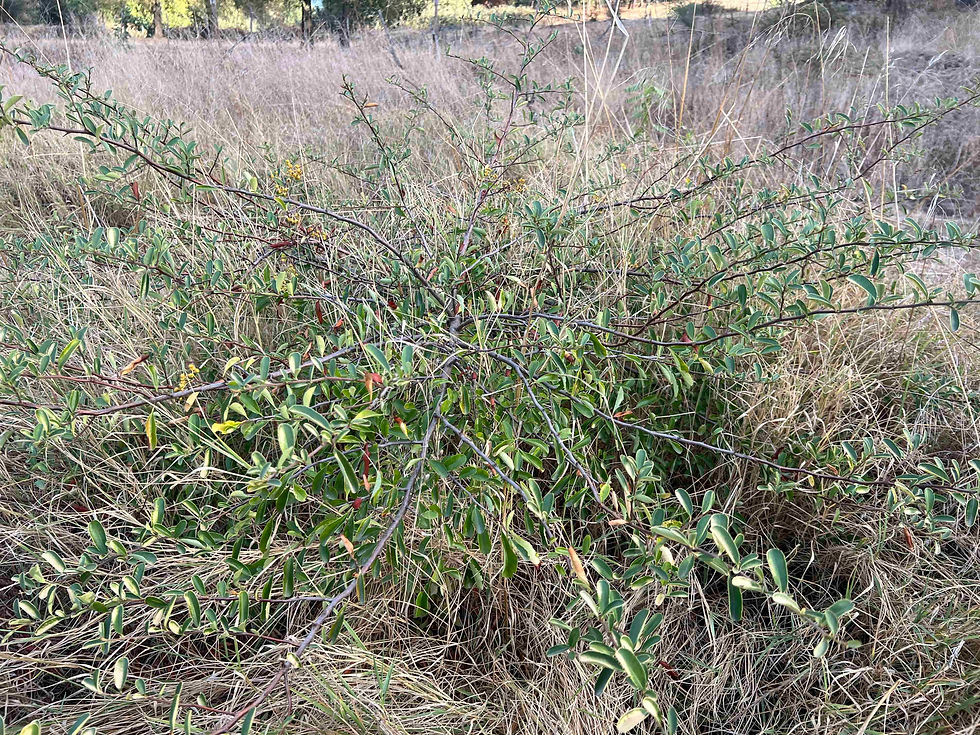
Ours has been in the food forest since at least before October 2023; it was already in the ground when we planted Salvia greggii 'Royal Bumble' beside it. Stick around for Herman’s Tough Kraut Fixes: fruit set, pruning timing, placement pinch-points, and why leafy growth with few pomes is usually not a fertilizer problem.
For field-tested tools and reading, see our Resources page.
Quick Answer: How to Care for Orange Firethorn
Give Orange Firethorn full sun to light partial shade, well-drained unfussy soil, and consistent moisture while young, then back off hard. Established shrubs on our Quinta get barely any deliberate summer irrigation and still expand and fruit. Mulch without piling against the stems, prune selectively after flowering so you keep previous-year wood for the next display, and wear thick gloves plus eye protection when you reach in. Leave the orange pomes for birds and winter color; they are not a human food crop.
Best Light and Placement for Orange Firethorn
Full sun to light partial shade suits Pyracantha angustifolia best. Heavier shade cuts flowering and fruit. In hot Zone 8a summers, a little afternoon protection is fine if the plant still sees strong light for most of the day.
Ours spreads outward more than up: more diameter and volume, still below hip height, a low broad form that fits denser food-forest layering. Site it where that spread has room, and think carefully about pinch-points. Avoid narrow paths, kid play zones, and places people regularly squeeze past unless you plan to prune often. The same spines that demand respect also make a useful defensive hedge and dense refuge for small wildlife.
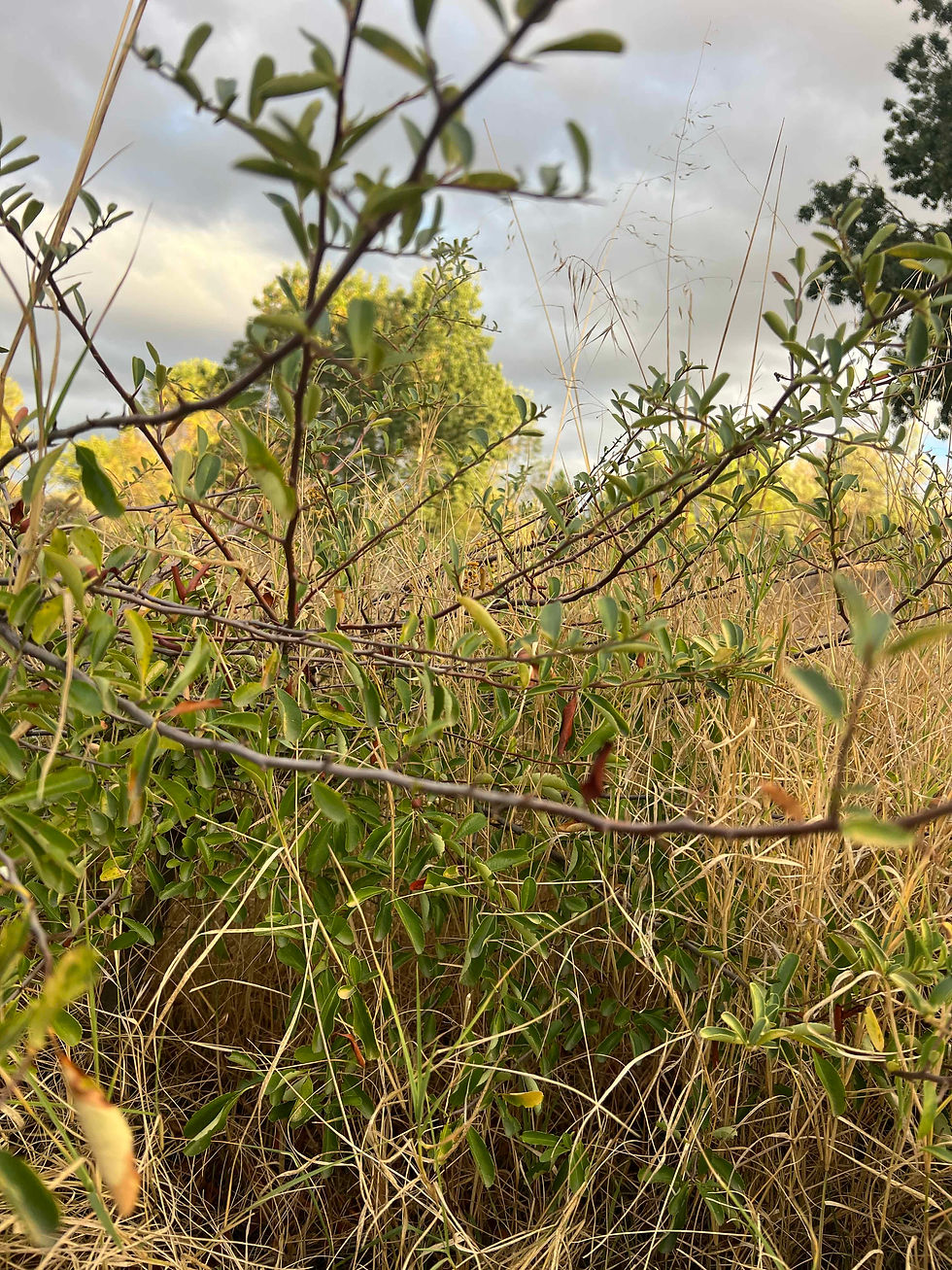
Tough Tip: Place the shrub for wildlife and fruit color, then place the path so elbows never meet the spines by accident.
Watering and Mulching Orange Firethorn
Young plants need consistent moisture through establishment, then a gradual cutback. Once settled, orange firethorn care is mostly restraint: little supplemental water in a normal dry season. A deep soak in exceptional drought helps if fruit starts dropping early. Our food forest is not pampered with constant irrigation, and the shrub still expands and fruits.

Mulch a wide ring to hold winter rain and buffer summer heat, but keep material clear of the stems. Persistent wet at the collar is a bigger enemy than lean summer soil. If dry-season watering feels like guesswork, our free Summer Survival Garden Checklist is a light companion for heat and drought framing.
Tough Tip: Deep soak when drought is genuinely exceptional, then walk away. Daily shallow wetting feeds weeds and still leaves the root zone confused.
Soil and Feeding Needs for Orange Firethorn
Drainage beats richness. Loosen compacted ground, add compost only if the pocket is exceptionally poor, and skip the soft overfed bowl. The species is adaptable across moderately fertile textures and dislikes persistent waterlogging more than lean ground.
This is not a heavy feeder. Leafy growth with few fruits is almost never fixed by fertilizer first. Check pruning timing, shade, pollinators, frost at flowering, and extreme drought before you reach for a feed.
Tough Tip: Prioritize air and drainage at the collar over a compost sump. Firethorn rewards structure more than soft growth.
Pruning and Seasonal Care for Orange Firethorn
Plant or reset in autumn or early spring. Keep the root collar at its original level, water in well, and mulch without burying the stems. Flowers form mainly on previous year’s wood, so excessive pruning kills next year’s fruit display. Selective work after flowering - or light shaping - is safer: remove damaged, diseased, badly placed, or overly vigorous wood, and leave enough flowering wood for the orange show.
Wear thick gloves, long sleeves, and preferably eye protection when you reach into a mature shrub. Bare-handed work around those spines is a Quinta lesson you generally only need once.

White flower clusters bring pollinators; nearby flowering herbs help, and a single shrub can fruit. Avoid unnecessary insecticides while it is flowering. Watch for fire blight, pyracantha scab, aphids, woolly aphids, scale, caterpillars, and leaf-mining moths. Companions that fit our edge include Mediterranean sages, rosemary, lavender, comfrey, fruit trees, and other dry food-forest shrubs - we already have Salvia greggii 'Royal Bumble' beside ours.
Treat the orange pomes as ornamental and ecological: relatives of miniature apples, not a harvest basket. Avoid deliberately eating them (especially the seeds), and supervise kids and pets around fruiting shrubs.

Tough Tip: Prune for shape and health after flowering, not for a tight yearly haircut. The fruit display lives on wood you leave behind.
Herman’s Tough Kraut Fixes: Common Challenges with Orange Firethorn Care
Ongoing orange firethorn care on Quinta ground is mostly troubleshooting: spread habit, sparse irrigation, fruit set, spines, and placement.
Q: Why is our Orange Firethorn spreading sideways instead of shooting up?
A: That low, broad habit is normal here. Ours has increased in diameter and volume while staying below hip height, which suits denser food-forest layering even though the species can eventually become a much larger spreading shrub.
Q: How little summer water can an established plant really take?
A: Once established, very little in a normal dry season. Ours receives barely any deliberate irrigation and still expands and fruits. Give young plants consistent moisture first; reserve deep soaks for exceptional drought or early fruit drop.
Q: Why plenty of leaves but few orange pomes?
A: Check pruning timing first - flowers sit mainly on previous year’s wood. Then look at shade, spring pollinator traffic, frost during flowering, and extreme drought before fertilizer.
Q: How seriously should we take the spines when placing and pruning?
A: Seriously. Thick gloves and eye protection matter when you reach into mature growth. Avoid pinch-points, kids’ play areas, and narrow paths unless you prune regularly; the same armor makes a strong defensive hedge and wildlife refuge.
Q: Are the orange “berries” safe to harvest for the kitchen?
A: We leave them for ornamental color and wildlife. Fruits are pomes, not a human food crop; avoid deliberately eating them, especially the seeds, and supervise children and pets.

Final Thoughts on Caring for Orange Firethorn
Solid orange firethorn care in Zone 8a stays simple: strong light, drainage over richness, moisture for youth then restraint, selective pruning after flowering, mulch clear of the stems, and gloves you actually wear. Ours asks for almost nothing, keeps spreading, and still throws a splash of orange when other plants look tired after a long Portuguese summer.
Open the full Pyracantha angustifolia Plant Library companion for the species profile, join the Kraut Crew for more Quinta field notes, and use the Resources page for tools we rely on.


Comments