
Wild Neighbors: Wolf Spider (Lycosidae) On Our Portuguese Homestead

Common Name: Wolf Spider
Scientific Name: Lycosidae (family)
Animal Group: Invertebrate (Arachnid, Spider)
Status in Portugal: Native
IUCN Status: Not assessed (family level)
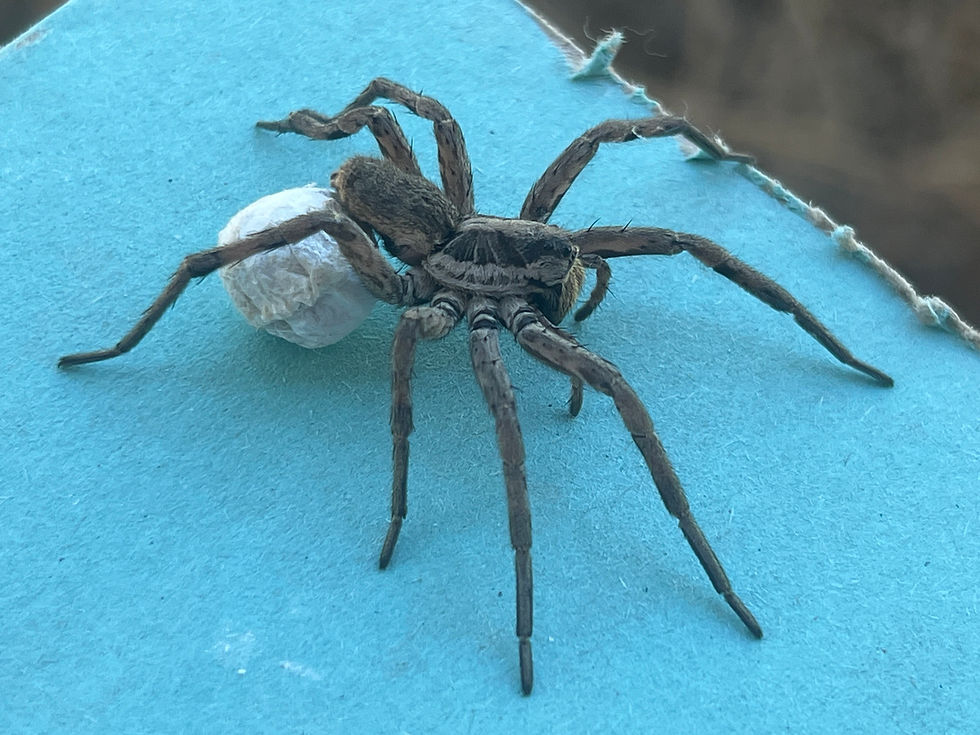
Some wild neighbors prefer to meet us indoors. A few days ago I found a wolf spider on the curtain of the terrace door in our living room, a brown-and-gray spider carrying a round ball on her body. I opened the window, carried her out on a piece of drywall, set her on a rock outside and left her alone.

For homesteaders, wolf spiders matter because they are ground hunters that chase down the small insects that nibble at crops, without a web or a spray. The way a female carries her young also makes them one of the more interesting spiders to meet.
If you enjoy putting names to the eight-legged hunters that share your land, our Tough Kraut Resources page gathers the field guides and tools we find useful for getting a spider to family level and beyond.
Quick Facts At A Glance
Characteristic | Information |
Common Name | Wolf Spider |
Scientific Name | Lycosidae (family) |
Size | Body from under 1 cm to about 3.5 cm long (under 0.4 to 1.4 in) depending on species |
Activity Pattern | Many species hunt at night, others by day |
Typical Diet | Insects and other small arthropods, including other spiders |
Predators (Portugal) | Birds, lizards, small mammals, larger spiders and spider-hunting wasps |
Predators (General) | Birds, lizards, toads, small mammals, larger spiders, spider-hunting wasps |
Preferred Habitat | Ground level in grassland, scrub, gardens, leaf litter and stone piles; occasionally wander indoors |
Human Risk Level | Low; bites are uncommon and usually mild |
Role On Our Homestead | Ground predator of insects |
How To Recognize Wolf Spider On A Mediterranean Homestead
Visual ID
A wolf spider is a robust, hairy, long-legged hunting spider, usually in browns, grays and tans with darker stripes and markings along the head region, colors that make it very hard to spot against soil, stones and leaf litter. Telling Lycosidae from other spiders comes down to a few reliable clues rather than fine detail. They have eight eyes in three rows, four small ones in the bottom row, two very large ones in the middle and two medium ones above, and a build made for running rather than sitting in a web. The other giveaway is how a female carries her young, which is covered just below.

Sounds & Behavior
Wolf spiders make no sound you will hear, and they do not spin webs to catch prey. They have excellent eyesight, so they spot a meal by sight, chase it down on the ground and often shelter in silk-lined hollows or under stones. For another spider that hunts without a web, see our Green Huntsman Spider post.
The habit that gives wolf spiders away is how a female carries her eggs. She packs them into a round silk egg sac, attaches it to her spinnerets (the silk-producing nozzles at the tip of the abdomen) and drags it along behind her wherever she hunts, holding her abdomen raised to keep it off the ground. Some other hunting spiders carry their sac in the jaws instead. After a few weeks, depending on the species and the temperature, the spiderlings hatch, climb up her legs and crowd onto her back, and they ride there for days to a few weeks before scattering to fend for themselves.
Tracks, Droppings & Other Signs
Spiders leave no tracks worth looking for, and the usual evidence is the animal itself, a silk-lined hollow under a stone or a female towing her egg sac. As a hygiene reminder, wear gloves when moving stones, firewood or debris where ground spiders shelter, and wash your hands afterward.
Where Wolf Spider Lives: Portugal and Beyond
Lycosidae in Portugal: A Well-Represented Native Family
Wolf spiders live across much of the world, in grassland, scrub, forest floors, dunes, wetlands and gardens. The family is well represented in Portugal, with many species recorded from the coast to the dry interior, and they are a native part of the fauna.
Ratings are given to individual species and not to whole families, hence the "Not assessed (family level)" line above, and most wolf spiders have not been rated at all. A few island specialists are a different story: the Desertas wolf spider of Madeira, for example, is rated Critically Endangered. General worries for the family include pesticides and the loss of ground cover.
What Wolf Spider Eats (And What Eats Wolf Spider)
Wolf spiders are generalist predators that eat insects and other small arthropods such as ants, beetles, moths, aphids and other spiders. They stalk or pounce rather than wait in a web.
In turn, wolf spiders are food for birds, lizards, toads, small mammals and larger spiders. Spider-hunting wasps are the specialist enemy, paralyzing a spider and carrying it to a nest as food for their larva, and pesticides and tidy, bare ground are the main human-made threats.
Living With Wolf Spider On An Off-Grid Homestead
A wolf spider is a good neighbor on the ground, since it eats the small insects that nibble at crops and does no harm to plants, poultry or stored food. The main issues are the surprise of meeting a big hairy spider indoors and a small bite risk: wolf spiders bite rarely, usually when trapped or pressed against skin, and the typical reaction is local pain, redness, mild swelling and sometimes itching that fades within a few days. Anyone with a severe, unusual or lasting reaction, signs of infection or an allergic reaction should ask a doctor or pharmacist.
To make land friendlier to ground predators, keep some leaf litter, stone piles and rough ground cover and skip insect sprays. Our wildlife-friendly gardening post has a wolf spider photo and more habitat ideas along those lines.
If one turns up indoors, the gentle route is to slide a piece of card or board under her, carry her outside and set her down somewhere sheltered, such as a rock pile or ground cover, without crushing her. An unwelcome surprise on the curtain can turn out to be a small privilege once you see how she lives.
Herman’s Tough Kraut Field Notes: Wild Neighbors Edition – Wolf Spider (Lycosidae)
This is our troubleshooting corner and FAQ for one of the most common questions a spider brings up: what do we do with it? For a bite that worries you, or any question about allergies or treatment, please ask a doctor or pharmacist, because we cannot give medical advice.
Q: Is a wolf spider dangerous?
A: Wolf spiders are not considered dangerous to people. A bite is uncommon and usually gives local pain, redness and swelling that fade within a few days, and the sensible step is to see a doctor or pharmacist if it is unusual or does not settle.
Q: What should I do if I find one indoors?
A: Relocate her gently outside to a sheltered spot. I opened the window and carried mine out on a piece of drywall, but a card or any flat board works, and there is no need to crush her.
Q: Do wolf spiders spin webs?
A: Not to catch prey. They hunt on foot, using excellent eyesight to spot a meal and a burst of speed to chase it down, and they shelter in silk-lined hollows or under stones.
Q: Are wolf spiders good for the garden?
A: Yes, as part of a balanced predator community. They eat many small insects and other spiders, though like any generalist predator they do not pick only the pests.
Q: How can I make my land friendlier to wolf spiders?
A: Keep some leaf litter, stone piles and rough ground cover, avoid broad insect sprays, and leave patches of ground undisturbed, because ground hunters need places to shelter.
If you have met a wolf spider in Portugal, know something useful about them, or can add to or correct anything we wrote here, please leave a comment or tell the Kraut Crew. Every bit of local knowledge helps the next reader.


Comments