
Wild Neighbors: Praying Mantis (Mantis religiosa) On Our Portuguese Homestead

Common Name: Praying Mantis
Scientific Name: Mantis religiosa
Animal Group: Invertebrate
Status in Portugal: Native and resident
IUCN Status: Least Concern
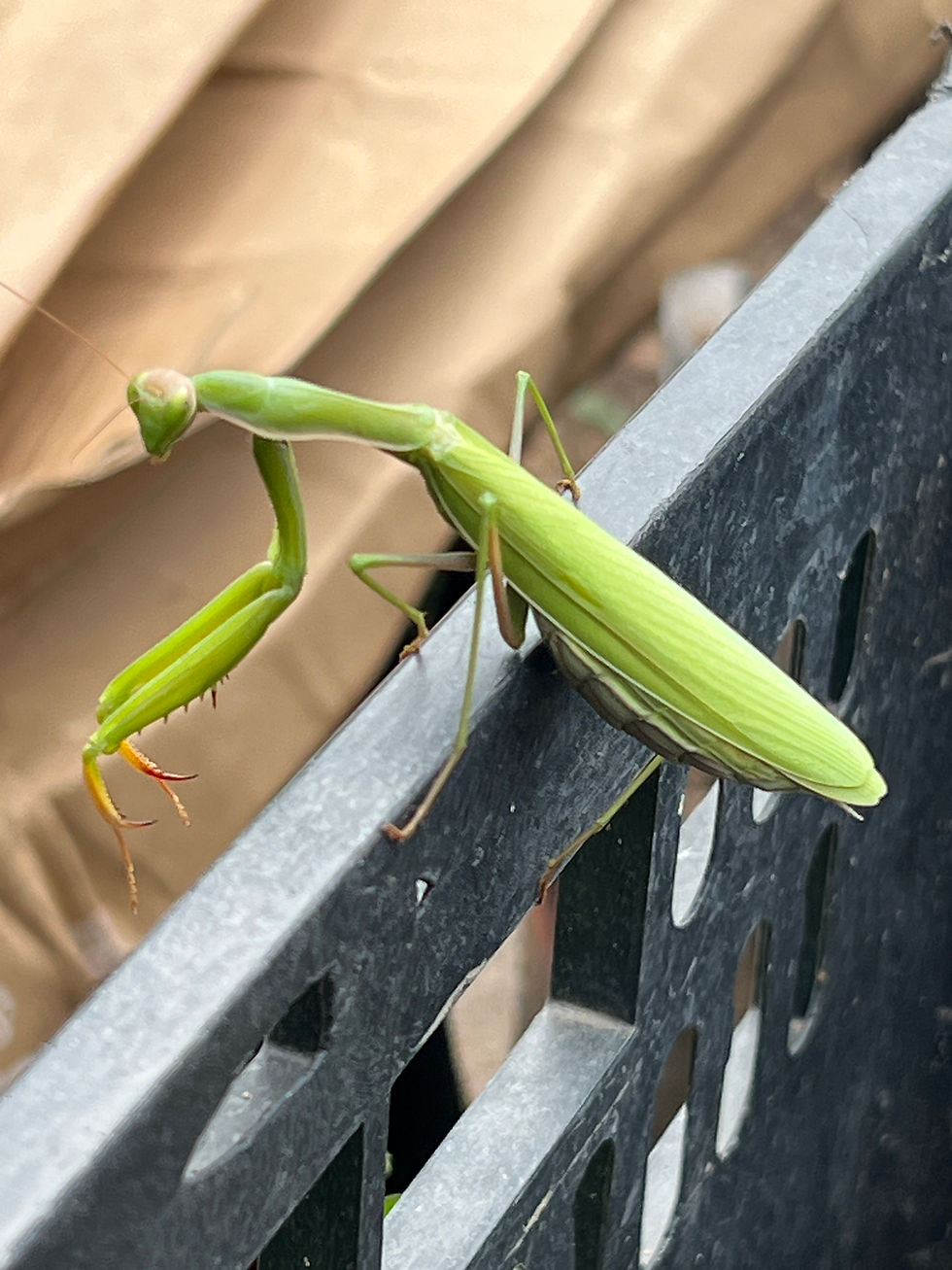
We spotted our first ever praying mantis on the land after more than a year of watching soil, leaves, stones, chicken fences, and suspicious moving shadows. It was the end of September, which fits the season well because adults are easiest to notice in late summer and autumn.
During watering, they sit among herbs, grasses, vegetable edges, and young food forest plants, then shift away from the spray as if we interrupted a serious meditation session. For homesteaders, Mantis religiosa matters because it is a skilled insect predator, a sign of layered habitat, and a reminder that organic pest balance is built by many small hunters.
For more in-depth field guides, wildlife observation tools, and practical homestead gear, visit our Tough Kraut Resources Self-Sufficiency Toolkit, where we collect useful tools for learning, observing, and living more peacefully with our wild neighbors.
Quick Facts At A Glance
Characteristic | Information |
Common Name | Praying Mantis |
Scientific Name | Mantis religiosa |
Size | Adults usually 5–8 cm long; females larger |
Activity Pattern | Mostly diurnal; adults most visible late summer to autumn |
Typical Diet | Flies, grasshoppers, crickets, moths, bees, wasps, caterpillars, and other moving insects |
Predators (Portugal) | Birds, lizards, spiders, bats, small mammals, and chickens if they spot one |
Predators (General) | Birds, reptiles, bats, spiders, rodents, larger mantises, parasitoid insects |
Preferred Habitat | Sunny grassland, shrubby edges, wildflower patches, gardens, orchards, fallow land |
Human Risk Level | Very low |
Role On Our Homestead | General insect predator and habitat indicator |
How To Recognize Praying Mantis On A Mediterranean Homestead
Visual ID:

Adults have a long body, triangular head, large eyes, and folded front legs that create the famous “praying” posture. Those front legs are raptorial, meaning modified for grabbing prey quickly. Color varies from green to straw-yellow or brown, helping them vanish among grasses, dry stems, and garden plants. Females are usually larger and heavier. Males are slimmer and fly more often. Nymphs look like tiny wingless adults.
Sounds & Behavior:
Praying mantises are silent hunters. No chirping, buzzing, or dramatic villain music. They rely on camouflage, patience, and speed. Around our garden, we mostly notice them during watering. They try to avoid direct spray, often climbing higher or turning sideways behind a stem. They are simply choosing “not today, rain dragon.”
Tracks, Droppings & Other Signs:
Praying mantises do not leave useful tracks for normal homestead observation. Their feet are too light, and their movements usually happen on stems, leaves, fences, or dry plant material. Droppings are tiny dark specks and rarely identifiable.
The most useful sign is the ootheca, the egg case. It looks like a small foamy beige or tan mass attached to a stem, twig, fence post, stone, or sheltered surface. Inside are eggs that overwinter and hatch when conditions warm. If you find one while pruning, avoid scraping it off unless it is truly inconvenient. Wear gloves when moving old plant material, and wash hands after handling insect signs, soil, or droppings. Mantis religiosa egg cases are little treasures we now hope to spot before our pruning enthusiasm gets too ambitious.
Where Praying Mantis Lives: Portugal and Beyond
In Portugal, the praying mantis is widespread and well suited to Mediterranean habitats. It can occur in dry grassland, shrubland, gardens, orchards, fallow fields, sunny edges, and urban green spaces. In rural Central Portugal, it fits neatly into dry vegetation, irrigated patches, stone walls, food forest lines, and wilder corners.
Beyond Portugal, Mantis religiosa is native across much of Europe, North Africa, and parts of Asia. It has also been introduced to other regions, including North America. The species is globally Least Concern, but local populations still depend on habitat structure, insect abundance, and safe overwintering sites.
On our land, we see them most often in late summer and autumn. They appear around herbs, annual vegetable edges, tall grasses, and young shrubs where there is enough vertical structure to hide and hunt.
What Praying Mantis Eats (And What Eats Praying Mantis)
Diet:
Praying mantises eat live, moving prey: flies, grasshoppers, crickets, moths, caterpillars, beetles, bees, wasps, and more. Larger individuals may occasionally take spiders or small vertebrates, but on our homestead we mostly see them as insect hunters.
The important detail for organic gardeners is that mantises are not selective pest-control employees. They eat what they can catch, including pests, neutral insects, and beneficial insects. We welcome them as part of the food web, not as a magic solution.
Predators & Threats:
In Portugal, predators include birds, lizards, spiders, bats, and small mammals. Our chickens would probably consider one an unusual crunchy snack if it appeared in the wrong place. Nymphs are vulnerable to many predators, including other mantises. Human-related threats include pesticide use, over-tidying, mowing all tall grasses at once, removing egg cases, and reducing wild edges.
Living With Praying Mantis On An Off-Grid Homestead
How Mantis religiosa Helps Our Homestead
The praying mantis adds another predator layer to the garden. It catches insects without chemicals, patrols the vertical world of stems and flowers, and brings our attention to habitat quality. If mantises are present, there is likely enough plant structure, prey diversity, and seasonal shelter to support them.
Potential issues are minor. Mantises can eat pollinators, so we do not treat them as pure “beneficial insects” in the cartoon sense. They may also startle people who notice one staring from a tomato stake like a tiny green alien with opinions.
Practical coexistence strategies:
Keep some tall grasses, herbs, and wild edges instead of mowing everything flat.
Avoid broad-spectrum pesticides, especially around flowering plants.
Prune carefully in autumn and winter so you do not accidentally remove egg cases.
Move mantises gently away from heavy watering if they are directly in the spray path.
Avoid buying and releasing mantis egg cases as a pest-control shortcut, especially if species identity is uncertain.
Create mixed planting layers with flowers, shrubs, grasses, and vegetable beds.

Living with praying mantises is mostly about patience. They are not pets, not pests, and not garden employees. They are wild neighbors, and they help most when we give them space.
Herman’s Tough Kraut Field Notes: Wild Neighbors Edition – Mantis religiosa
Once we started noticing praying mantises appearing regularly during our watering routines, it sparked a wave of curiosity and questions, leading us down a path of troubleshooting, observation, and plenty of impromptu FAQs about their behavior and role in the garden.
Q: Are praying mantises dangerous to humans?
A: No. They are not venomous and do not sting. A large mantis might pinch or nip defensively if grabbed, but normal observation is very low risk. We prefer watching rather than handling.
Q: Are praying mantises good for the garden?
A: Yes, with nuance. They eat many insects, including some pests, but they also eat beneficial insects. We see them as part of overall balance, not as targeted pest control.
Q: Should we move a praying mantis when watering?
A: If it is directly in the spray, we usually pause or water around it. If needed, gently encourage it onto a stick and move it to a dry nearby plant.
Q: Will praying mantises hurt chickens, pets, or children?
A: They are not a meaningful threat to chickens, pets, or children. The bigger risk is the other way around, especially from chickens, curious cats, or rough handling.
Q: How can we attract more praying mantises naturally?
A: Grow a layered garden with flowers, grasses, shrubs, herbs, and undisturbed corners. Avoid pesticides, leave some stems through winter where practical, and protect egg cases when you notice them.
Want to make your homestead a little more welcoming for patient hunters like the praying mantis? Explore our Tough Kraut Resources page for field-tested tools, garden gear, and practical resources that help us observe, protect, and coexist with the small wild neighbors sharing our land.


Comments