
Nerium oleander (White Oleander)

Common Name: White Oleander
Scientific Name: Nerium oleander
Plant Family: Apocynaceae
Lifecycle: Perennial evergreen shrub
White Oleander is the white-flowering form of Nerium oleander, a tough evergreen shrub known for thriving in hot, dry, Mediterranean-style conditions. Growing White Oleander in Zone 8a can be a smart choice for dry pathways, sunny edges, and low-input ornamental structure, as long as one golden rule is respected: this plant is beautiful, resilient, and seriously toxic.
For in-depth guides and curated tools, be sure to check out our Resources Self-Sufficiency Toolkit.
Plant Profile
Characteristic | Information |
Climate Suitability | USDA Zones 8–11; Köppen Csa/Csb Mediterranean climates |
Sun / Shade Needs | Full sun to light partial shade; strongest flowering in full sun |
Watering Needs | Low once established; moderate watering during establishment |
Soil Preferences | Well-drained sandy, rocky, loamy, or poor soils; tolerates dry and alkaline conditions |
Spacing & Height | 2–3 m (6.5–10 ft) spacing; typically 2–5 m (6.5–16 ft) tall depending on pruning and moisture |
Propagation Method(s) | Semi-hardwood cuttings; best potted first until new growth confirms establishment |
Planting Timeline | Spring or early autumn in Zone 8a; plant out after active new growth is visible |
Companion Plants | Rosemary, lavender, cistus, santolina, prickly pear, olive, umbrella pine |
Edible / Medicinal / Ecological Uses | Ornamental flowers, evergreen screening, dry-edge structure, pathway definition; not edible or suitable for home medicinal use |
Pest / Disease Considerations | Generally tough; watch for aphids, scale, leaf scorch, and root rot in poorly drained soils; all parts toxic if ingested |
Pruning / Harvest Notes | Prune lightly after flowering or in early spring; wear gloves; do not burn prunings |
Quick Plant Reference
Care Level: Easy once established, with strict toxicity awareness
Optimal Sunlight: Full sun to light partial shade
Water Needs: Low once established; water young plants through the first dry season
Mature Size: 2–5 m (6.5–16 ft) tall and 2–4 m (6.5–13 ft) wide
Soil Type: Well-drained, sandy, rocky, loamy, or poor soil
Humidity: Low to medium
Toxicity: Highly toxic if ingested; sap may irritate skin; smoke from burning is unsafe
Beneficial Pollinators: Butterflies, moths, occasional bees and hoverflies
Health Benefits: None for homestead use; treat as ornamental only
Chilling Hours: Not applicable
Pollination Requirements: Not required for flowering; grown mainly for ornamental bloom and structure
Our White Oleander Application @ Tough Kraut
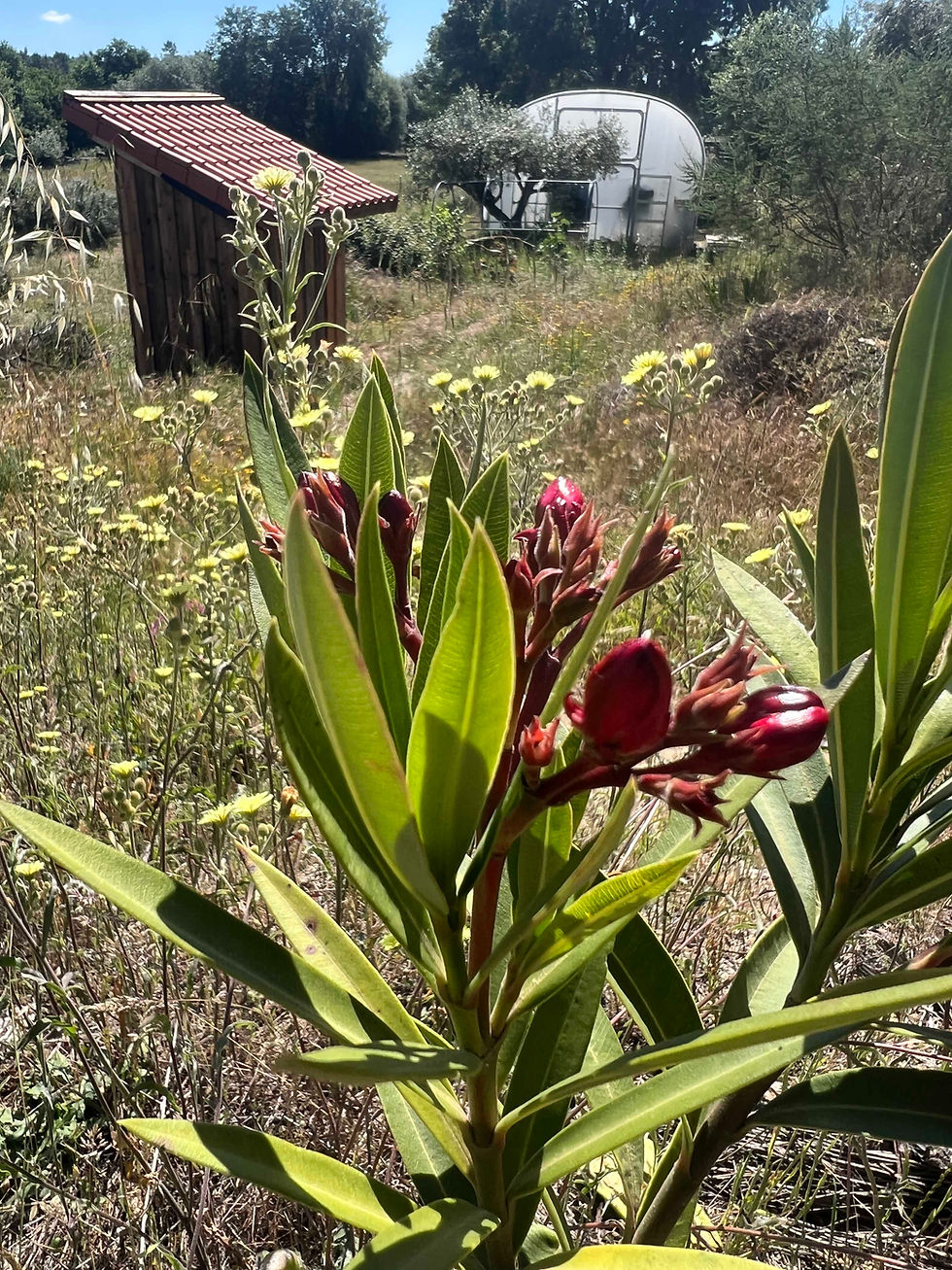
Our White Oleander plants came from cuttings taken from a mature plant, following the same spirit as many of our practical homestead plant trials: observe what already thrives locally, take a cutting, and see if it earns its place. Instead of planting the cuttings directly into the ground, we first kept them in pots until they showed new growth. That small waiting period made a big difference, because visible new growth gave us confidence that the cuttings had rooted and were ready for tougher conditions outdoors.
The confirmed White Oleander plants now grow along our footpath leading toward the veggie terrace and greenhouse. This makes them part of a useful transition zone on the Quinta: not a food crop, not a cuddly herb, but a drought-tolerant ornamental edge plant that helps shape the route between working areas. Because Oleander is toxic, we treat these shrubs with respect and keep pruning, placement, and plant handling in mind.
Step-by-Step Growing Guide
1. Choose the Right Site
Select a warm, sunny, well-drained spot where White Oleander can form a durable ornamental edge without constant interference. Along a pathway, give it enough space so mature branches do not crowd the walking route.
2. Prepare the Soil
White Oleander does not need rich garden soil. Loosen compacted ground, improve drainage if needed, and avoid creating a soggy planting pocket; this shrub prefers tough-but-draining soil over pampered mud.
3. Plant the Tree/Plant
For cuttings, start in a pot first and wait for clear new growth before planting out. Once ready, plant at the same depth as in the pot, firm the soil gently, water deeply, and mulch lightly without burying the stem.
4. Water Consistently
Water newly planted Oleander regularly through the first dry season, especially if planted near paths where soil can become compacted. Once established, reduce watering to occasional deep soaks during long summer drought.
5. Ensure Proper Pollination
Pollination is not a major concern for White Oleander as an ornamental shrub. Flowers may attract visiting insects, but you do not need multiple plants for flowering.
6. Prune Annually
Prune after flowering or in early spring to keep the shrub compact, balanced, and safely away from pathways. Wear gloves, avoid skin and eye contact with sap, and wash tools afterward.
7. Manage Pests and Diseases
Oleander is usually low-maintenance, but aphids and scale insects can appear on tender growth. Improve airflow, prune congested stems, and use gentle organic controls such as water sprays or insecticidal soap when needed.
8. Harvest and Store
There is no edible harvest. The main yield is evergreen structure, white flowers, drought resilience, and a more defined walking route through the homestead.
9. Note
Troubleshooting and FAQ basics for White Oleander usually come down to three things: drainage, establishment watering, and safe handling. If a young plant stalls after planting out, check whether it was moved too early, planted too deeply, or left too dry before its roots were ready.
Kraut Crew Insight
Our White Oleander taught us a useful propagation lesson: a pot can be a waiting room between “cutting” and “landscape plant.” Seeing new growth before planting out gave us more confidence, and now these shrubs help mark the route toward the veggie terrace and greenhouse—beautiful, practical, and handled with respect.
Photos
July 13, 2026 July 13, 2026 July 13, 2026 July 13, 2026
Herman’s Tough Kraut Field Notes: Solving White Oleander Cultivation Challenges
White Oleander is one of those plants that looks almost too easy from a distance. It grows along roads, survives heat, handles dry soil, and still manages to flower like it has a secret irrigation system hidden somewhere underground. But on a homestead, the troubleshooting questions are a little more practical: when is a cutting ready, where should it be planted, and how do we manage a toxic plant responsibly?
This FAQ section is based on our own White Oleander propagation and pathway planting experience. The plant may be tough, but our approach is simple: root first, plant later, prune carefully, and never forget that “ornamental” does not mean “harmless.”
Q: Why start Oleander cuttings in pots before planting them out?
A: Potting the cuttings first gives you a controlled stage where you can watch for new growth. Once the cutting pushes new leaves or shoots, it is a strong sign that roots are forming and the plant has a better chance of surviving outdoor conditions.
Q: How do I know when a White Oleander cutting is ready to plant out?
A: Wait until you see healthy new growth and the plant resists slightly when gently tugged, which suggests root anchoring. Do not rush it into dry ground while it is still basically a stick with hope attached.
Q: Is White Oleander suitable along a footpath?
A: Yes, but only with thoughtful spacing and pruning. It can create a beautiful evergreen edge, but it should not be allowed to block the path, brush against people constantly, or grow where children or animals may chew leaves.
Q: Why is my Oleander not flowering yet?
A: Young plants often focus on root and shoot growth before flowering. Too much shade, heavy pruning at the wrong time, or water stress during establishment can also delay blooms. Full sun and light pruning usually help.
Q: What should I do with Oleander prunings?
A: Handle them with gloves and dispose of them safely. Do not feed them to animals, do not leave them where livestock or pets can access them, and do not burn them because the smoke can be harmful.
For more field-tested tools, propagation gear, and practical garden resources, visit the Tough Kraut Resources page.
Entry last updated: 2026-07-13
This post is part of the Tough Kraut Plant Library, documenting what really grows on our off-grid homestead in Central Portugal.


Comments