
Our First Peruvian Apple Cactus Flower After Nearly Four Years


Some garden milestones arrive with baskets of fruit. Others appear quietly on the side of a cactus and give you only a few days to notice.
In late April 2026, we spotted the first Peruvian Apple Cactus flower bud ever produced by our Cereus repandus. We bought the cactus in November 2022, planted it in the ground on our Quinta in Central Portugal, and watched it grow to about 1.80 m (5 ft 11 in). Until now, it had never flowered.
I began photographing the bud as it grew and moved closer to opening. Then, almost as soon as the long wait seemed ready to pay off, the flower wilted and collapsed.
I did not witness the exact moment it opened or capture it at its widest stage. The cactus appears to have scheduled its grand opening while nobody was watching.
Keep reading for Herman’s Tough Kraut Fixes, where we answer common questions about short-lived Peruvian Apple Cactus flowers, nighttime opening, and fruit formation.
From a 2022 Purchase to a 1.80-Metre Cactus
We purchased this Peruvian Apple Cactus in November 2022. Since then, it has grown directly in the ground in our Mediterranean climate, roughly USDA Zone 8a.
At around 1.80 m (5 ft 11 in), it had become a familiar part of the landscape. That changed when the first flower bud appeared.

After more than three and a half years with us, the plant was no longer only adding height. It was entering a new stage.
Our Peruvian Apple Cactus Plant Library profile covers the plant itself. This article is the story of one flower, from the first visible bud to its sudden collapse.
Watching Our First Peruvian Apple Cactus Flower Develop
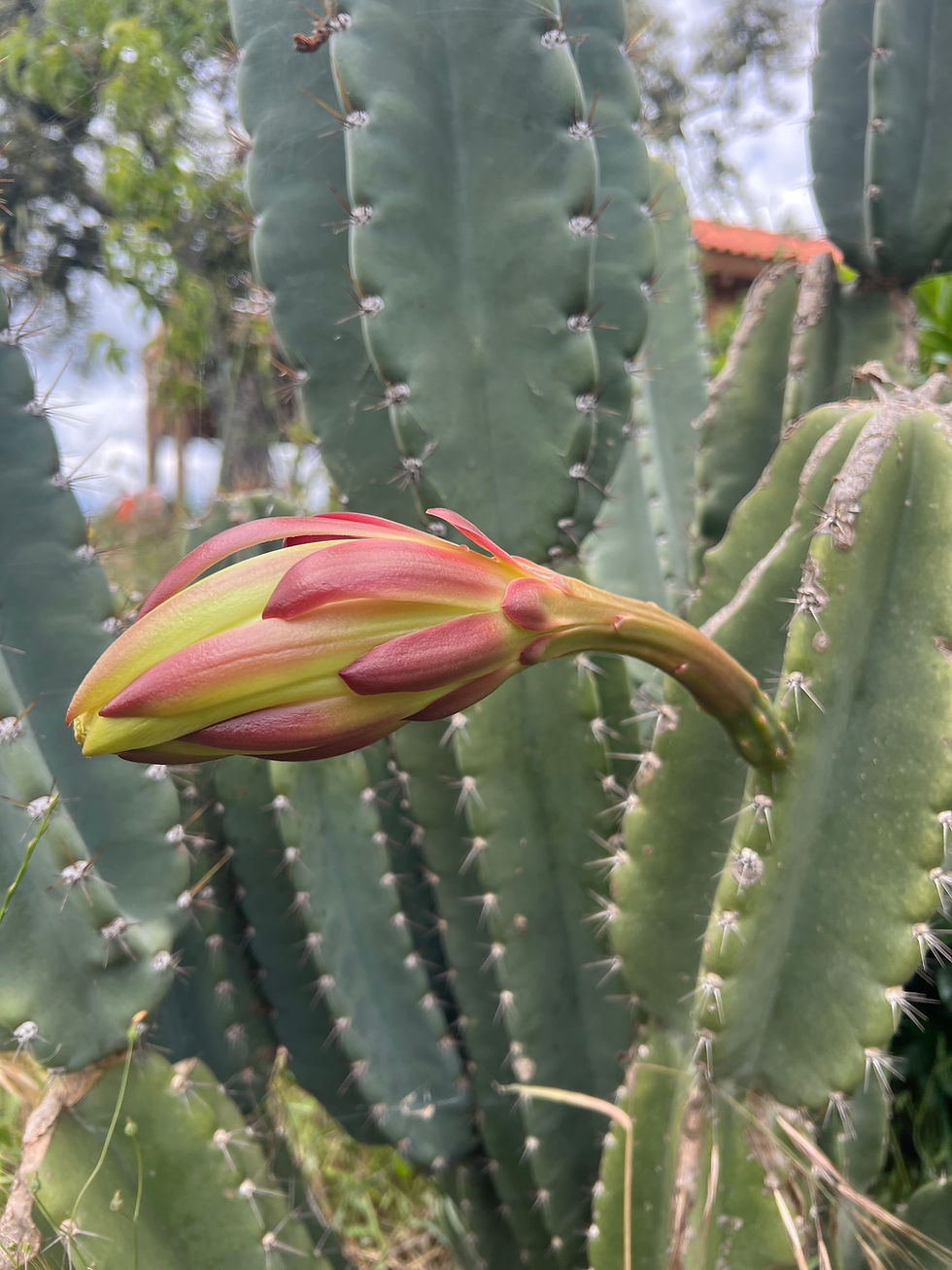
The earliest photograph shows a compact bud emerging from the side of the cactus. It was easy to miss and looked more like a small growth than the start of a large flower.
Over the following days, the bud became longer and fuller. Its outer parts began to separate, and pale inner petals became visible.

The closest I came to photographing the bloom shows it nearly or partly open. It is not the perfect, fully spread flower image seen in plant books, but it is honest. This is the stage I actually saw.
Soon afterward, the flower had wilted and folded downward. Years of growth had led to a display that could be missed between one inspection and the next.
That missing photograph is not a failure. Brief blooms do not wait for good light, charged batteries, or convenient schedules.
Did the Flower Open While We Were Sleeping?
Flowers of Cereus repandus are commonly described as nocturnal. Published observations under the older name Cereus peruvianus found that the large flowers opened almost entirely between sunset and sunrise.
That makes nighttime opening the most likely explanation for what happened on our Quinta. Still, I did not witness it.
I cannot say exactly when the flower opened, how wide it became, or how long it remained at its best. The flower may have reached its fullest point during the night and already begun to decline by the time we checked again.

That fits the known pattern of the species, but it remains an informed explanation rather than a recorded event.
Next time, we may need to treat a swelling cactus bud like an alarm clock.
Why Does a Peruvian Apple Cactus Flower Fade So Quickly?
A large flower takes energy to build, but its main task is brief. It must present pollen and receive compatible pollen during a limited window.
Night-opening cactus flowers are suited to animals active after dark. Depending on the region and cactus population, bats, moths, and other visitors may carry pollen between flowers. We did not observe a pollinator, so we cannot say whether pollination occurred.
Once the flowering period ends, the petals lose firmness, fold inward, and wilt. This natural aging process is called flower senescence.

The rapid collapse does not mean the cactus is sick. A healthy stem can remain firm while the flower fades within a short period.
The contrast is striking. The cactus may spend years reaching maturity, several days building a bud, and only a brief time displaying the open flower.
What the First Flower Tells Us About the Plant
The first flower shows that our cactus has reached a new level of maturity.
The plant had enough stored energy and suitable conditions to produce and support a bud. Its location on our Quinta can support reproductive growth.

That does not guarantee a larger display next year, and it does not guarantee fruit.
Fruit can develop only if pollination and fertilization succeed. Research on cultivated Peruvian Apple Cactus material has found self-incompatibility in some plants, which means pollen from a genetically different plant may be needed.
For now, the important fact is simple. The cactus flowered.
A Small but Meaningful Quinta Milestone
One reason I created Tough Kraut was to document how our land changes over time.
Some changes are obvious. Trees grow taller, beds become fuller, and structures appear where empty ground once stood. Other changes are easy to miss because they last only a few hours.
This first Peruvian Apple Cactus flower belongs to that second group. We had watched the plant establish and gain height since late 2022. Flowering made those years of quiet growth visible in a new way.
The flower was brief, but the milestone is not.
What Happens Next?
We will watch the remains of the flower for any change at its base, while staying realistic about the chance of fruit. At the time of writing, we have no evidence of successful pollination or fruit formation.
We will also monitor the cactus for more buds and try to observe future flowers more closely. Perhaps the next bloom will open while I am awake and holding a camera.
We recently took four cuttings from the mother plant. Their callusing, planting sites, and progress will be covered in a separate Peruvian Apple Cactus propagation article. This flower deserves its own story.
Herman’s Tough Kraut Fixes: Common Peruvian Apple Cactus Flowering Questions
This Troubleshooting and FAQ section covers the questions that often arise when a Peruvian Apple Cactus flower appears, opens briefly, or fails to produce fruit.
Q: How long does a Peruvian Apple Cactus flower last?
A: The open stage is usually very brief and is often described as lasting for one night. Published research also supports mainly nighttime opening. We did not record the exact opening and closing times of our flower, so we cannot give a precise duration for this bloom.
Q: Why did the flower wilt so quickly?
A: Rapid wilting after flowering is normal. Once the flower’s reproductive window closes, the petals lose water pressure and structure, then fold and collapse. This does not automatically mean the cactus is unhealthy. Check the stem separately for soft tissue, discoloration, or rot before assuming there is a wider problem.
Q: Do Peruvian Apple Cactus flowers open at night?
A: They commonly do. Scientific observations have found that the flowers open mainly between sunset and sunrise. Our flower may have reached its fullest stage while we were sleeping, but we did not witness the exact opening and cannot confirm the timing from personal observation.
Q: Does every flower produce a Peruvian apple fruit?
A: No. A flower must receive compatible pollen and complete fertilization before fruit can develop. Some cultivated plants have shown self-incompatibility, so a lone specimen may not set fruit from its own pollen. We did not observe pollination and are not claiming that our flower will form fruit.
Q: Why has my Peruvian Apple Cactus never flowered?
A: The plant may still be too young or too small, or it may lack enough sun, warmth, stored energy, or seasonal growth. Stress from poor drainage, root damage, severe cold, or weak growth can also delay flowering. Focus on a healthy plant in bright conditions rather than forcing blooms with heavy feeding. Flowering age varies, so there is no reliable countdown for every specimen.
A Brief Flower With a Lasting Place in Our Story
Our first Peruvian Apple Cactus flower did not stay long. We missed its likely peak, never saw a pollinator, and still do not know whether fruit will follow.

Yet none of that makes the event less valuable. After more than three and a half years on our Quinta, the cactus reached a stage we had never seen before. The bud, brief opening, and rapid collapse became another marker in the slow transformation of our land.
The flower may have lasted only a short time, but documenting it gives the moment a longer life.
Next time, we may be ready for the full nighttime performance.
Have you ever waited years for a plant to flower, only to discover that the bloom lasted less than a day? Share your experience at the comments below with the Kraut Crew.


Comments