
Phytolacca americana (Pokeweed)
- Herman Kraut

- 1 day ago
- 6 min read
Common Name: Pokeweed
Scientific Name: Phytolacca americana
Plant Family: Phytolaccaceae
Lifecycle: Herbaceous perennial
Pokeweed is a bold, fast-growing wild perennial with thick stems, large leaves, long flower clusters, and dark purple-black berries that birds seem to appreciate far more safely than humans do. Growing Pokeweed in Zone 8a is not something we recommend intentionally in Portugal, because Phytolacca americana is invasive here, but when it arrives on its own, it becomes an important lesson in observation, wildlife value, toxicity, and responsible land management.
For in-depth guides and curated tools, be sure to check out our Resources Self-Sufficiency Toolkit.
Plant Profile
Characteristic | Information |
Climate Suitability | USDA Zones 4–10; Köppen Csa/Csb/Cfa; thrives in disturbed, moist, nutrient-rich places |
Sun / Shade Needs | Full sun to partial shade; grows especially fast in sheltered, fertile spots |
Watering Needs | Moderate; prefers moist soil but tolerates short dry periods once established |
Soil Preferences | Disturbed soil, compost-rich ground, rubble piles, field edges, riparian margins, greenhouse beds |
Spacing & Height | Not recommended for intentional planting in Portugal; can reach 1.2–3 m (4–10 ft) tall and 1–1.5 m (3–5 ft) wide |
Propagation Method(s) | Seeds spread by birds; resprouts from thick taproots and root crowns |
Planting Timeline | Do not intentionally plant where invasive; seedlings usually emerge in spring and summer |
Companion Plants | Best kept at wild edges, not as a planned companion; avoid placing near vegetable beds, animal areas, and sensitive plantings |
Edible / Medicinal / Ecological Uses | Ecological observation plant, bird food source, historical dye plant; not recommended for food or medicine due toxicity |
Pest / Disease Considerations | Few serious pest issues; main concern is invasiveness, toxicity, and seed spread |
Pruning / Harvest Notes | Cut before berries mature; remove seedlings young; wear gloves; never compost berry clusters or root crowns |
Quick Plant Reference
Care Level: Easy to grow, advanced to manage responsibly
Optimal Sunlight: Full sun to partial shade
Water Needs: Moderate; grows fastest with irrigation or greenhouse moisture
Mature Size: 1.2–3 m (4–10 ft) tall, 1–1.5 m (3–5 ft) spread
Soil Type: Disturbed, fertile, moist, nitrogen-rich soil
Humidity: Medium
Toxicity: Toxic to humans, pets, and livestock; wear gloves when handling and do not ingest
Beneficial Pollinators: Bees and other small insects visit flowers
Health Benefits: Not recommended for home medicinal use; focus on ecological observation only
Chilling Hours: Not applicable
Pollination Requirements: Insect-assisted; spreads mainly by abundant seed production and bird dispersal
Our Phytolacca americana Application @ Tough Kraut
Pokeweed was not invited to our homestead, but like many wild plants, it found the guest entrance anyway. I first noticed it about two years ago growing out of a pile of granite rocks collected during our stone house renovation. Since then, the main plant has developed a thick stem and now grows taller than 2 m (6.5 ft), producing berries that birds clearly enjoy. Because of that wildlife value, I let some plants grow where they are not causing trouble, but when they compete with useful crops or take over valuable space, I cut them back. The stems and leaves have often ended up in the middle of our banana circle in the greenhouse, but going forward, we will be more careful to use only seed-free, root-free material and keep berries out of compost areas. The greenhouse is one of the places where Pokeweed grows quickly, which is both impressive and slightly annoying. Classic homestead situation: nature provides a lesson, then invoices you in seedlings.
Step-by-Step Growing Guide
Pokeweed does not need much help growing, which is exactly why this guide is more about responsible management than cultivation. If your FAQ is “Should I plant this?” the short answer in Portugal is no. If your troubleshooting question is “Why is it suddenly everywhere?” the answer is usually birds, berries, disturbed soil, and a plant that knows how to make itself comfortable.
1. Choose the Right Site
Do not intentionally plant Pokeweed in Portugal, especially near vegetable beds, greenhouse paths, watercourses, or animal areas. If one appears naturally, only consider leaving it in a controlled wild edge where seedlings can be monitored and removed.
2. Prepare the Soil
No soil preparation is needed. Pokeweed thrives in disturbed, fertile ground, especially places like rubble piles, compost edges, old renovation zones, greenhouse beds, and moist shady corners.
3. Plant the Tree/Plant
Do not sow or transplant Pokeweed where it is invasive. If you decide to tolerate one existing plant for bird observation, mark it clearly and remove flower or berry clusters before they mature if spread becomes a concern.
4. Water Consistently
Do not irrigate Pokeweed unless you are accidentally feeding it through nearby crops. In our greenhouse, regular moisture and fertility create perfect conditions, which explains why it grows there like it has signed a long-term lease.
5. Ensure Proper Pollination
Pollination is not usually a problem. The plant flowers freely, attracts insects, and produces plenty of berries, so management should focus on preventing unwanted seed spread rather than improving fruit set.
6. Prune Annually
Cut stems before berries ripen if you want to reduce spread. Wear gloves, avoid skin contact with sap, and never leave mature berry clusters where birds can drag the seeds around the property.
7. Manage Pests and Diseases
Pests are not the main issue. The real management task is controlling seedlings, removing young plants after rain, and digging out as much of the taproot as possible before the plant becomes established.
8. Harvest and Store
Do not harvest Pokeweed for food or medicine. The only safe “harvest” in our system is observation, photos, and possibly seed-free biomass for controlled composting or chop-and-drop away from animals and edible greens.
9. Note
If Pokeweed is spreading fast, check for unnoticed berrying plants, bird perches, compost piles, and moist disturbed ground. In the greenhouse or banana circle, remove seedlings early before roots thicken and before any berries form.
Kraut Crew Insight
Pokeweed is one of those plants that teaches respect before it teaches usefulness. It feeds birds, grows like a champion, and turns disturbed homestead corners into accidental habitat, but it also spreads, competes, and carries real toxicity risks. Our current approach is simple: observe it, respect it, cut it before it causes trouble, and never let the berries sneak into the compost like tiny purple troublemakers.
Photos


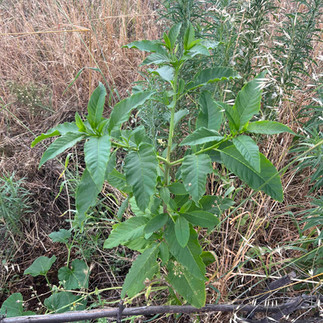
Herman’s Tough Kraut Field Notes: Solving Pokeweed Cultivation Challenges
Pokeweed brings up the kind of troubleshooting questions that make homesteading interesting: Is it a weed, wildlife plant, biomass crop, toxic hazard, invasive problem, or all of the above? The honest FAQ answer is yes, depending on where it grows and how carefully it is managed.
On our land, Phytolacca americana has become a useful reminder that plant value is context-dependent. One plant on a granite pile feeding birds can feel like a wild gift. Ten seedlings in the greenhouse competing with bananas, pineapples, and other tropical experiments are less charming. That is where observation turns into management.
Q: Should I keep Pokeweed because birds like the berries?
A: You can tolerate one carefully monitored plant in a wild corner, but in Portugal this species is invasive, so bird value must be balanced against seed spread. Birds eat the berries and move seeds across the land, which explains why one plant can quietly become a small purple-berried empire. If you keep one, inspect the area often and remove seedlings while they are small.
Q: Is it safe to throw cut Pokeweed into the banana circle?
A: Only if the material is seed-free and root-free. Stems and leaves without berries can be treated as rough biomass with caution, but berry clusters and root crowns should not go into the banana circle, compost pile, chicken run, or anywhere else you do not want future seedlings. When in doubt, dry it separately or dispose of it away from productive areas.
Q: Why is Pokeweed growing so quickly in the greenhouse?
A: The greenhouse offers warmth, moisture, shelter, and fertile soil, which are basically luxury accommodation for a plant that already enjoys disturbed ground. If birds brought seeds in, or if seeds arrived with moved soil or mulch, the greenhouse can become a perfect germination zone. Remove seedlings early, before the taproot develops.
Q: How do I control Pokeweed without chemicals?
A: Pull young seedlings after rain when the soil is soft. For larger plants, dig around the root crown and remove as much of the fleshy taproot as possible. Repeated cutting can weaken the plant, but cutting alone often encourages resprouting, so root removal is the better long-term fix where feasible.
Q: Is Pokeweed dangerous for chickens, dogs, children, or livestock?
A: Yes, treat it as toxic. Keep it away from animals, do not feed it to chickens or livestock, and wear gloves when cutting or pulling it. The berries are especially tempting-looking, so this is not a plant to leave near paths, play areas, patios, or places where curious visitors might ask, “Can I eat that?” The answer is a very firm no.
For more field-tested tools, propagation gear, and practical garden resources, visit the Tough Kraut Resources page.
Entry last updated: 2026-06-28
This post is part of the Tough Kraut Plant Library, documenting what really grows on our off-grid homestead in Central Portugal.


Comments