
Salvia nemorosa 'Caradonna' (Woodland Sage)

Common Name: Woodland Sage 'Caradonna', Balkan Clary, Meadow Sage, Wood Sage
Scientific Name: Salvia nemorosa 'Caradonna' (also sold as Salvia × sylvestris 'Caradonna' or Salvia 'Caradonna')
Plant Family: Lamiaceae
Lifecycle: Herbaceous perennial
Salvia nemorosa 'Caradonna' is an upright woodland sage whose violet-blue flower spikes stand on dark, almost black stems above gray-green, aromatic leaves, and it is commonly described as blooming from early summer into early autumn, with a second flush if the spent spikes are trimmed. Bees and butterflies work the spikes, the plant is drought-tolerant once its roots are settled, and it makes a tidy, upright front-of-border or gravel-bed perennial that also gives long-lasting cut flowers. Growing Woodland Sage in Zone 8a looks like a sun-and-drainage job on paper, because this cultivar is commonly listed for hardiness zones 4 to 9, so the real limits in Central Portugal are summer heat and wet winter soil rather than frost.
For practical tools, gear, and homestead resources that hold up in real soil, explore our Resources Self-Sufficiency Toolkit.
Plant Profile
Characteristic | Information |
Climate Suitability | Commonly listed for hardiness zones 4 to 9; Köppen Csa / Csb Mediterranean if drainage is good. Winter cold sits well inside its limits in Zone 8a, so summer heat and winter wet are the real tests, and that is general plant information rather than a Quinta result |
Sun / Shade Needs | Full sun gives the strongest flower color and sturdiest stems, and light part shade is tolerated, while deep shade thins the bloom according to general growing advice |
Watering Needs | Even moisture while it establishes, then drought-tolerant once rooted; it dislikes a waterlogged crown (the point where the stems meet the roots) in winter |
Soil Preferences | Light, well-drained loam, sand, or chalk, acid to alkaline in pH; heavy clay needs grit or organic matter to drain before it suits this plant |
Spacing & Height | Space plants 30 to 50 cm (12 to 20 in) apart; flowering height is usually given as 45 to 75 cm (18 to 30 in) with a spread of 30 to 60 cm (12 to 24 in), reached over two to five years |
Propagation Method(s) | Spring division of the clump and summer semi-ripe cuttings (firm, partly matured shoots) copy the plant exactly, while seed can be sown in spring but seedlings of a named cultivar may not match the parent |
Planting Timeline | General advice is early autumn once the soil is warm and rain returns, or early spring; we are waiting for the first rains before planting this one out |
Companion Plants | Lavender, rosemary, oregano, Perovskia, Nepeta, Gaura, Echinacea, roses, and other sun perennials that share well-drained soil |
Edible / Medicinal / Ecological Uses | Ornamental first, with aromatic leaves, good cut flowers, and a reputation as a bee and butterfly plant; it is not the kitchen sage (Salvia officinalis) and we do not cook with it |
Pest / Disease Considerations | Generally listed as pest-free but open to slugs, snails, leafhoppers, aphids, spider mites, and powdery mildew in still, humid air, plus crown and root rot in soggy soil, and it is reported to resist deer and rabbits; we have no Quinta pest or disease experience with this plant yet |
Pruning / Harvest Notes | General advice is to cut spent spikes as they fade to prolong flowering, cut old stems back to fresh growth in early spring, and divide the clump when flowering declines after about five years. Pruning across the Quinta is led by MuDan, and this plant has not been pruned or divided here |
Quick Plant Reference
Care Level: Easy according to general growing advice; we have not tested that here yet
Optimal Sunlight: Full sun, with light part shade tolerated
Water Needs: Regular water through establishment, low once established
Mature Size: 0.45 to 0.75 m (1.5 to 2.5 ft) tall in flower; 0.3 to 0.6 m (1 to 2 ft) wide
Soil Type: Light, well-drained loam, sand, or chalk
Humidity: Low to medium; it needs airflow around the clump
Toxicity: Generally listed as non-toxic to people; it is not a culinary sage, so do not eat it, and we have no pet or livestock safety information to offer
Beneficial Pollinators: Bees and butterflies are the usual listing, and we have not watched this plant yet
Health Benefits: None claimed; we grow sages like this for color and insects
Chilling Hours: Not applicable, because it is not a fruit crop
Pollination Requirements: Not applicable, since it flowers without help and is not grown for seed or fruit
Our Salvia nemorosa 'Caradonna' Application @ Tough Kraut
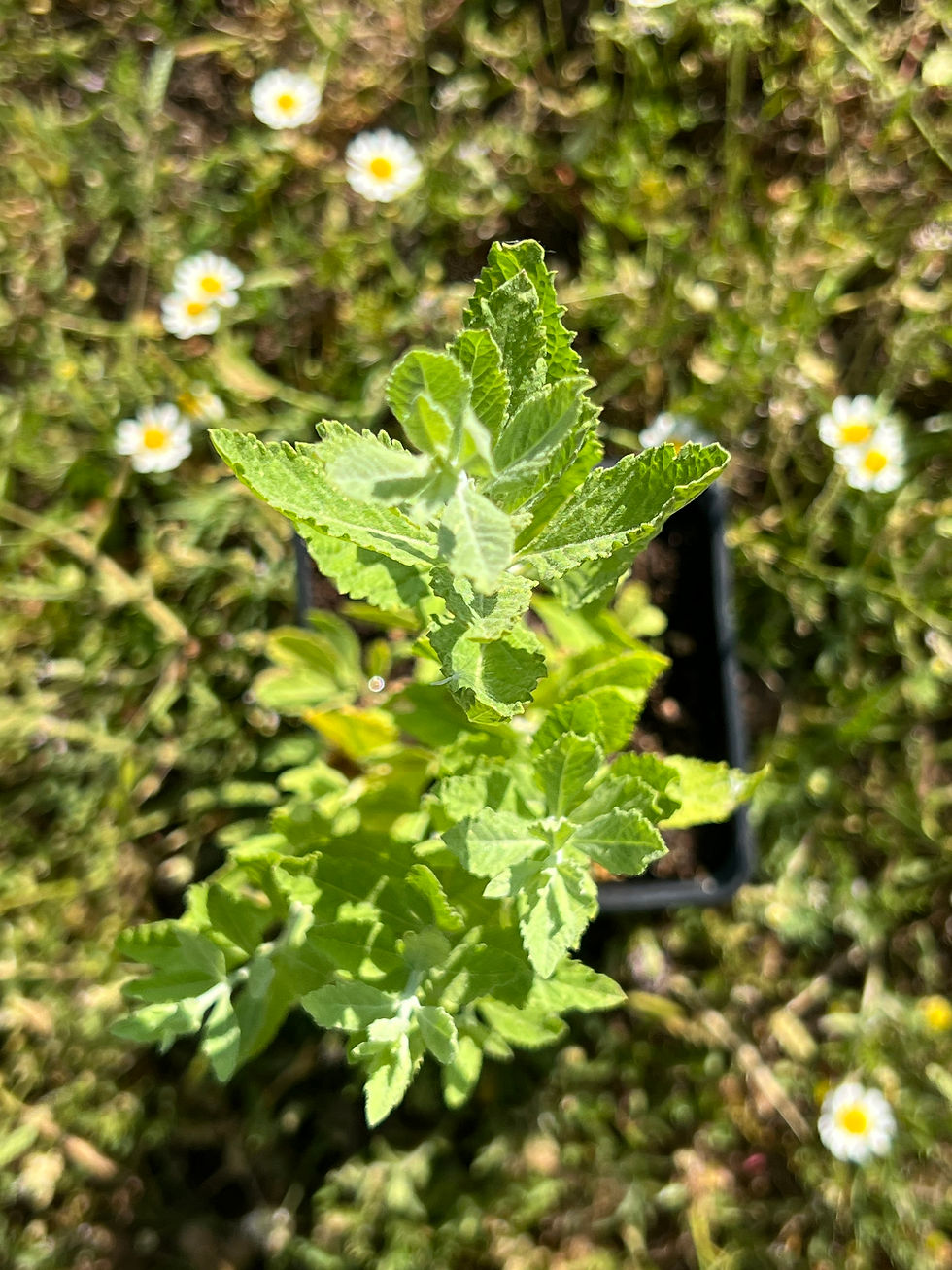
I bought Salvia nemorosa 'Caradonna' in late September 2026 from a local private nursery, together with 11 other plants the same day, and they now sit side by side in a box at our nursery spot under the Mimosa trees. Nothing has been divided yet, and I am waiting for the first rains before planting this sage out so the soil is workable and roots can settle before winter. If the clump can be divided at plant-out, I would seriously consider planting one part out and potting the other in a larger pot. We have not grown it in the ground yet, so there are no Quinta bloom dates, survival results, or pollinator sightings to report, and everything else in this entry is general plant information for 'Caradonna', labeled as such.
Step-by-Step Growing Guide
Note: The steps below are general growing advice for Salvia nemorosa 'Caradonna', not a record of what we have done, because the plant has not been planted out yet. The troubleshooting that matters most for this sage in Zone 8a is sun, drainage, and a cutback after flowering, since frost is not the issue.
1. Choose the Right Site
Pick an open, well-drained spot with full sun for most of the day, because flower color and stem strength are best there and deep shade thins the bloom. Leave room for airflow between neighbors instead of a crowded, humid corner where mildew moves in.
2. Prepare the Soil
Loosen the soil about 25 cm (10 in) deep and dig the planting hole roughly twice as wide as the root ball, mixing in grit or coarse compost if the spot is heavy. General advice for clay is to improve the drainage first or to plant slightly raised so winter rain runs off the crown.
3. Plant the Plant
Slide the plant out of its pot, loosen any circling roots, and set it at the same depth it grew in the pot so the crown sits level with the soil. Water once thoroughly to settle it, then mulch around the crown rather than over it.
4. Water Consistently
Give the first season regular deep watering, especially if autumn turns dry again, because the general listing says this sage is drought-tolerant only once it is established. After that, water only through long dry spells and keep standing winter water away from the crown.
5. Ensure Proper Pollination
You do not hand-pollinate a woodland sage, because it flowers without help and insects visit the spikes when they can. Thin bloom usually points to too much shade or an old clump that needs dividing.
6. Prune Annually
Pruning across the Quinta is led by MuDan, and this plant has not been cut or divided here, so this step is general advice. Trimming spent flower spikes as they fade is said to prolong flowering, old stems are cut back to fresh growth in early spring (often to about 25 cm or 10 in), and a clump that flowers less after about five years is divided in spring.
7. Manage Pests and Diseases
Slugs, snails, leafhoppers, and aphids are the usual listing, while powdery mildew (a white, dusty film on the leaves) follows still, humid air and crowding, and a soft, rotting crown follows soggy soil. Airflow and drainage prevent more than any treatment does, and we have had no pests or disease on this plant because it has not been in the ground.
8. Harvest and Store
Cut flowers are generally said to last well in a vase, so a few spikes are fair game, though the plant earns its place mainly by feeding insects. It is not a culinary or drying herb, and we do not store leaf or seed from it.
9. Note
Clumps are commonly said to stay compact in the center for several years and to need dividing after about five years, when flowering declines. Take divisions in spring, replant the vigorous outer pieces at the same depth, and water them in, and if mildew or a mushy crown appears, troubleshoot drainage and airflow before anything else.
Kraut Crew Insight
A plant in a box under the Mimosa trees is a purchase waiting for rain, not a planting, and I would rather say that plainly than borrow results we have not earned. The real decision comes at plant-out, because if the clump divides cleanly I would seriously consider planting one part out and keeping the other in a larger pot. The Kraut Crew can expect real observations here once it has a season in our soil.
Photos
October 07, 2026 October 07, 2026 October 07, 2026
Herman’s Tough Kraut Field Notes: Solving Salvia nemorosa 'Caradonna' Cultivation Challenges
Most questions about 'Caradonna' in Central Portugal are troubleshooting questions in a violet coat: when to plant, whether the summers will cook it, when to cut it back, and how it differs from the blue woodland sage already in the Plant Library. This FAQ is written before the plant has touched our soil, so every answer is general plant information, and I say so wherever we have nothing to report.
Growing Salvia nemorosa 'Caradonna' in Zone 8a comes down to sun, drainage, and a sensible planting window, and I will update these answers with real observations once the plant has been in the ground for a season.
Q: When should Salvia nemorosa 'Caradonna' go into the ground in Zone 8a?
A: General advice gives two windows, early autumn once the rains return and early spring, and we are waiting for the first autumn rains because warm soil plus rain lets roots establish before winter. We have not planted it yet, so I cannot tell you how that timing works out here.
Q: Will it cope with a Central Portugal summer?
A: It is generally listed as drought-tolerant once established and hardy far beyond our winters, but established means a full season of roots, and we have not yet seen this plant through a dry summer on the Quinta. General advice is to water it through the first dry summer, and I will report what actually happens.
Q: Does it need cutting back for a second flush of flowers?
A: General advice is to trim the spent spikes as they fade to encourage more bloom and to cut old stems back in early spring. As the pruning step above says, this plant has not been cut yet, so there is no result to share.
Q: How is 'Caradonna' different from 'Blauhügel'?
A: Both are Salvia nemorosa, but general listings give 'Caradonna' the taller habit, often 45 to 75 cm (18 to 30 in), with violet flowers on dark purple-black stems, while our live entry for 'Blauhügel' covers the more compact, true-blue cultivar. I can only compare them on paper until both have grown in our ground.
Q: The crown looks mushy after a wet week. Is that a pest or a water problem?
A: General advice points to water, because soggy winter soil causes crown and root rot, so improve the drainage, plant slightly raised, and never leave a potted plant standing in a saucer of water. Slugs leave ragged holes in the leaves, while rot leaves a soft neck at the base, and we have not seen either on this plant yet.
For more field-tested tools, propagation gear, and practical garden resources, visit the Tough Kraut Resources page.
Entry last updated: 2026-10-08
This post is part of the Tough Kraut Plant Library, documenting what really grows on our off-grid homestead in Central Portugal.


Comments