
Wild Neighbors: Moorish Gecko (Tarentola mauritanica) On Our Portuguese Homestead

Common Name: Moorish Gecko / Common Wall Gecko
Scientific Name: Tarentola mauritanica
Animal Group: Reptile
Status in Portugal: Native and resident on mainland Portugal
IUCN Status: Least Concern
Some wild neighbors make dramatic entrances. Others simply appear on a wall one evening, disappear into a crack, and leave us wondering whether we actually saw them.
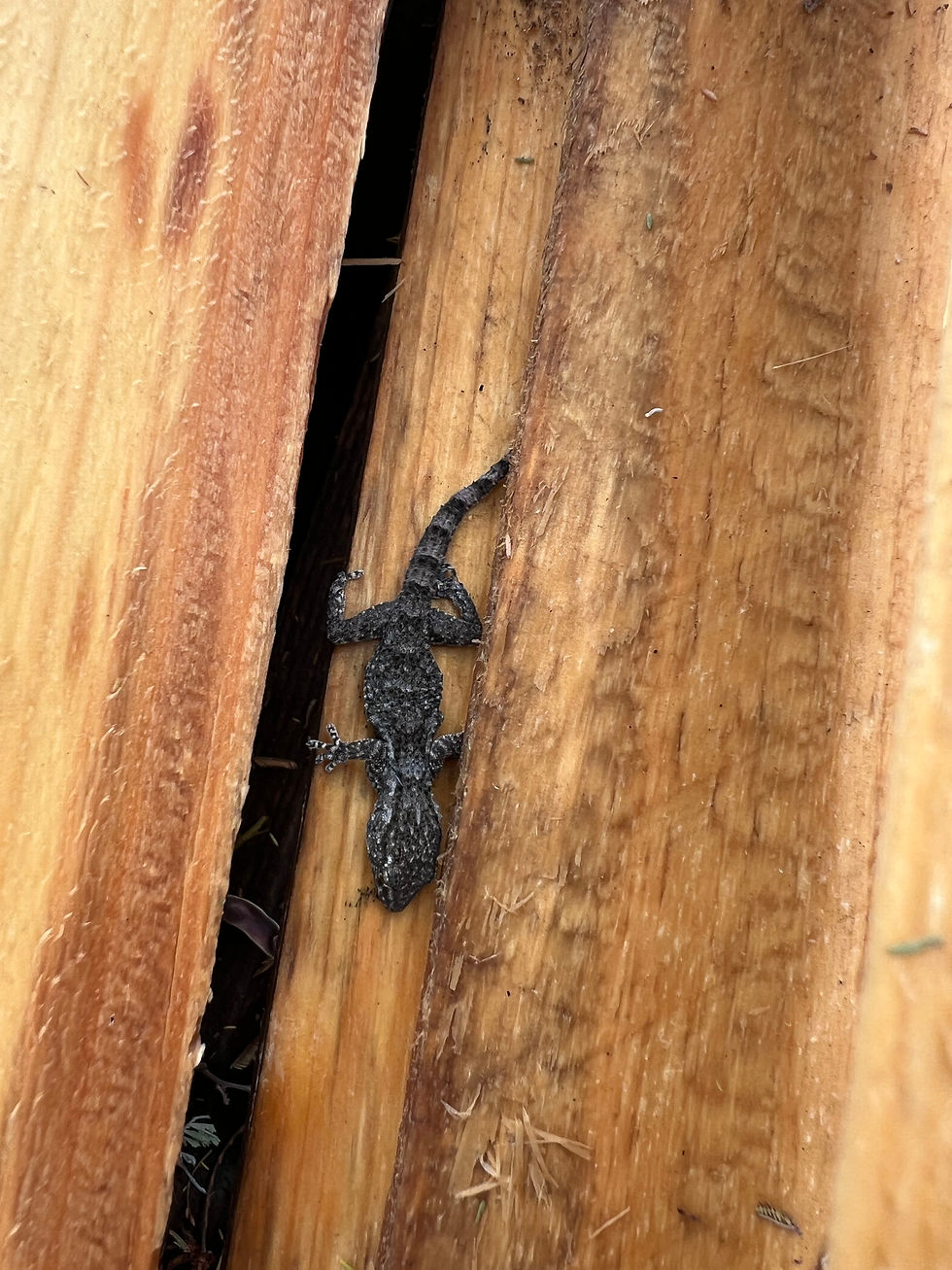
The Moorish gecko belongs firmly in the second category. We have spotted these chunky little reptiles several times over the years, originally around our old granite stone house ruin and now increasingly around the shipping containers we use for storage. Stacked timber nearby provides another maze of sheltered spaces. They also appear on the exterior walls of our granite house, where the stonework has not yet been lime-pointed and still contains enough gaps to make a gecko estate agent very happy.
For us, they are welcome neighbors. They occupy spaces we already have, cause virtually no trouble and spend their evenings hunting insects around the homestead.
For more in-depth field guides, wildlife observation tools, and practical homestead gear, visit our Tough Kraut Resources Self-Sufficiency Toolkit, where we collect useful tools for learning, observing, and living more peacefully with our wild neighbors.
Quick Facts At A Glance
Characteristic | Information |
Common Name | Moorish Gecko / Common Wall Gecko |
Scientific Name | Tarentola mauritanica |
Size | Usually up to about 15 cm total length |
Activity Pattern | Mainly crepuscular and nocturnal, sometimes active or basking by day |
Typical Diet | Insects, spiders and other small invertebrates |
Predators (Portugal) | Snakes, birds, small mammals and domestic cats |
Predators (General) | Snakes, birds, mammals and larger reptiles |
Preferred Habitat | Rocky ground, cliffs, stone walls, buildings, ruins and other crevice-rich structures |
Human Risk Level | Very low |
Role On Our Homestead | Nocturnal insect predator around buildings and stored materials |
How To Recognize Tarentola mauritanica On A Mediterranean Homestead
Visual ID
The Moorish gecko looks considerably tougher than its size suggests. Adults have a broad, flattened head, thick body and rough-looking skin covered in raised tubercles, which are small knobbly scales. The overall effect is somewhere between miniature dinosaur and very determined piece of granite.
Colour varies considerably. Individuals can appear grey, beige, brown or mottled, often matching the stone, bark or concrete around them remarkably well. The back usually carries darker markings or bands, while the tail often shows stronger banding, especially in younger animals.
Adults can reach roughly 15 cm including the tail, although many individuals we encounter are smaller. Their toes are broadened into adhesive pads that help them climb vertical walls, rocks and other surprisingly smooth surfaces.
Juveniles resemble smaller versions of the adults but often show stronger contrast and more obvious tail banding.
Another useful feature is the tail itself. Like many lizards, Moorish geckos can shed their tail when attacked. A regrown tail may look shorter, thicker or less regularly patterned than the original.

Sounds & Behavior
Moorish geckos are mostly active from dusk into the night, although they may bask or move around during daylight when conditions suit them.
Rather than roaming widely across open ground, they are strongly associated with surfaces and hiding places. A wall with cracks, a pile of timber, a rocky bank or the narrow gap behind stored materials can provide both shelter and hunting territory.
That fits our experience remarkably well. Our sightings concentrate around old granite masonry, the outside of the house, shipping containers and wood piles. During the day, there may be no sign of them whatsoever. Then an evening inspection suddenly reveals one clinging to a wall only a few metres from where we have been working all afternoon.
Tarentola mauritanica is primarily an ambush and short-range hunter. Around buildings it can exploit insects attracted by lights, making walls and doorways productive nighttime feeding grounds.
Tracks, Droppings & Other Signs
Gecko tracks are tiny and easily overlooked. In very fine dust or soft mud, you may occasionally see small five-toed impressions, sometimes with the expanded toe tips visible. Around our rocky homestead, actually seeing the gecko is considerably easier than following its tracks.
Droppings are more noticeable. Like many reptiles, gecko droppings usually consist of a small dark pellet with a white or cream-colored section of urate at one end. They may accumulate beneath favored resting or hunting areas.
Treat droppings as you would other animal waste. Avoid handling them unnecessarily, wash your hands after cleaning surfaces, and keep food preparation areas clean.
Where Moorish Gecko Lives: Portugal and Beyond
The Moorish gecko is well suited to the warm, dry landscapes of the Iberian Peninsula. In Portugal it occurs particularly across central and southern parts of the mainland, using natural rocky habitats as well as villages, farm buildings, ruins, gardens and other human-made structures.
Its wider native distribution is centred on the western Mediterranean, including parts of southern Europe and North Africa. Humans have also transported the species beyond parts of its original range, where introduced populations have become established.
One reason the species succeeds around people is straightforward: our buildings accidentally recreate excellent gecko habitat. Stone walls provide warm surfaces for thermoregulation, which means controlling body temperature using external heat. Cracks provide daytime refuges, and outdoor lights attract dinner.

Our own Quinta could almost have been designed with them in mind. The granite ruin offered countless cavities when we first began seeing them. Today, the unpointed exterior of the renovated stone house still contains small gaps, while our shipping containers and nearby stacked wood provide another concentration of sheltered hiding places.
What Moorish Gecko Eats (And What Eats Moorish Gecko)
Diet
Moorish geckos are primarily insectivorous. Their menu includes moths, flies, beetles, mosquitoes, spiders and other small arthropods they can overpower.
Around a homestead, artificial lights can unintentionally create gecko feeding stations. Insects gather around illuminated walls and doorways, while the gecko waits nearby for something edible to wander within range.
This makes them particularly useful neighbors in an organic system. They will not eliminate mosquitoes, moths or other insects, nor should we expect them to, but every native predator adds another layer to the food web.
Our stonework, wood piles and containers probably provide the complete package: daytime shelter only a short crawl away from nighttime hunting areas.
Predators & Threats
Being a small reptile means spending plenty of time on somebody else's menu. Snakes, birds and small mammals can prey on Moorish geckos, while domestic cats are an additional threat around homes and farms. Juveniles are particularly vulnerable.
Human-related hazards include road traffic, pesticide use, deliberate killing and accidental destruction of refuges. Moving old timber, dismantling stone piles or filling wall cavities can suddenly expose animals that have been sheltering unseen.
The good news is that coexistence rarely requires doing anything complicated.
Living With Moorish Gecko On An Off-Grid Homestead
From our perspective, Moorish geckos fall comfortably into the "please carry on" category of wildlife management.
Their most obvious benefit is insect control. They hunt naturally around walls and structures without sprays, traps or electricity. They also form part of the wider food web, supporting predators farther up the chain.
Potential problems are minor. Droppings may appear beneath regular hiding places, and geckos occasionally enter sheds or buildings through gaps. They are not interested in eating vegetables, attacking chickens or damaging timber.
Practical Coexistence Strategies
Keep some wildlife-friendly cracks and crevices.We do not need every stone pile or wall on the property to resemble a perfectly finished hotel lobby. Away from living spaces, cavities provide refuge for geckos and many other useful animals.
Separate habitat from sensitive storage.Wood piles can remain valuable shelter while still being kept orderly, dry and away from food or items that need to stay particularly clean.
Check before moving stacked materials.Timber, sheets, boards and rocks can hide geckos underneath or behind them. Moving things slowly gives wildlife a chance to escape.
Avoid unnecessary insecticides.Removing insects also removes the food supporting insect predators. An organic garden works better when several layers of predators are allowed to participate.
Seal only where it matters.Pointing our house walls eventually makes sense for the building, but that does not mean every habitat gap across the Quinta must disappear. Rock piles, retaining walls and dedicated habitat areas can compensate for lost cavities around finished living spaces.
Leave outdoor lighting off when it is not needed.Geckos can exploit insects around lights, but excessive nighttime lighting also alters normal insect behavior. Darkness is habitat too.
Living with Moorish geckos requires surprisingly little effort. Mostly, we just need to notice that they are there before rearranging their hiding places.
Herman’s Tough Kraut Field Notes: Wild Neighbors Edition – Tarentola mauritanica
Geckos create plenty of "should we be worried about that?" moments, particularly when one suddenly materializes halfway up a wall. Here are a few of the practical questions that matter most around a homestead.
Q: Are Moorish geckos dangerous to people?
A: No. They are small, non-venomous reptiles that normally flee rather than confront us. Like any wild animal, they are better observed than repeatedly handled.
Q: Will they damage our house or shipping containers?
A: No. They use existing cracks and cavities for shelter but do not excavate masonry, eat timber or create structural damage.
Q: Should we remove geckos from stacked firewood?
A: Usually not. If the wood is outdoors and safely stored, the animals are simply using an available refuge. When moving the pile, work gradually and give anything hiding inside an escape route.
Q: Can they harm our chickens or other pets?
A: Moorish geckos are far too small to threaten chickens, dogs or cats. The greater risk generally runs in the opposite direction, particularly from cats that hunt small reptiles.
Q: How can we encourage geckos without inviting them into the house?
A: Maintain stone piles, rough retaining walls, logs and other sheltered habitat outside while sealing unwanted gaps around doors, windows and indoor living areas. We can provide wildlife habitat without turning the kitchen into a reptile reserve.
Want to make your homestead a little more welcoming for nighttime hunters like the Moorish gecko? Explore our Tough Kraut Resources page for field-tested tools, wildlife guides, and practical gear that help us observe, protect, and coexist with the small wild neighbors sharing our walls, wood piles, and garden.


Comments