
6 Reasons to Grow Honey Drop Fig in a Mediterranean Garden

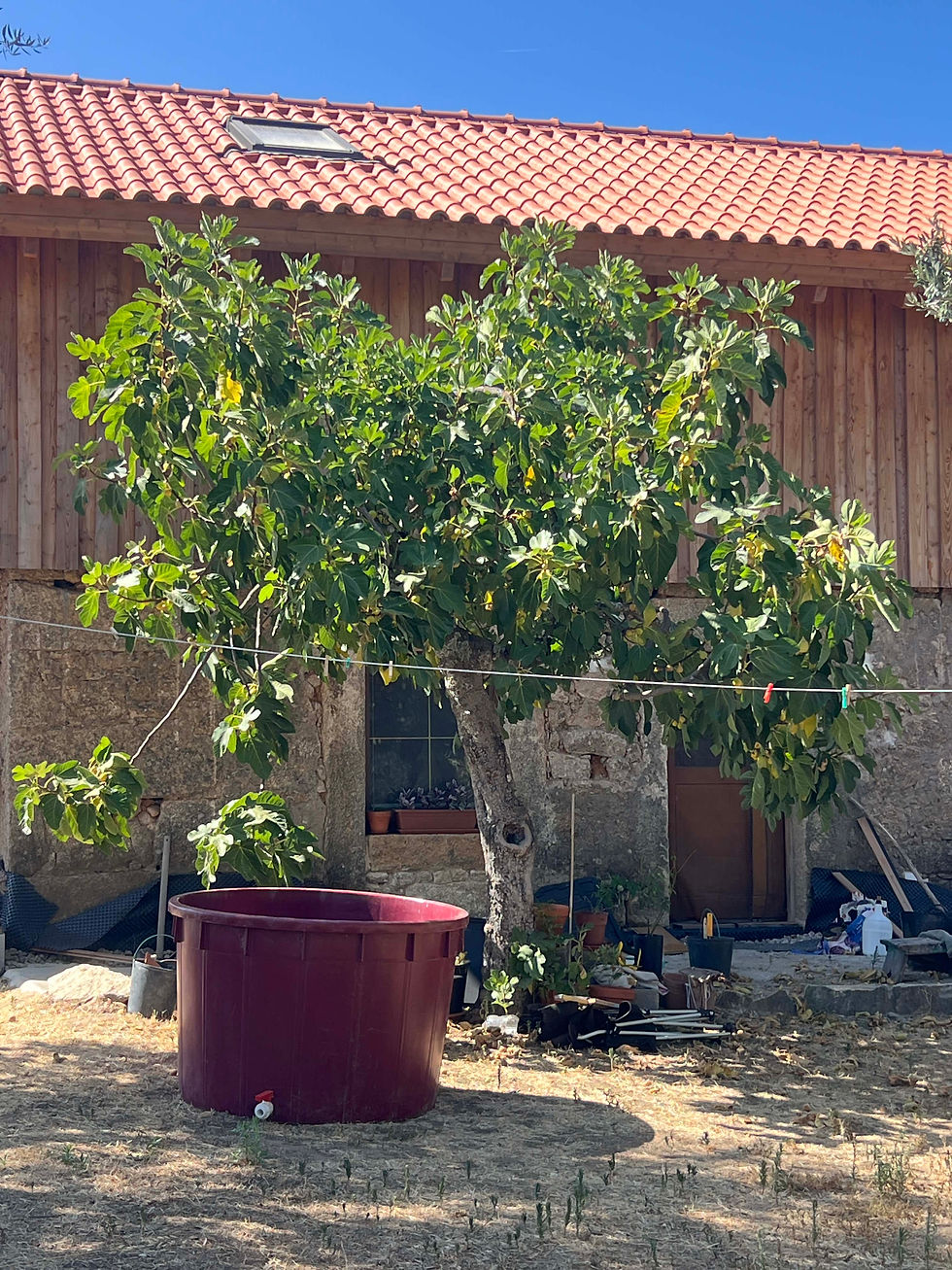
A fig that looks completely dead in winter can be the busiest tree on the land by summer, and that is exactly how the Honey Drop Fig (Ficus carica 'Pingo de Mel') introduced itself to us. When we first viewed the property on a rainy winter day, it was a leafless skeleton standing in front of the granite stone house ruin, the real estate agent assured us it would come back to life, and when spring arrived it filled with leaves and later fruit.

This post gives six honest reasons to grow Honey Drop Fig in a Mediterranean garden, all drawn from that one established tree that was already on the land, with a troubleshooting and FAQ section at the end, and anything that does not come from the Quinta is labeled general nursery practice, which we have not tested.
The tools and reading we lean on are collected on our Resources page.
Quick Verdict: Is Honey Drop Fig Worth Growing?
Yes, if you have a sunny spot with room for a broad canopy and a root system that goes looking for water, and if you are ready for more figs than one household can eat fresh.
Best for: sunny ground with room to spread, away from foundations and drains
Care level: easy once established
Water needs: low to moderate once established, with extra water for a heavy crop in a prolonged drought
Propagation ease: hardwood cuttings, layering, and suckers
Main benefit: summer shade and a heavy fig crop
Biggest caution: roots that travel and a tree that answers a hard cut with a forest of shoots
Tough Kraut verdict: worth growing where it has room, and worth planning for before it has a crop
Why This Plant Caught Our Attention
The fig was already rooted into this land long before Tough Kraut existed, and locals and the former owner told us it is Pingo de Mel, so this is not a story about planting a fig and waiting. It is a story about living beside an established tree that came with the land and watching what it does through the seasons, which is a different lesson from the one in a nursery label. This post is about why the tree earns its place and who should think twice before planting one of their own.
1. A Bare Winter Fig Is Not a Dead Fig
The first time we saw the fig it had not a single leaf, and I would not have bet on it, but it was simply a deciduous tree in winter, and by spring that bare skeleton was full of leaves and later fruit. General nursery practice, which we have not tested, treats that as normal, since a deciduous fig stands leafless through the cold months and tells you little about its health until it leafs out. That matters on a Mediterranean property because a neglected fig is easy to write off in January and easy to regret in August.
If you inherit a fig that looks dead, wait for spring before you judge it.
2. The Broad Canopy Gives Real Summer Shade
Once it is in leaf, the broad canopy of this fig gives welcome shade during the hottest part of summer, and the same tree feeds us, the birds, and the ants. On a homestead, a tree that shades and fruits in the same season earns more than a purely decorative one. General nursery practice, which we have not tested, is to give a fig full sun, ideally 6 to 8 hours or more of direct sunlight, so decide where its shadow will fall before you decide where the bench or the vegetable bed goes.
Plant it where shade helps you and where fallen fruit will not be a nuisance.
3. It Can Produce More Figs Than You Can Eat
The bigger problem on this tree now is abundance, because there are almost too many figs hanging from it. So far dried figs are all we have made from the surplus, with whole figs going through the dehydrator, and whatever the birds and ants manage to claim first is simply the price of a productive tree. A glut like this is a good problem, but it is still a planning problem, so think about drying before the crop arrives rather than during it, and if jam or chutney appeals to you as well, those are sensible ideas for a surplus, although we have not made either.

Plant a fig only if you are happy to dry, preserve, share, or feed the surplus to the wider homestead.
4. Cuttings Give You More of the Same Tree
Figs are particularly easy to clone from cuttings, and a cutting keeps the characteristics of the parent tree, which is why this established fig has become a useful source of propagation material. I propagate new trees from its cuttings and will keep doing so every year, both for planting around the Quinta and eventually for our plant nursery, and I now have a few propagated fig trees in pots, ready to plant out. I am not going to quote you a rooting rate in this post, and our guide to taking dormant fig cuttings in late winter covers the method for anyone who wants to try it themselves.

If you like the fig you have, cuttings are the cheapest way to get another one.
5. The Roots Go Looking for Water in Hard Ground
When we started renovating the granite house, I dug roughly 85 cm (33 in) down before hitting solid granite bedrock and boulders, and fig roots were already threading through the same ground. I found them again while digging the French drainage channels in front of the house, and that is a lesson I would hand to anyone: drought tolerance is not the same thing as a small root system. A mature fig can endure remarkably dry conditions precisely because it is so good at exploring the soil around it for moisture.
Give a fig generous space from foundations, pipes, and drains, because its roots can travel surprisingly far.
6. It Takes a Hard Cut and Comes Back Strong
This tree has been pruned hard twice and has also had some light pruning, and after the hard cuts it responded with vigorous new growth and is looking fantastic again this year. Pruning on the Quinta is led by MuDan, so what follows about method is general nursery practice, which we have not tested, and not a record of anything done to this tree: a hard cut tends to trigger strong vegetative regrowth, so once the basic renovation is finished, selective thinning and canopy control beat repeating severe cuts every year. The milky sap can irritate skin, and more so in sunlight, so gloves and covered arms are sensible for anyone doing heavy cutting.
A fig forgives a hard cut, but plan for a crowd of new shoots afterward.
What to Plan For If You Plant One
I propagate and plant fig cuttings and young trees every year, usually in autumn. Simple cuttings go straight into the ground, and I also plant trees that spent roughly a year in a pot after rooting. Once in the ground they have proven drought-tolerant, though I still hand-water three or four of the smaller ones in the hope they settle and grow, and we use the sprinkler when irrigating the wider garden. Keep the root collar at soil level, mulch around the trunk but never against it, and give young figs regular water through their first summers. Leave 4 to 6 m (13 to 20 ft) between trees and think hard before placing one beside a foundation, a drain, or a confined space.
Best Place to Grow Honey Drop Fig in a Mediterranean Garden
General nursery practice, which we have not tested, favors full sun, with a south- or west-facing Mediterranean position ideal, in fertile, well-drained soil with a pH of roughly 6.0 to 7.5 that still copes with lean or rocky ground once established. Good spots include:
A sunny slope or terrace edge with room for roots and canopy
Open ground well away from the house, drains, and pipes
A spot beside lavender, rosemary, comfrey, clover, or grapevine
Anywhere you can reach the branches to harvest and cut
The best site is the one where you will not resent the roots in a few years.
Who Should Think Twice Before Growing It?
Think twice if you only have a tiny courtyard, if the only space is beside a foundation or a drain, or if a heavy crop sounds like a chore rather than a gift. Think twice if hard winters are normal where you live, because cold is the main limit for figs, and think twice if you dislike sharing fruit with birds and ants. A fig is easy, but it is not small, quiet, or tidy.

Final Verdict: Is Honey Drop Fig Worth Planting?
For us the fig is inseparable from the place, because it gives summer shade, a crop we struggle to keep up with, cuttings for the next plantings, and roots that keep investigating the granite beneath the house. Some trees take years before you know whether planting them was a good decision, and this one was already here, so I can tell you what an established fig does here but not what a first-year fig feels like, and I would rather say so than guess. The reasons to grow Honey Drop Fig come down to shade, a heavy crop, cuttings, roots that find water, and a tree that forgives a hard cut, balanced against the room it demands. For the full species profile, see our full Pingo de Mel Plant Library profile, and join the Kraut Crew if you would like to follow what we learn next.
Herman's Tough Kraut Fixes: Common Challenges When Weighing Reasons to Grow Honey Drop Fig
Q: Why are my figs splitting before harvest?
A: Sudden water uptake, such as rain or heavy irrigation while the fruit is ripening, can split figs, so keep moisture reasonably consistent and pick ripe fruit promptly. This is general nursery practice, which we have not tested.
Q: Do I need a second fig tree to get fruit?
A: Not automatically, because many garden cultivars set fruit without a separate pollinator, though a healthy tree that repeatedly drops immature figs deserves a look at the pollination needs of that cultivar. This is general nursery practice, which we have not tested.
Q: How do I know when a fig is ripe?
A: Pick figs when they are fully colored for the cultivar, soft, and beginning to hang downward rather than standing rigidly from the branch, and harvest by hand gently. This is general nursery practice, which we have not tested.
Q: Which pests and diseases should I watch for?
A: A general watch list is birds, ants, fruit splitting, fig rust, and scale, and removing spoiled fallen fruit, diseased leaves, and mummified figs is one of the simplest ways to reduce recurring pressure. This is general nursery practice, which we have not tested, and not a report from our tree.


Comments