
6 Reasons to Grow Strawberry Tree in a Mediterranean Garden

Our strawberry tree story started with one larger sapling in early 2022 whose main stem died in its first year, and yet the roots never gave up, so the plant keeps sprouting at grass level on our Quinta in Central Portugal. That stubbornness is a big part of why we planted more.

The strawberry tree (Arbutus unedo), called medronho here in Portugal, is an evergreen shrub or small tree in the heather family, and the reasons to grow strawberry tree in a dry garden go well beyond its odd, bumpy red fruit.
This post mixes what we have seen on the Quinta with general practice for Mediterranean gardens in Zones 8 to 10, so where something is general nursery practice rather than something we've tested, I say so, and more reading sits on our Resources page.
Quick Verdict: Is Strawberry Tree Worth Growing?
For a Mediterranean garden, generally yes. It suits gardeners who want a tough evergreen with year-round structure, care is easy once it settles, and water needs are low after the first couple of summers. The main benefit is that it handles heat, drought and poor, stony soil, while the biggest caution is patience, because growth is slow at first and fruit usually takes a few years. Our verdict so far is a quiet winner, and our best-watered trees are now carrying their first small fruits.
Why This Plant Caught Our Attention
After that first sapling, we bought several medronho saplings later in autumn 2022 and spread them across the land: near the porch, behind the chicken run, beneath mimosa trees, downslope of our future terrace, and in the roundabout bed. That spread turned into a small, unplanned trial, and this post sums up why we think the plant deserves a place, rather than repeating the full care details.
1. It Is Built for Dry Mediterranean Summers
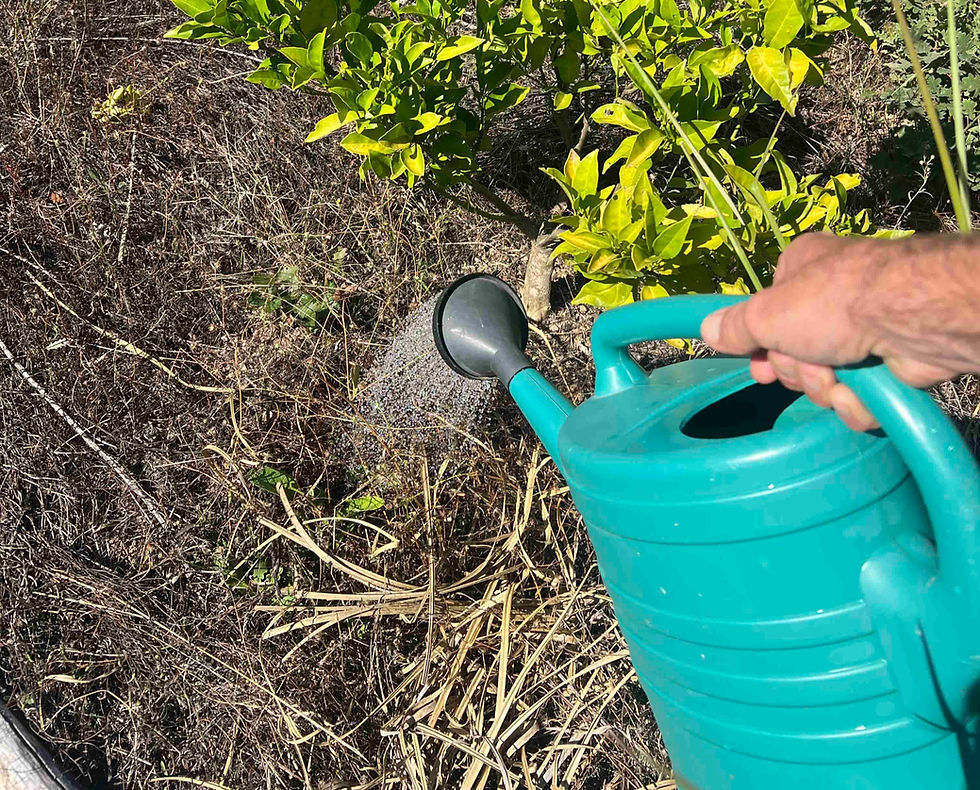
Strawberry tree generally tolerates summer drought once established, which makes sense for a plant that grows wild on dry, rocky hillsides around the Mediterranean. On our land, the neglected trees behind the chicken run and under the mimosas are alive but slow, while the better-watered ones are establishing faster, so a few deep waterings in the first summers clearly pay off even for a tough plant.
2. It Comes Back from the Roots
Strawberry tree is generally known as a strong resprouter that can regrow from its woody root base after the top is damaged, which helps it recover from fire, browsing or a hard cut. Our first sapling is living proof, because the main stem died, yet new shoots keep coming from the roots at grass level.
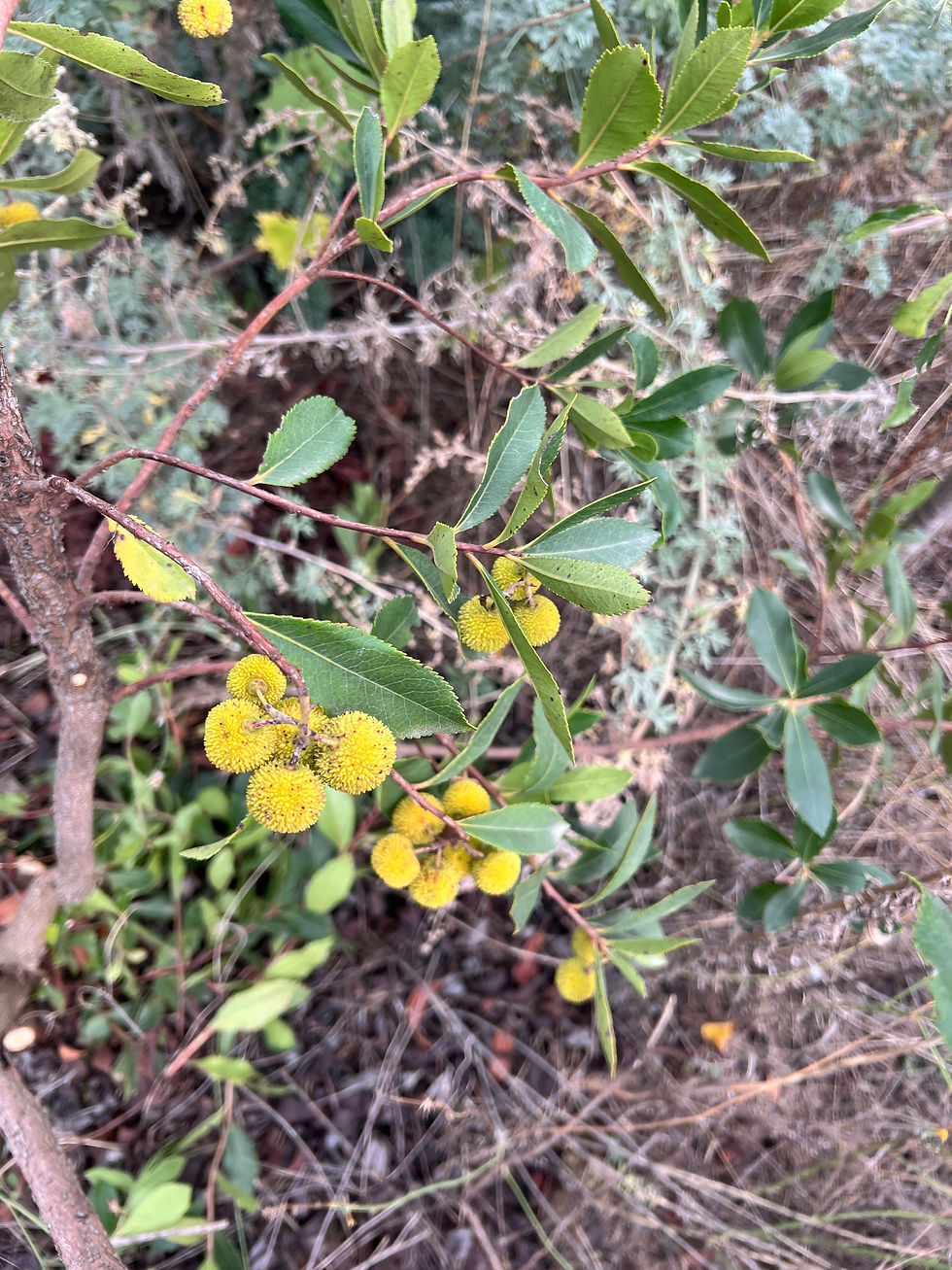
The other strawberry trees on the Quinta are looking very good thanks to regular summer irrigation, especially the one beside our Peruvian apple cactus and the one in the roundabout bed. Both are carrying their first small fruits this year, still green and small.

3. It Belongs Here
The strawberry tree is native to the Mediterranean and to western Europe, including Portugal, so it fits local soils, rain patterns and wildlife without much fuss. Planting a native shrub also means you are adding something local insects and birds already know how to use.
4. It Flowers When Little Else Does
The small, white, urn-shaped flowers usually open in autumn and early winter, and bees, hoverflies and butterflies visit them at a time of year when nectar is scarce. Because the fruit takes about a year to ripen, a mature tree often carries flowers and ripe fruit together, which is one of the prettiest sights in a winter garden.
Our trees have flowered, and the bees found them. The small green fruits on them now grew from last autumn's flowers and ripen this autumn, while new flowers open right beside them.
5. The Fruit Is Edible, with a Caveat
The round, red fruits usually ripen from late autumn into winter and can be eaten fresh, cooked into jam, or fermented and distilled into the traditional Portuguese spirit, aguardente de medronho. Fresh fruit is generally mild and a little gritty, and ripe fruit ferments quickly, so eating a large amount at once is commonly said to upset the stomach, which is why most of it ends up in jam or the still.

6. It Gives Year-Round Cover with Little Pruning
As an evergreen with glossy leaves and reddish bark, strawberry tree keeps a garden structured all winter, gives birds shelter, and generally needs only light pruning of dead or crossing branches in late winter. We have not pruned ours at all yet, and none have needed it.

What We Would Do Differently Next Time
We would give every new sapling the same steady deep watering through its first two summers, instead of leaving a few to fend for themselves, because our better-watered trees are clearly ahead. We would also choose a spot with good drainage for each one from the start, since root rot in soggy soil is the main thing these trees generally dislike.
Best Place to Grow Strawberry Tree in a Mediterranean Garden
Pick full sun or light shade in well-drained, sandy or stony soil that never stays waterlogged in winter, and leave room for a shrub that can eventually reach about 3 to 7 m (10 to 23 ft) tall. It works well in a dry hedge, a food forest edge or a wildlife corner alongside olives, lavender and rosemary.
Who Should Think Twice Before Growing It?
If you want fast results or heavy fruit crops soon, this is the wrong plant, because young trees often take several years to fruit. Gardeners with heavy clay or wet, low ground should also be careful, and anyone growing it mainly to eat raw should know the fresh fruit is pleasant rather than exciting.
Herman's Tough Kraut Fixes: Questions About Reasons to Grow Strawberry Tree
This short troubleshooting and FAQ section covers the questions that come up most when you grow strawberry tree for the first time, from slow growth to missing fruit.
Q: Why is my strawberry tree growing so slowly?
A: Young strawberry trees usually put their energy into roots first, so give them deep, occasional summer water and mulch, and expect faster growth after a few years.
Q: Why hasn't my strawberry tree fruited yet?
A: A strawberry tree generally takes several years to start fruiting, and stress in the early years can delay it further.
Q: Do I need two strawberry trees for fruit?
A: A single strawberry tree is generally self-fertile, although a few trees nearby may improve fruit set.
Q: Why are the leaves on my strawberry tree yellowing?
A: Yellowing on a strawberry tree often points to waterlogged roots, so check drainage and cut back on watering in heavy soil.
Final Verdict: Would We Plant It Again?
Yes, without hesitation, because even our most neglected strawberry trees are still alive and the cared-for ones are finally gaining momentum. We will share the first ripe fruit with the Kraut Crew once it turns red.
Read more in our strawberry tree (Arbutus unedo) Plant Library entry.


Comments