
How to Grow Maritime Pine from Seed in a Mediterranean Climate

For years I pointed at the giant above the veggie terrace and called it our stone pine, the one that should drop fat culinary nuts. Looking closer at the irregular crown, long paired needles, elongated cones, and small winged seeds finally corrected me: it is Maritime pine, Pinus pinaster (Cluster pine, pinheiro-bravo), not Pinus pinea. Learning how to grow maritime pine from seed starts with that ID check, then with autumn cones, volunteer seedlings, and a site that can hold a forest tree.

Ours was already standing more or less in the middle of the Quinta when we bought the land. From the ground I estimate about 30 m (98 ft), inside the usual mature range of 20 to 30 m (66 to 98 ft). It shades Blueberry Alley below, drops cones and needles, and sends volunteers onto the veggie terrace that we dig and move into the food forest. Stick around for Herman's Tough Kraut Fixes on germination, taproots, waterlogging, pine-nut confusion, and processionary safety.
For field-tested tools and reading, see our Resources page.
Quick Answer: How to Grow Maritime Pine from Seed
Give Pinus pinaster full sun, sharp drainage, and far more room than a young seedling suggests. Collect mature cones in autumn, extract the small winged seeds (not supermarket pine nuts), and sow fresh in autumn or after a cool moist period for spring. Or dig small volunteers with a wide root mass and transplant in cool weather. Set the root collar at soil level, deep-water the first one or two dry summers, then step back. Keep the future crown clear of greenhouses, buildings, and lines.
Maritime Pine vs Stone Pine (so you grow the right tree)
If your goal is a bowl of Mediterranean pine nuts, stop here and grow Stone pine instead. Maritime pine seeds are small, papery-winged, and built for wind dispersal. Stone pine develops the classic umbrella crown, broader rounded cones, and much larger heavy seeds with only a rudimentary wing. Mature Maritime pine usually keeps a tall, irregular crown, very long paired needles (roughly 15 to 20 cm / 6 to 8 in), and elongated cones.

That mix-up mattered on our Quinta. Shade over the veggie terrace and Blueberry Alley (Vaccinium corymbosum 'Legacy', 'Biloxi', and 'Gupton') is real value, and dry cones make excellent kindling, but the seeds will never fill a pinhão jar. Get the species right before you invest years in the wrong canopy.
Tough Tip: Identify the whole package (crown, needles, cone shape, seed wing) before you sow a forest of the wrong pine.
Collect Cones and Winged Seed in Autumn
Autumn is the practical window to gather what the tree already drops. Collect mature cones once they have opened naturally and released or exposed their seeds. Separate the small winged seeds from debris, and keep dry cones for fire starters if you heat with wood.

Store seed cool and dry for short holding, or sow soon. Prefer local cones from trees that already prove themselves when you can. On our ground the mother tree does the gathering: cones rain onto the terraces, and the winged seed is hard to miss once you look for the papery sail.

Tough Tip: Collect for propagation and kindling in the same pass. Just do not expect culinary pine kernels from Pinus pinaster.
Sow Fresh Seed or Pot Up Volunteer Seedlings
Seed is the primary propagation method, and natural regeneration is often prolific under a mature tree. Two honest paths work here.
Sowing (general guidance): Sow in autumn so winter chill and rain help, or give seed a cool moist stratification of roughly 30 to 60 days and sow in early spring in free-draining mix. Cover lightly (about 0.5 to 1 cm / 0.2 to 0.4 in), keep evenly moist but never waterlogged, and use deep pots or root trainers because pines resent early taproot damage. Germination often spreads over a few weeks once temperatures rise.
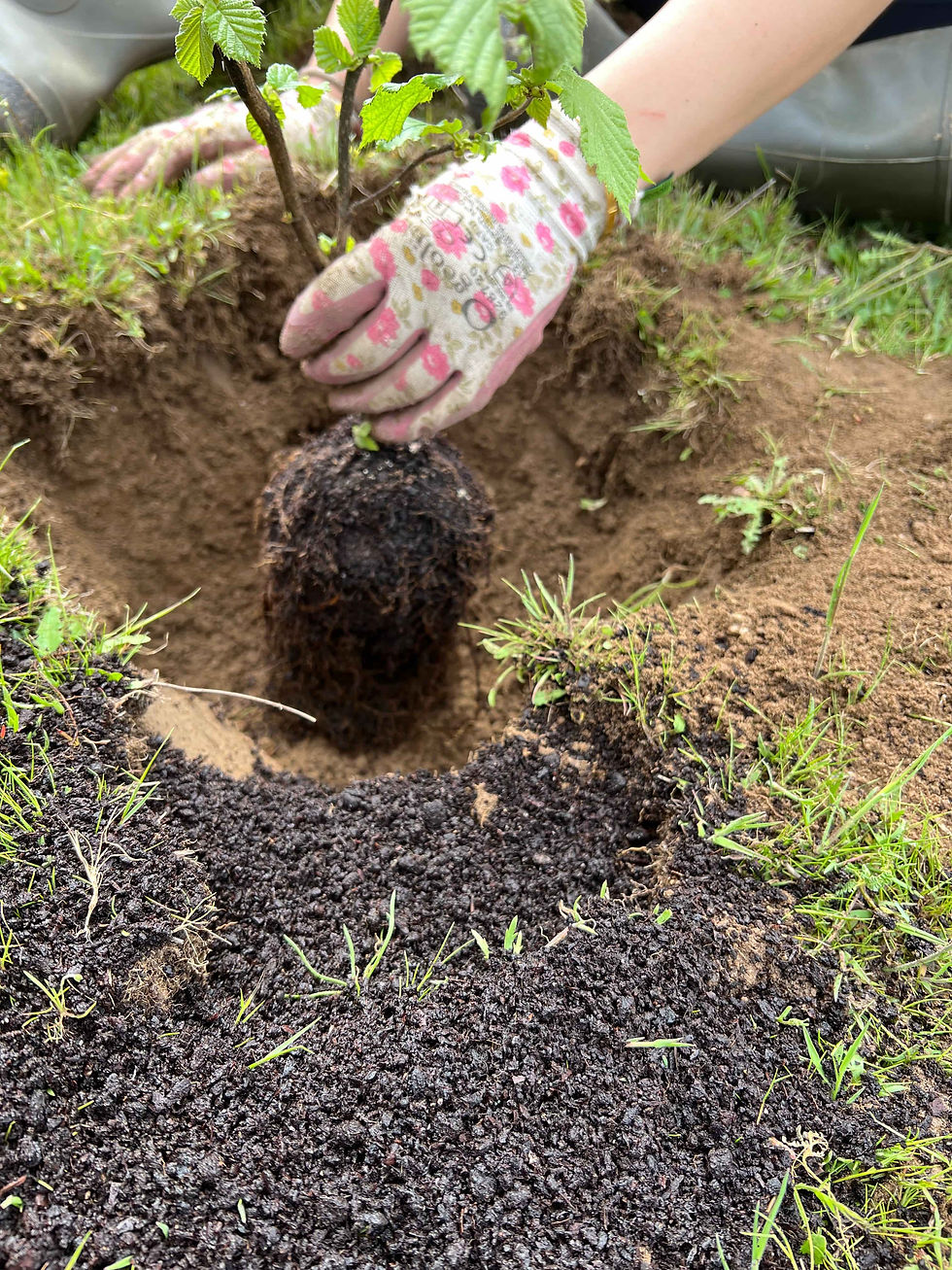
Volunteers (Quinta path we actually use): Small seedlings regularly appear on the veggie terrace. We dig them while still small, take a wide root ball, and move them in cool weather. At least three transplanted saplings now grow in the food forest with no additional summer watering, which is the clearest Zone 8a proof I have that the species belongs here once roots take.

I have not run a formal Quinta sowing trial with counted trays or published germination rates, so treat tray sowing as standard horticultural practice and the volunteer transplants as the field experience we can stand behind.
Tough Tip: Dig wide, transplant cool, and water through the first establishment stretch. A smashed taproot is a slow failure you will blame on "bad seed."
Site for a Future 20 to 30 m Canopy (full sun, drainage, distance from glass, buildings, and lines)
Maritime pine wants full sun and well-drained sandy or siliceous ground that stays acidic to neutral. It adapts to lean sites and dislikes prolonged waterlogging. Plan roughly 8 to 12 m (26 to 39 ft) between large specimens, and picture 20 to 30 m (66 to 98 ft) of height, occasionally more.
Do not plant close to buildings, greenhouses, power lines, or retaining walls. Our mature tree sits uphill of the greenhouse by two terraces, which is exactly why its size above infrastructure stays on my mind. Deadwood and high work on a tree around 30 m (98 ft) are arborist territory, not casual ladder pruning.
Companions that fit include blueberries where soil moisture allows, plus rosemary, lavender, cistus, thyme, and cork oak. None replace drainage or distance from glass.
Tough Tip: Site for the adult tree, not the cute seedling. A pine that shades blueberries is useful; a pine that shades your greenhouse roof is a different story.
First Summers: Deep Water, Then Step Back
Young Maritime pines benefit from deep watering through the first one or two dry summers. Soak the root zone thoroughly, then let the surface settle. Skip daily shallow sprinkling that feeds weeds and still leaves deeper roots guessing.
Once established, cut supplemental irrigation substantially. Our food-forest transplants now cope without additional summer watering. Mulch a wide ring clear of the stem, and keep the collar dry enough that winter rain does not sit in a bowl. For first-summer heat and drought timing, our free Summer Survival Garden Checklist helps walk mulch and watering priorities.
Tough Tip: Treat the first dry summers as part of planting. After that, Maritime pine is built for Portuguese sun, not for a nursery hose habit.
Herman's Tough Kraut Fixes: Common Challenges with Grow Maritime Pine from Seed
Getting grow maritime pine right on Quinta ground is mostly ID, seed handling, taproots, drainage, and calm pest sense.
Q: When should Maritime pine seed germinate, and when do I sow?
A: Sow fresh in autumn, or after a cool moist period for early spring sowing in free-draining mix. Germination often stretches over several weeks once conditions warm.
Q: Why do transplants sulk, and what about the taproot?
A: Dig a wide root ball, move in cool weather, water through establishment, and avoid snapping the taproot. Small volunteers move more kindly than big ones.
Q: Can waterlogging kill a young Maritime pine?
A: Yes. The species likes sandy, free-draining ground and weakens when roots sit wet. Plant on a slight mound on heavy soil and skip the compost sump under the collar.
Q: Are the winged seeds the same as culinary pine nuts?
A: No. Supermarket-style Mediterranean pine nuts generally come from Stone pine (Pinus pinea). Maritime pine seeds are much smaller and winged for wind dispersal.
Q: What about pine processionary nests on a big mother tree?
A: In Portugal, Thaumetopoea pityocampa builds white winter nests on pines. Do not handle nests, caterpillars, or contaminated material bare-handed; later-stage hairs can irritate skin, eyes, and airways. High nests on a mature canopy are professional work.
Final Thoughts on Growing Maritime Pine from Seed
To grow maritime pine from seed in a Mediterranean climate, keep the method honest: confirm you are not raising Stone pine by mistake, collect autumn cones for winged seed or dig young volunteers with intact roots, give full sun and sharp drainage, and leave real room for a 20 to 30 m (66 to 98 ft) canopy well clear of glass and buildings. Deep-water the first dry summers, then step back and let a Portuguese native do what it already does on our terraces, where shade, kindling cones, and food-forest transplants earn their keep.
Open the full Pinus pinaster Plant Library companion for the species profile, join the Kraut Crew for more Quinta field notes, and use the Resources page for tools we rely on.


Comments