
Reading the Land: What Indicator Plants Can Tell Us About Our Soil

A soil test arrives in a plastic bag with numbers on a page. An indicator plant arrives quietly, puts down roots and waits for us to notice where it chose to grow.
The plant does not replace the soil test. It may, however, help us decide where to take the sample.

I began thinking more seriously about indicator plants while walking along the regularly mown paths on our off-grid Quinta in Central Portugal. Dandelions had become more common, but they were not spread evenly across the land. Many appeared directly in areas where we walk, mow and repeatedly press the ground.
During my Permaculture Design Certificate course, I learned that dandelions are often linked with disturbed or compacted soil. That did not mean each flower was carrying a clipboard and a soil report. Still, the pattern made me curious.
Why were plantains also growing near walked areas?
Why did rushes favour parts of the lower, wetter ground?
Why did sheep’s sorrel appear in leaner patches?
Why were nettles thriving in a few lush corners, while pokeweed and thistles colonised other disturbed areas?
Our Quinta covers less than one hectare, yet it contains dry upper land, wet winter hollows, compacted paths, cultivated terraces, chicken-influenced soil, greenhouse beds, river-edge ground and areas disturbed by building work.
The plants had apparently been mapping these differences long before I started taking notes.
This guide explores how indicator plants for soil can help us observe compaction, moisture, drainage, fertility, acidity and disturbance. More importantly, it explains how to use those clues without turning a flexible ecological pattern into a false diagnosis.
Stick around until the end for Herman’s Tough Kraut Fixes, where I answer common Troubleshooting and FAQ questions about reading wild plants and checking what lies beneath them.
What Are Indicator Plants for Soil?
An indicator plant is a species whose recurring presence, absence or abundance is linked with certain site conditions.
Those conditions may include:
Soil moisture and drainage
Compaction
Soil pH
Nutrient levels
Salinity
Light and shade
Grazing or mowing
Recent disturbance
Past land use
Researchers and land managers have long used plant communities to help assess ecological sites. The useful information comes from associations between vegetation, soil, climate and landform, not from one plant considered in isolation.
A species may thrive in one place because several factors work together.
A low-growing plant beside a path may be able to tolerate trampling, survive mowing and compete in compacted soil. A rush in a hollow may benefit from seasonal saturation, heavy soil and reduced competition from plants that dislike wet roots.
This is why indicator plants should not be treated like labels stuck to the ground.
A dandelion does not automatically mean compaction. A nettle does not prove excess nitrogen. A rush does not confirm acidic soil. A thistle does not diagnose heavy-metal contamination.
Plants establish where their traits allow them to survive and compete. Some prefer a condition. Others merely tolerate it better than the plants around them. That difference matters.
Introduced Plants Are Not Independent Indicators
Wild or spontaneous plants are most useful because they selected the location without our help.
Comfrey and some of our willows do not fit that category. I brought them onto the Quinta and chose where to plant them.
If a planted willow grows strongly in a damp area, that tells me the site suits it. It does not tell me that willows naturally selected that location.

The same applies to comfrey. Its performance can teach me about the site, but its presence cannot be interpreted like a naturally established patch.
Tough Tip: Before interpreting any plant, ask the simplest question first: Did it arrive by itself, or did somebody plant it there?
How to Read Wild Plants Without Jumping to Conclusions
Using indicator plants well requires more patience than memorising a list of weeds and soil problems.
I use three basic rules.
Rule 1: One Plant Is Only a Clue
A single seed may arrive through wind, water, an animal, machinery, imported compost or muddy boots. One plant proves very little.
A dense patch, a population that returns each year or a species repeatedly appearing under similar conditions is more useful. Even then, it remains a clue.
Plant communities and repeated patterns offer stronger information because they reflect several seasons of survival and competition. Ecological vegetation surveys also place value on species composition, abundance and spatial distribution rather than relying on isolated individuals.
Rule 2: Location Changes the Meaning
The same plant growing in two different places may be responding to different pressures.
Before drawing conclusions, ask:
Is the ground regularly walked or driven over?
Is it mown?
Was it recently dug, cleared or built upon?
Does rainwater collect there?
Is the area irrigated?
Is there manure, compost or animal activity nearby?
Does the soil stay shaded?
Is the plant alone or part of a wider community?
Does it return during the same season each year?
A plant beside the chicken run may reflect added nutrients. The same species near a wall may be responding to shelter and trapped moisture.
Another population in an open field may simply be taking advantage of disturbed ground and reduced competition.
Rule 3: Confirm the Pattern
Indicator plants should guide your next observation or test. They should not end the investigation.
Useful checks include:
A laboratory soil test
A simple pH test
An infiltration test
A soil-texture assessment
A moisture check after rain
A compaction check with a metal rod or garden fork
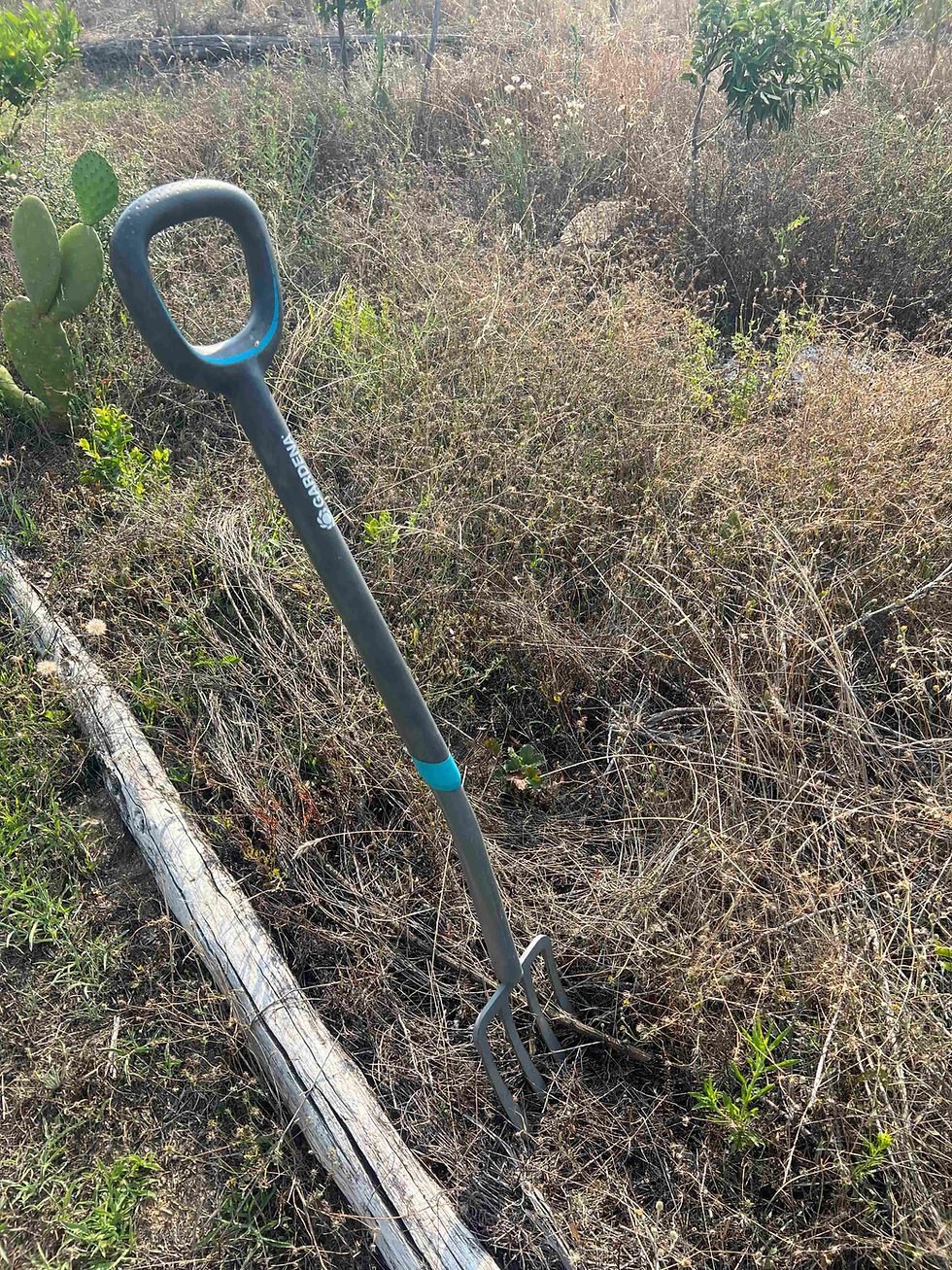
A soil profile dug with a spade
Soil or plant-tissue analysis for suspected contamination
Compacted soil often absorbs and drains water more slowly because its pore space has been reduced. An infiltration test can help confirm whether water is entering the ground poorly.
Use the plant to decide what question to ask, not to assume that you already know the answer.
Tough Tip: Mark suspicious patches on a simple sketch of your land. Revisit them after heavy rain, during summer drought and again in spring. One visit gives you a snapshot. A full year begins to reveal the story.
What Seven Wild Plants May Be Showing Us on Our Quinta
These are preliminary observations from our own land. Some plants still need firm identification before I assign them a more exact ecological meaning.
Plant | Possible site clue | Important caution |
Dandelion | Compaction, mowing or disturbed ground | Highly adaptable |
Plantain species | Trampling, compaction and sometimes moisture | Species identification matters |
Rushes | Persistent moisture, seasonal saturation or poor drainage | Rush species differ |
Sheep’s sorrel | Dry, sandy, lean and often acidic ground | Does not prove low pH |
Stinging nettles | Moist, fertile or nitrogen-enriched ground | Past land use may explain fertility |
Pokeweed | Disturbed, relatively fertile ground | Bird dispersal affects location |
Thistles | Open or disturbed ground | Soil preferences vary by species |
Dandelions Along the Paths
Our dandelions, Taraxacum officinale, were not planted deliberately. Their numbers are increasing along frequently walked and mown paths where boots, machines and repeated activity press the soil. Dandelions tolerate many conditions, so they do not prove compaction on their own, but horticultural references do include compacted ground among their common habitats, making the pattern worth a closer look.
Their low rosettes survive mowing well, keeping growth close to the ground where taller plants are repeatedly cut.
Beyond their role as possible indicators, dandelions provide early flowers for insects, edible young leaves and organic matter when they die back. Their taproots reach deeper soil layers, though this does not mean they reliably repair compaction or correct mineral shortages.
They are not giving a final answer, only a prompt for investigation. I can compare infiltration on the path with nearby unwalked ground, test resistance with a rod, and look for dense layers beneath the surface. That turns a general weed observation into a site-specific check.
Plantain Underfoot
Several plantain species may occur in Portugal, including broadleaf plantain (Plantago major), ribwort plantain (Plantago lanceolata) and others. Until identified, “plantain species” is the honest label.
Plantains form low rosettes with tough leaves and tolerate mowing and trampling. Broadleaf plantain is especially associated with compacted or disturbed ground and frequent foot traffic, making it a common companion to dandelions along paths and gateways.
Identification still matters, because different species tolerate different moisture and soil conditions. For now, I am noting where they occur, how wet the ground is and which species grow together.
Rushes and the Hidden Movement of Water
Rushes create one of the clearest contrasts on our Quinta.
Upper areas can become hard and dry in summer, while lower zones near the food forest and river stay cooler and retain moisture longer. Where rushes appear, I look for patterns of water movement, low ground, seasonal saturation and drainage limits.
Many Juncus species grow in wet or waterlogged ground, but their soil preferences differ. Soft rush (Juncus effusus) commonly occurs in wet, poorly drained and often acidic or non-calcareous soils, although it can also tolerate conditions closer to neutral. Hard rush (Juncus inflexus) likewise favours moist ground but is more often associated with neutral, alkaline or base-rich soils. A patch of unidentified rushes is therefore strong evidence that we should investigate moisture and drainage, but it cannot reveal soil pH until the species is identified and the ground is tested.
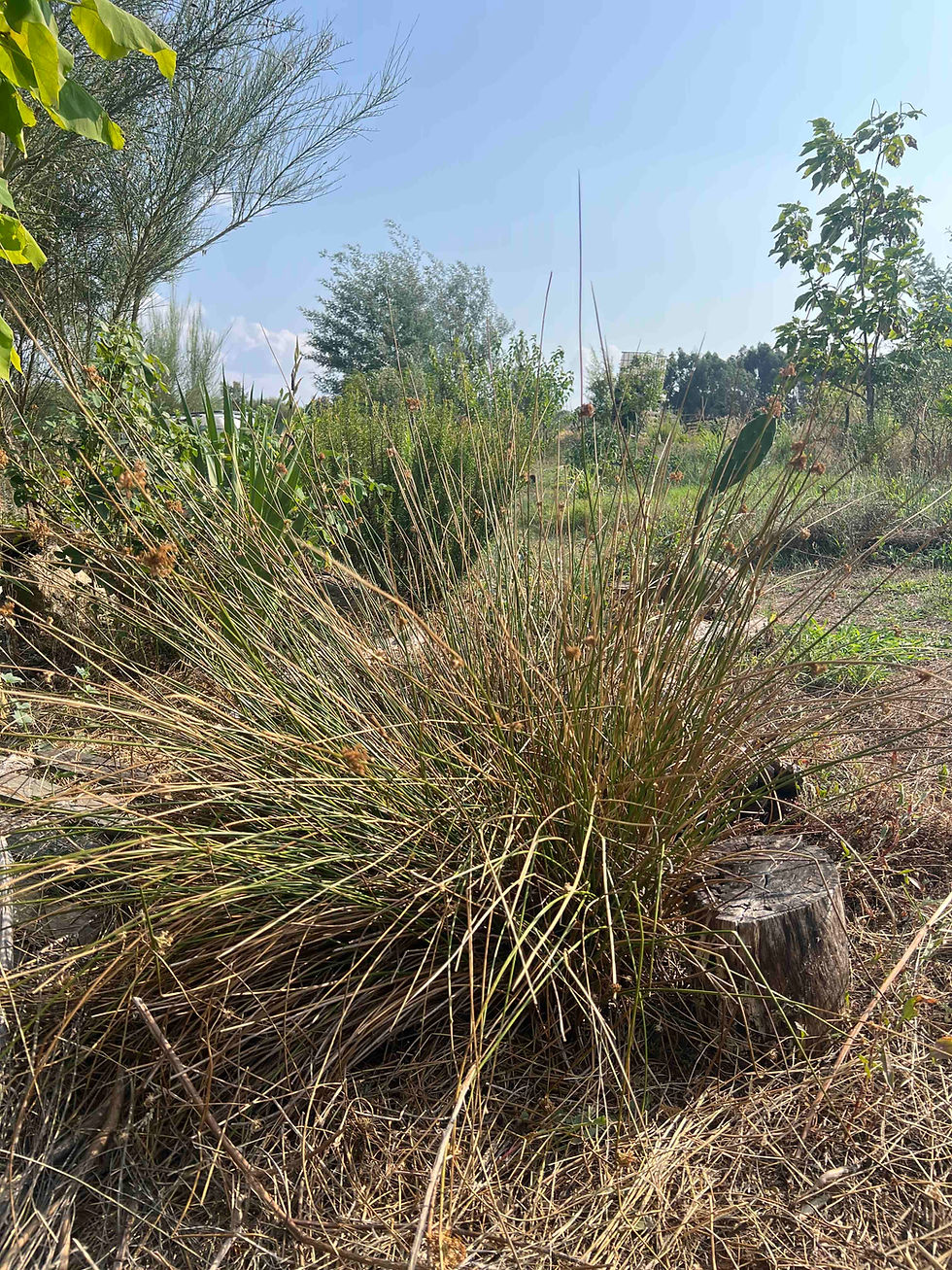
The key message is simple: rushes point to persistent moisture or drainage issues that may influence planting, paths or water management.
Sheep’s Sorrel on Leaner Ground
Sheep’s sorrel (Rumex acetosella) often appears in sunny, disturbed, dry and acidic soils, though it can also grow in other conditions.
On our Quinta, it may help highlight leaner or more acidic patches, especially where vegetation is sparse and the ground dries quickly. However, it does not prove low pH.
A better approach is to compare soil from sorrel patches with nearby areas where it is absent. If differences appear in pH, texture or organic matter, the plant is part of a useful pattern. If not, other factors such as disturbance or light may be more important.
Tough Tip: Start with simple tests like pH and texture before making major changes. They often explain more than the plant alone.
Stinging Nettles in Lush Corners
Stinging nettles (Urtica dioica) are commonly found in moist, fertile, nitrogen-rich ground.
On rural land, that fertility often has a history: old manure piles, livestock activity, compost runoff, shaded damp ditches or areas where organic matter has accumulated.
The wider context matters more than the nettle itself. A patch near past animal activity may reflect that history more than a general soil condition.
Nettles are also useful plants, providing biomass, wildlife value and material for garden feeds when handled carefully.

Pokeweed and Disturbed Ground
American pokeweed (Phytolacca americana) appears in several places on our Quinta and can grow to a large size.
It commonly establishes in disturbed habitats, and its spread is strongly influenced by birds that disperse the seeds. This means a first plant in a location may reflect bird movement as much as soil conditions.
A repeated cluster, however, suggests the site also supports germination and growth.
Pokeweed is toxic and should not be treated as edible. Here, its value is observational: it highlights where disturbance, moisture, fertility and seed dispersal overlap.

Thistles, Disturbance and Metal Claims
Thistles are easy to overinterpret. Different species occupy different soils, but many colonise open, grazed or disturbed ground where competition is reduced. Until identified, that is the most reliable interpretation.
Claims that thistles indicate mineral shortages or heavy-metal contamination are not supported in a simple way. Some plants can tolerate or accumulate metals, but this does not mean a thistle proves contamination at a site. Only soil or tissue testing can confirm that.
Turning Plant Clues Into Better Land Decisions
Indicator plants are useful not for dramatic conclusions, but for better decisions.
Observe Before You Alter
Before adding lime, fertiliser or drainage, record what is already happening. Photograph plants in context, note conditions, and compare wet and dry periods or disturbed and undisturbed areas. This is practical observation, not theory.
Compare Similar Areas
Use nearby contrasting zones as reference points: walked vs unwalked soil, wet hollows vs higher ground, nutrient-rich patches vs surrounding soil. The goal is better reasoning, not laboratory precision.
Test Before Making Large Changes
Soil tests can measure pH and nutrients, while more specialised analyses may be needed for texture, salinity or contaminants. Plants suggest patterns; tests confirm conditions in a sample. Used together, they give a clearer picture than either alone.
Read Communities, Not Just Species
Groups of plants are more informative than single species. Dandelions with plantains suggest disturbance and compaction. Rushes with other moisture-loving plants suggest wet ground. Nettles, pokeweed and lush grasses may cluster around nutrient sources. Communities reveal long-term conditions.
Let the Question Come Before the Fix
Instead of asking only how to remove a plant, ask why it is growing there. The answer may point to compaction, moisture, fertility or disturbance. Once understood, solutions become more precise and less wasteful.
Reading the Land Builds Resilience
Our Quinta is a patchwork shaped by water, soil, grazing, mowing, animals and past human activity. Wild plants reflect that history.
Dandelions and plantains suggest compacted paths. Rushes point to moisture. Sheep’s sorrel highlights lean or acidic ground. Nettles mark fertility and moisture. Pokeweed shows disturbance and seed dispersal. Thistles indicate open or disturbed land, but not soil chemistry on their own.
Indicator plants are clues, not results. One plant is interesting. A repeated population is more useful. A community plus testing begins to form evidence.
Take time to observe, identify and question before acting. The plants beneath your feet may not give answers, but they often show where the right questions begin.
Join the Kraut Crew for more practical lessons from our off-grid Quinta, including seasonal guides, Plant Library updates and honest field observations.
Herman’s Tough Kraut Fixes: Indicator Plant Troubleshooting and FAQ
Using indicator plants for soil sounds simple until several species appear together, the soil test disagrees or the mystery plant refuses to identify itself. This Troubleshooting and FAQ section covers the most common problems and the practical fixes I would use before changing the land.
Q: One dandelion appeared in my lawn. Does that mean the soil is compacted?
A: No. One dandelion may have arrived by chance. Look for a repeated pattern, especially in walked, driven or heavily mown areas. Compare the suspected patch with nearby ground using an infiltration test or a metal rod. If water enters slowly and the rod meets more resistance, compaction becomes a stronger explanation.
Q: Rushes are growing in one area. Should I install drainage?
A: Not immediately. First observe the site after heavy rain and during the dry season. The area may be seasonally wet, permanently damp or simply suited to that rush species. Identify the rush and check the soil profile. In some cases, the better solution is to use the wet area productively rather than trying to dry it.
Q: Sheep’s sorrel is growing everywhere. Should I add lime?
A: Test the soil first. Sheep’s sorrel is often linked with acidic, lean or sandy soil, but its presence does not measure the pH. Adding lime without a test can push the soil too far in the other direction and affect nutrient access.
Q: Do nettles mean I have too much nitrogen?
A: They may suggest fertile, moist or nitrogen-enriched ground, but investigate the land’s history. Old manure, livestock, compost, wastewater or nutrient-rich runoff may explain a local patch. Test before deciding that the whole property is over-fertile.
Q: Can thistles warn me about heavy metals?
A: Not on their own. Metal tolerance, accumulation and hyperaccumulation are different traits, and thistle species vary. Identify the plant, then arrange soil and possibly tissue analysis if there is a real reason to suspect contamination. Do not base a health or land-use decision on the thistle alone.


Comments