
How to Care for Common Alder in a Mediterranean Climate

If you already have a young Alnus glutinosa (Common Alder / Black Alder) in moist ground, solid care for common alder matters more than another nursery brochure. This companion is about keeping a tree you already planted: wet-line siting, summer water, mulch, Frankia nitrogen partnership, light pruning, and honest Mediterranean moisture limits. It is not a from-scratch grow guide.
Portuguese alders labeled Alnus glutinosa are sometimes treated as Alnus lusitanica, so wild-collected stock can sit on a fuzzy label. Ours is our best guess at a small rooted sapling from a Central Portugal road trip, possibly near Serra do Buçaco. We potted it, then planted it in the food forest, probably in autumn about two years ago. It is now about 2.2 m (7.2 ft) tall, with height and trunk diameter moving faster than many neighbors. Stick around for Herman’s Tough Kraut Fixes: summer moisture, Frankia, drought-stress pests, and whether to coppice yet.

For field-tested tools and reading, see our Resources page.
Quick Answer: How to Care for Common Alder
Give Common Alder full sun to light shade and, more important in Zone 8a, reliable soil moisture. Prefer a damp food-forest pocket over a dry exposed slope. Moist loam or clay works; poorly drained ground is usually fine. Little soil improvement is needed if moisture already holds. Plant in autumn or winter with the root collar level. Water young trees through Mediterranean summers; drought is not this species’ superpower. Mulch a wide ring and keep material off the trunk. Skip heavy fertilizer: Frankia nodules fix nitrogen. Prune only damaged or badly placed wood unless you deliberately want to coppice. One tree is enough for pollen; it is monoecious and wind-pollinated.
Siting Common Alder on Wet Lines and Food-Forest Edges
Sun is welcome, but moisture placement decides success. Alder belongs on wet lines, seep edges, and low food-forest pockets where the root zone stays cooler and wetter through summer. A dry slope that suits cork oak’s dry-canopy logic will leave alder stressed; if you want that habit instead, our cork oak care companion covers the opposite water story.
Plan for roughly 20-25 m (66-82 ft) mature height, a 4-8 m (13-26 ft) spread, and about 6-10 m (20-33 ft) spacing if you plant more than one. Companions that share moisture logic fit best: willow, comfrey, and moisture-loving fruit trees or shrubs.
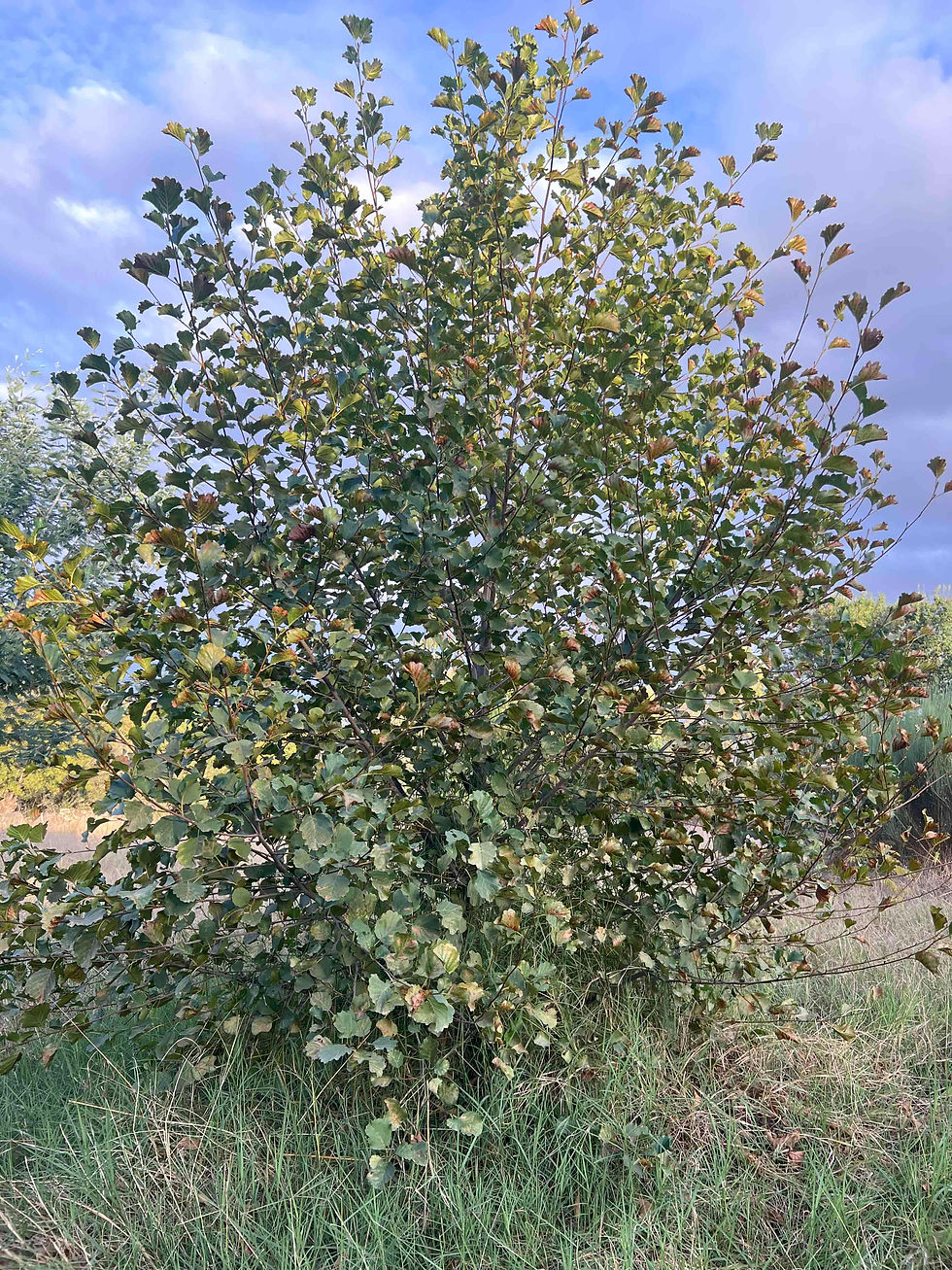
Tough Tip: Choose the wet pocket first. Sun without summer moisture is the wrong Mediterranean deal for alder.
Watering and Mulching Common Alder
Young Common Alder needs reliable water through hot, dry summers. Deep watering at the root zone beats shallow daily sprinkles. Once rain returns, ease off; this tree is usually calmer about heavy winter ground than most orchard stock.
Mulch a wide ring to hold winter rain and buffer summer heat, and keep material clear of the trunk collar. Yellowing or early leaf drop in July often points to a drying root zone before fertilizer. If heat-and-drought timing for other woody stock feels like guesswork, our free Summer Survival Garden Checklist is a light companion for that framing. Alder still wants the root zone moist through summer, not a cork-oak-style dry walkaway.
Tough Tip: Water the tree you have, not the label’s temperate reputation. Mediterranean summers rewrite the care plan.
Soil, Frankia, and Feeding for Common Alder
Moist loam or clay is ideal. Poorly drained and low-fertility ground is often fine when moisture holds. Heavy amendment is rarely the priority; protect the wet-line habit instead of chasing a fancy mix.
The strategic payoff is Frankia. Alder is actinorhizal, not a legume: root nodules partner with Frankia bacteria to fix atmospheric nitrogen. That is why we find ours interesting in a food forest even before we multiply it. Skip high-nitrogen fertilizer. A light compost mulch for structure is enough if the soil is compacted.
Propagation is next on our experiment list (seed and hardwood cuttings). Care comes first: keep the tree moist and healthy before you multiply it. We have not finished those trials, so treat seed and cuttings as recognized options, not Quinta-proven wins.
Tough Tip: Feed with moisture and Frankia, not a fertilizer bag. Healthy nodules beat a cocktail.
Pruning, Coppicing, and Seasonal Care for Common Alder
Minimal pruning is enough: remove damaged, crossing, or badly positioned branches. Coppicing can yield manageable biomass, but we plan to let ours develop further before deciding. Skip yearly hard haircuts unless biomass is the goal.
Autumn to winter: Best planting window; refresh mulch off the trunk.
Spring: Check winter damage, quiet grass near the collar, and confirm water before heat arrives.
Summer: Prioritize deep water at the root zone. Watch drought stress before pests become the story.
Ongoing: Healthy trees are generally robust. Honey fungus, leaf miners, Phytophthora, and other alder pests show up more when drought stress piles on. Fix moisture before sprays.

No partner tree is required. Male and female flowers sit on the same tree, and wind handles pollination.
Tough Tip: Prune for health and access, delay heavy coppice until you know what biomass role you want, and water before you blame insects.
Herman’s Tough Kraut Fixes: Common Challenges with Care for Common Alder
Ongoing care for common alder on Quinta ground is mostly troubleshooting: summer moisture, wet-line siting, Frankia patience, pest stress under drought, and whether to coppice yet.
Q: Does the root zone stay moist enough through a Portuguese summer?
A: That is the core Mediterranean question. Young trees need reliable deep water; a damp food-forest pocket beats a dry slope every time.
Q: Does Common Alder really fix nitrogen?
A: Yes. It forms root nodules with Frankia bacteria, so it is a genuine actinorhizal nitrogen fixer rather than a legume.
Q: Why is my young alder growing so fast?
A: Fast juvenile growth is normal when moisture and rooting conditions are good. Nitrogen fixation can also help on leaner ground. Ours reached about 2.2 m (7.2 ft) with strong trunk growth in roughly two seasons in the ground.
Q: Should I coppice my food-forest alder now?
A: You can for biomass, but we are letting ours develop further before deciding. Minimal health pruning is enough for now.
Q: What pests should I watch in Zone 8a?
A: Honey fungus, leaf miners, Phytophthora, and other alder pests matter most when drought stress weakens the tree. Keep summer moisture steady before reaching for treatments.
Final Thoughts on Caring for Common Alder
Solid care for common alder in Zone 8a stays practical: wet-line or damp food-forest siting, full sun to light shade, moist loam or clay, reliable summer water while young, mulch clear of the trunk, trust in Frankia instead of heavy feed, and light pruning until you choose a coppice path. Ours already shows what moisture plus nitrogen partnership can do at about 2.2 m (7.2 ft).
Open the full Alnus glutinosa Plant Library companion for the species profile, join the Kraut Crew for more Quinta field notes, and use the Resources page for tools we rely on.


Comments